

In today’s digital world, having a strong online presence is very important. Businesses, brands, and even individuals rely on Search Engine Optimization (SEO) to rank higher on Google and other search engines. But not all SEO practices are the same.
Some people take shortcuts and use tricks to get quick results, while others focus on long-term, honest, and user-friendly strategies. This is where Ethical SEO, also known as White Hat SEO, comes into play.
In this blog, we will explain what Ethical SEO is, why it matters, the principles behind it, and how you can apply it to build lasting online success.
What Is Ethical SEO?
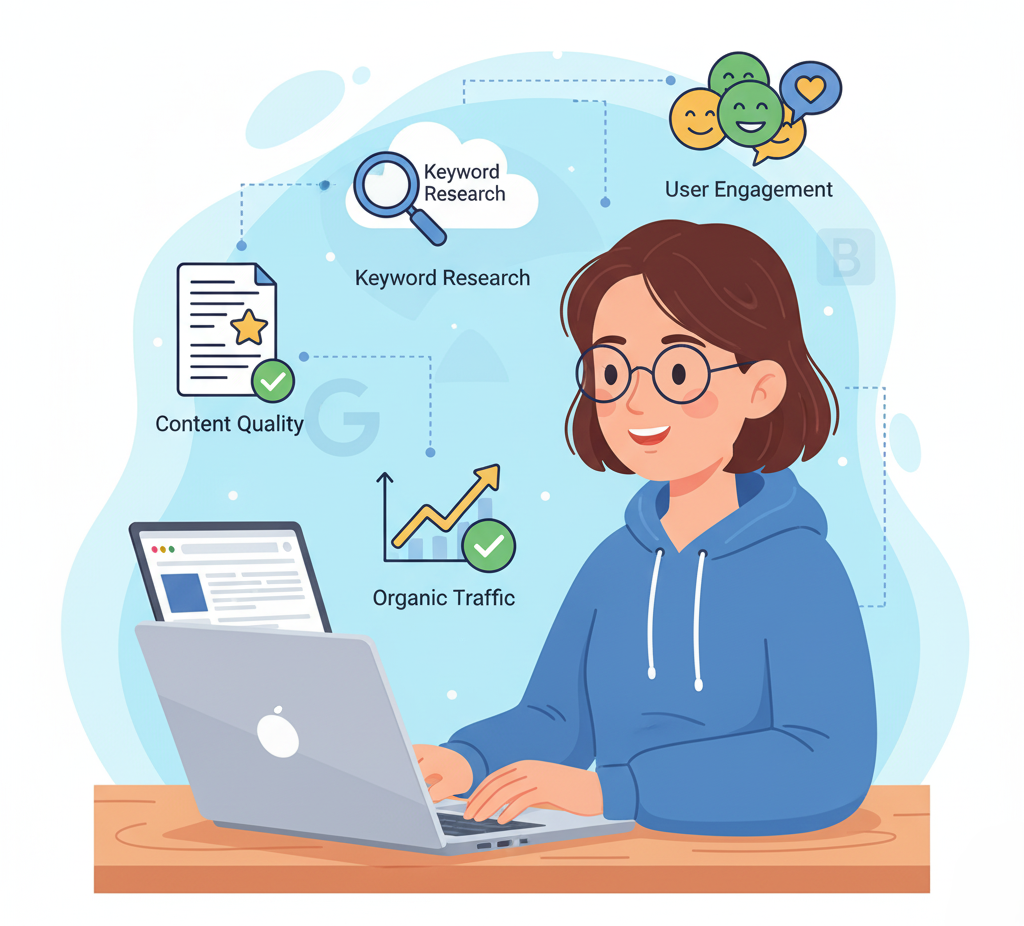
Ethical SEO refers to SEO practices that follow search engine guidelines and focus on providing real value to users. It is the opposite of manipulative or dishonest tactics that aim to trick search engines.
In simple terms:
- Ethical SEO (White Hat SEO): Long-term, user-first, guideline-friendly practices.
- Unethical SEO (Black Hat SEO): Shortcuts and tricks to get quick rankings, often leading to penalties.
- Grey Hat SEO: Somewhere in between – not strictly against rules, but still risky.
The main idea of Ethical SEO is to focus on quality, transparency, and sustainability.
Why Ethical SEO Matters
Search engines like Google are constantly improving to provide the best experience to users. Using unethical methods may work for a short time, but they can harm your website in the long run. Here’s why Ethical SEO is so important:
- Long-Term Success: Ethical SEO builds a strong foundation that lasts.
- Trust & Credibility: Users trust brands that rank honestly.
- Compliance: Following search engine rules avoids penalties.
- Brand Reputation: Unethical practices can damage your image.
- Sustainable Results: Real growth instead of short-term spikes.
Key Principles of Ethical SEO
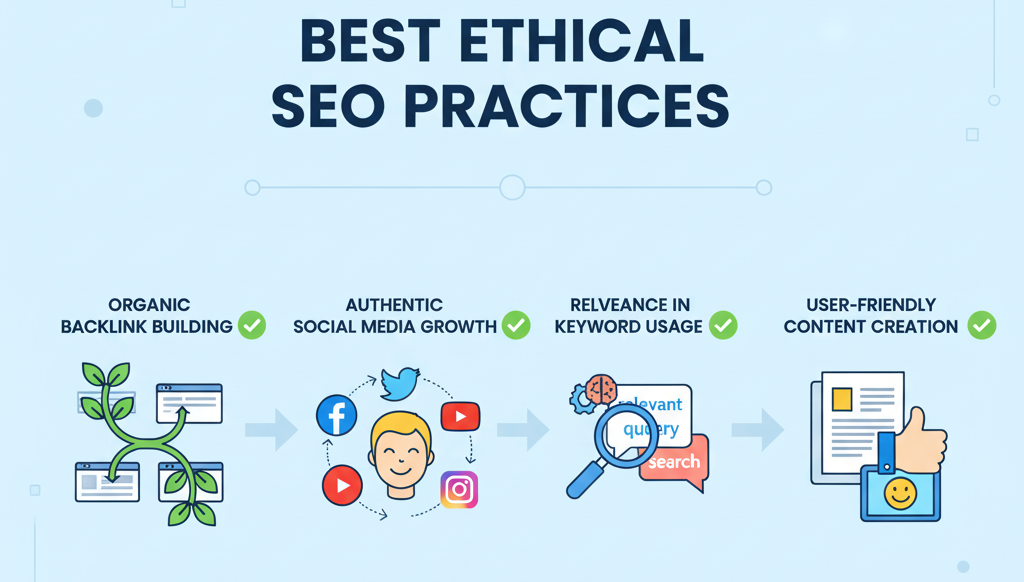
Ethical SEO follows some clear principles. Let’s go through them:
- High-Quality Content Creation
-
-
- Content should be original, useful, and written for users, not just for search engines.
-
- Honest Keyword Usage
-
-
- Use keywords naturally based on user intent. Avoid keyword stuffing.
-
- Proper Link Building
-
-
- Earn backlinks through valuable content, guest blogging, and networking – not by buying or spamming.
-
- Transparent Technical SEO
-
-
- Improve site speed, mobile-friendliness, and accessibility without using deceptive tricks.
-
- Respect for User Privacy & Data
-
- Follow rules like GDPR and avoid unethical data collection.
Ethical SEO vs. Black Hat SEO
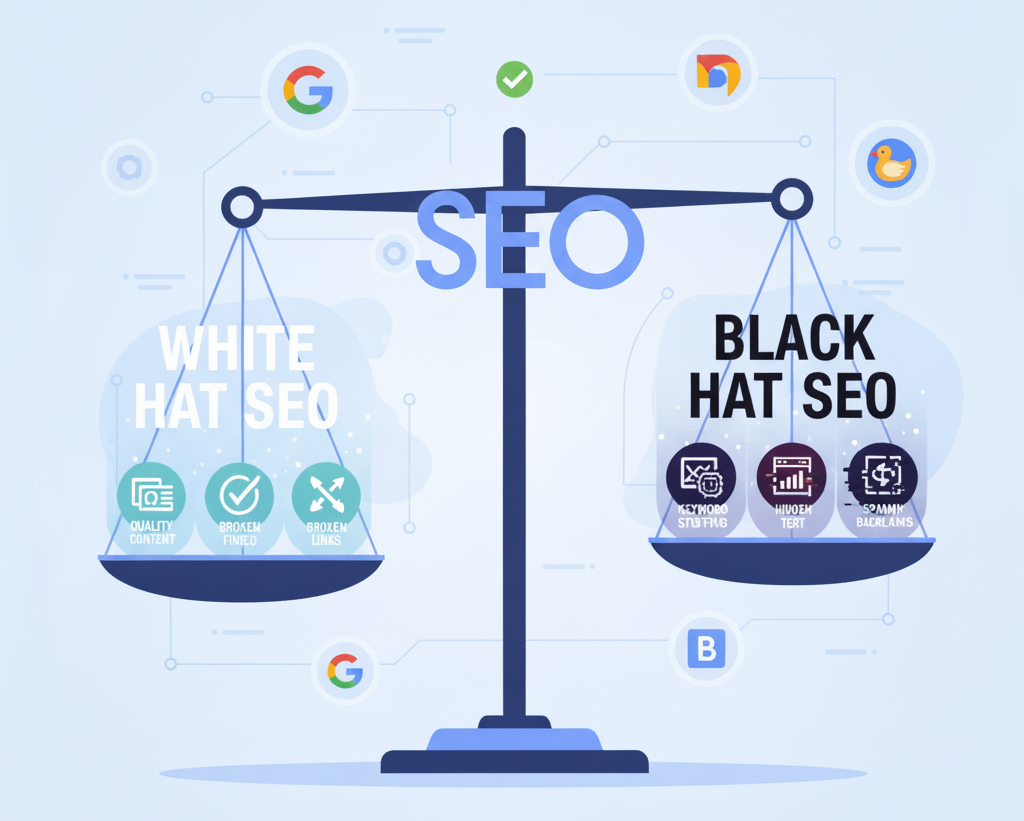
| Ethical SEO (White Hat) | Unethical SEO (Black Hat) |
| High-quality, original content | Duplicate/spun content |
| Natural keyword use | Keyword stuffing |
| Earning backlinks organically | Buying/selling links |
| Transparent practices | Cloaking, hidden text |
| Long-term growth | Short-term tricks with penalties |
Risks of Black Hat SEO:
- Website penalties
- Lower rankings
- Complete removal from search results
- Loss of trust and reputation
Benefits of Practicing Ethical SEO
When you use Ethical SEO, you enjoy many advantages:
- Higher and more stable search rankings
- Better user experience and engagement
- Stronger brand authority
- Higher conversion rates
- No fear of sudden Google penalties
In short, Ethical SEO is the safest and smartest way to grow your online presence.
Also Check: What Are Google Search Partners? + 7 Pro Tips
Common Unethical SEO Practices to Avoid
If you want to stay ethical, avoid these risky tactics:
- Keyword stuffing
- Hidden text or links
- Cloaking (showing different content to search engines and users)
- Buying or selling backlinks
- Spun or duplicate content
- Misleading redirects
These may bring quick results, but they usually end badly.
How To Implement Ethical SEO in Your Strategy
Here are steps to include Ethical SEO in your marketing plan:
- Do proper keyword research: focus on user intent.
- Create high-quality content: original, informative, and helpful.
- Follow Google’s E-E-A-T: show experience, expertise, authority, and trust.
- Build backlinks naturally: by writing valuable content that others want to share.
- Optimize technical SEO: fast loading, secure website, and mobile-friendly design.
- Audit regularly: check your site to make sure it follows ethical practices.
Challenges of Ethical SEO
While Ethical SEO is the best approach, it does come with challenges:
- Takes longer to see results compared to shortcuts.
- Needs continuous effort and patience.
- Competitive industries make it harder to rank ethically.
- Requires balancing optimization with creativity.
But despite these challenges, the rewards are worth it.
Best Practices & Tips for Staying Ethical
- Always put the user first – solve their problem.
- Stay updated with Google’s guidelines.
- Be transparent about your methods.
- Focus on long-term growth, not overnight success.
- Avoid shortcuts, even when tempted.
Conclusion
Ethical SEO is not just about following rules – it’s about building a digital presence that lasts. While Black Hat SEO may promise quick wins, it often leads to penalties, lost rankings, and damaged reputations.
By choosing Ethical SEO, you:
- Earn long-term results
- Build trust with your audience
- Strengthen your brand reputation
- Future-proof your business against algorithm updates
SEO is a marathon, not a sprint. If you invest in Ethical SEO, you’ll enjoy growth that is stable, sustainable, and successful.

Passionate about blogging and focused on elevating brand visibility through strategic SEO and digital marketing. Always tuned in to the latest trends, I’m dedicated to maximizing engagement and delivering measurable ROI in the dynamic world of digital marketing. Let’s connect and unlock new opportunities together!