

Summary
The BCG Matrix of L’Oréal provides a strategic analysis of how the world’s largest cosmetics and beauty company manages its global portfolio of brands across categories like skincare, haircare, makeup, fragrances, and personal care. As a multinational corporation with over 35 international brands, L’Oréal uses strategic tools such as the BCG Matrix to position its products based on market share and market growth.
This detailed analysis examines the four quadrants of the Boston Consulting Group Matrix for L’Oréal—Stars, Cash Cows, Question Marks, and Dogs. It describes how each major L’Oréal brand fits into the company’s global strategy and how this positioning supports innovation, profitability, and long-term expansion.
The BCG Matrix of L’Oréal (2026) reveals a well-balanced, diversified portfolio supported by luxury brands, mass-market leaders, professional salon products, and high-growth dermatological offerings. The blog explores each quadrant in depth, showing how the company allocates resources, invests in growth segments, and nurtures emerging opportunities.
L’Oréal, founded in 1909, is a global beauty and cosmetics giant headquartered in France. It operates in more than 150 countries and owns some of the world’s most iconic beauty brands, including L’Oréal Paris, Garnier, Lancôme, Maybelline, Kiehl’s, Vichy, Matrix, SkinCeuticals, Yves Saint Laurent Beauty, Urban Decay, and many more.
The company leads the global beauty market through innovation, research, sustainability, dermatological advancements, and digital transformation. With divisions targeting all major customer segments—from budget-conscious consumers to ultra-luxury buyers—L’Oréal’s product portfolio is vast and diverse. Managing such a broad mix of brands requires continuous evaluation of market performance, demand patterns, innovation potential, and profitability.
The BCG Matrix of L’Oréal serves as a critical strategic tool to evaluate each brand’s position and guide future investments. It categorizes L’Oréal’s business units based on relative market share and market growth rate, offering insights into which brands lead the company’s global growth and which require strategic support or transformation.
What is the BCG Matrix
The Boston Consulting Group (BCG) Matrix, also called the Growth-Share Matrix, helps organizations analyze their business units or product lines based on two key strategic dimensions:
Market Growth Rate
Reflects how fast the industry or product category is expanding. A high-growth market indicates strong demand and future potential.
Relative Market Share
Shows the company’s competitive strength compared to its largest competitor. A high market share implies category leadership and strong customer preference.
These two factors create four categories:
Stars – High market share in high-growth markets
Cash Cows – High market share in low-growth markets
Question Marks – Low market share in high-growth markets
Dogs – Low market share in low-growth markets
For a global organization like L’Oréal, applying this matrix helps identify the strongest brands, future growth opportunities, and areas where restructuring or repositioning is required.
Importance of the BCG Matrix for L’Oréal
The BCG Matrix of L’Oréal is essential because of the company’s massive, diverse brand portfolio. It helps L’Oréal:
Allocate resources strategically
Identify high-potential growth brands
Support innovation in strong but growing segments
Prioritize investments in emerging beauty categories
Reduce risk by balancing high-growth and mature products
Optimize marketing budgets across multiple divisions
Make informed decisions for long-term global competitiveness
As the beauty market evolves with new trends such as clean beauty, dermatological skincare, premiumization, and digital commerce, the BCG Matrix plays a critical role in helping L’Oréal stay ahead of its competitors.
BCG Matrix of L’Oréal – Detailed Analysis
Stars (High Market Share, High Market Growth)
L’Oréal Paris (Skincare and Haircare Segments)
L’Oréal Paris is one of the world’s most recognized beauty brands, offering skincare, haircare, makeup, and hair color products. The skincare and haircare categories continue to grow rapidly due to increasing consumer awareness about personal grooming, anti-aging demand, and rising global beauty consumption.
The brand dominates these categories with strong global market share and exceptional marketing strategies. Its popularity across all age groups, product accessibility, and continuous innovation make it a leading Star in the BCG Matrix of L’Oréal.
Maybelline New York
Maybelline is one of the top global makeup brands, offering affordable yet high-quality cosmetics. The global makeup industry remains a high-growth sector driven by social media influence, celebrity branding, and digital beauty trends.
Maybelline’s market leadership and strong presence across both online and offline channels make it a Star brand. Its product diversity, global appeal, and strong digital campaigns contribute to high market share and rapid category growth.
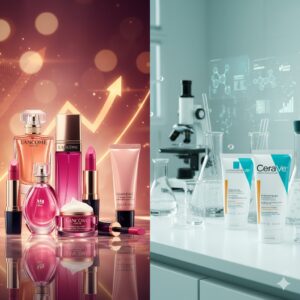
Lancôme (Prestige Skincare & Luxury Makeup)
Lancôme dominates the premium skincare and luxury makeup segments. These categories are growing quickly as consumers increasingly shift toward premium beauty experiences, anti-aging treatments, and scientifically advanced formulations.
Lancôme’s luxury positioning, strong brand heritage, and global demand for anti-aging and premium products ensure that it is a high-performing Star brand.
CeraVe, La Roche-Posay, and SkinCeuticals (Dermatological Skincare Brands)
L’Oréal’s dermatological skincare division is growing at an exceptional pace. With rising consumer focus on scientifically backed products, dermatologist-recommended skincare has become the fastest-growing beauty segment worldwide.
CeraVe, La Roche-Posay, and SkinCeuticals show:
High growth rate
Strong global reputation
Domination in dermatology-backed beauty
Massive consumer demand
These brands are some of the strongest Stars in the BCG Matrix of L’Oréal.
Cash Cows (High Market Share, Low Market Growth)
Garnier
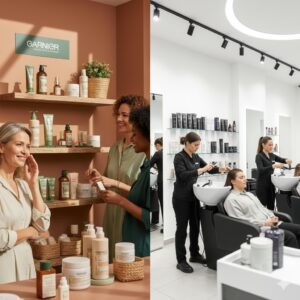
Garnier is one of L’Oréal’s oldest and strongest mass-market brands, offering haircare, skincare, and hair color products. Although the mass beauty market is relatively stable, Garnier continues to hold high market share and steady profitability.
Garnier is a Cash Cow because:
It has strong distribution worldwide
Demand remains constant
It requires low investment compared to luxury brands
Profit margins remain stable
This brand provides consistent financial support for L’Oréal’s innovation-heavy divisions.
L’Oréal Professional & Matrix (Salon Haircare Brands)
The salon haircare market is mature, with slower growth compared to consumer segments. However, L’Oréal Professional and Matrix continue to dominate global salon channels. They generate stable cash flow due to strong relationships with stylists, extensive training programs, and brand trust.
These brands are major Cash Cows for L’Oréal, helping support R&D and marketing in high-growth divisions.
Kiehl’s
Kiehl’s is a premium skincare brand with strong brand loyalty and repeat customer base. While the premium skincare segment has growth, it is not expanding as rapidly as dermatology-backed or luxury science-driven brands.
Due to its steady performance and high margins, Kiehl’s is categorized as a Cash Cow.
Question Marks (Low Market Share, High Market Growth)
Urban Decay
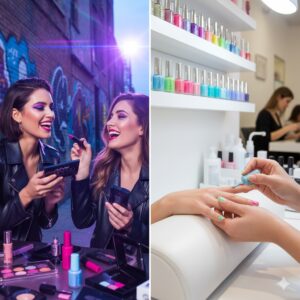
Urban Decay is a popular brand in the global makeup market, known especially for its eyeshadow palettes and bold aesthetic. However, the brand faces heavy competition from fast-growing beauty brands like Fenty Beauty, Huda Beauty, Morphe, Rare Beauty, and many indie labels.
While the global makeup market still shows strong expansion, Urban Decay’s relative market share is not as high as competitors. This places it in the Question Marks quadrant.
With strategic innovation and marketing investment, it could regain momentum and potentially move toward the Star category.
NYX Professional Makeup
NYX is highly popular for its professional-grade, affordable cosmetics, especially among younger audiences. However, the mass makeup segment is saturated, and competition from digital-native beauty brands is intense.
Although the market is still high-growth, NYX’s current share is moderate, making it a Question Mark but with strong potential if supported correctly.
Essie (Nail Care and Nail Polish)
The global nail care industry is expanding due to increased self-grooming culture. Essie, a strong brand in the nail category, holds presence worldwide, but competition from gel polish brands, indie nail companies, and professional nail studios is rising.
Essie holds decent recognition but limited dominance, making it a Question Mark in the BCG Matrix of L’Oréal.
Dogs (Low Market Share, Low Market Growth)
The Body Shop (Previously Owned by L’Oréal)
Although L’Oréal sold The Body Shop in 2017, historically the brand was a Dog during L’Oréal’s ownership. It had emotional appeal but limited profitability, faced competition, and struggled in several regions.
Some Regional or Niche Brands
Certain smaller brands and product lines within L’Oréal’s portfolio do not hold significant market share and operate in low-growth niches. These segments may include:
Small-scale hair styling products
Low-demand fragrance lines
Underperforming regional brands
These brands do not significantly contribute to profits and may require restructuring or repositioning.
Strategic Insights from the BCG Matrix of L’Oréal
The BCG Matrix of L’Oréal (2026) highlights a balanced and strategically managed portfolio.
The company’s Stars—dermatology brands, luxury skincare, global makeup leaders, and flagship brands like L’Oréal Paris—drive strong growth.
Its Cash Cows, including Garnier, Kiehl’s, and L’Oréal Professional, ensure steady cash flow to support innovation.
The Question Marks, such as Urban Decay and NYX, indicate areas of potential expansion that require targeted investments.
The Dogs reflect older or niche brands that may need limited support or strategic restructuring.
This combination of high-growth and stable segments allows L’Oréal to maintain market leadership, drive innovation, and invest in future trends.
Also Read: BCG Matrix of Reliance Industries
Challenges of Applying the BCG Matrix to L’Oréal
The BCG Matrix, although useful, has certain limitations when applied to a global beauty conglomerate:
Beauty trends shift rapidly
Consumer preferences vary across regions
Innovation cycles are fast and unpredictable
New indie brands constantly disrupt markets
Digital marketing shifts create unpredictable growth patterns
Despite these challenges, the BCG Matrix remains a valuable tool for identifying which brands drive long-term strategic success.
Conclusion
The BCG Matrix of L’Oréal (2026) shows how the company manages an expansive, diverse, and strategically powerful beauty portfolio.
Star brands like La Roche-Posay, CeraVe, Lancôme, Maybelline, and L’Oréal Paris drive enormous growth.
Cash Cows like Garnier, Kiehl’s, and L’Oréal Professional generate stable profits.
Question Marks like Urban Decay, Essie, and NYX offer strong future opportunities.
Dogs include niche or underperforming lines that may be repositioned or phased out.
Through this strategic balance, L’Oréal remains the global leader in beauty innovation, brand influence, and sustainable growth—continuing to meet consumer demands across every beauty segment.
FAQs
What is the BCG Matrix of L’Oréal?
It is a strategic framework that categorizes L’Oréal’s brands into Stars, Cash Cows, Question Marks, and Dogs based on market growth and market share.
Which L’Oréal brands are Stars?
L’Oréal Paris, Maybelline, Lancôme, CeraVe, SkinCeuticals, and La Roche-Posay.
What are the Cash Cows for L’Oréal?
Garnier, L’Oréal Professional, Matrix, and Kiehl’s.
Which brands of L’Oréal are Question Marks?
NYX, Essie, and Urban Decay.
Are there any Dogs in the L’Oréal portfolio?
Some niche, regional, or low-demand brands fall into this category.