


Summary
The BCG Matrix of Bank of India provides a strategic understanding of how one of India’s oldest and most prominent public-sector banks manages its diverse financial product portfolio. Bank of India (BOI), founded in 1906, has expanded across retail banking, corporate banking, MSME lending, digital banking, rural banking, wealth management, international operations, and investment services.
Using the Boston Consulting Group (BCG) Matrix, this extensive analysis categorizes each of Bank of India’s business segments into Stars, Cash Cows, Question Marks, and Dogs based on market growth and relative market share. It explains which divisions lead growth, which ensure stable profitability, which need strategic intervention, and which may require restructuring.
The BCG Matrix of Bank of India (2026) highlights how the bank balances traditional strength with digital transformation, how it manages public-sector challenges, and how it positions itself for future competitiveness in India’s rapidly evolving banking landscape.
Bank of India (BOI) is a major public-sector bank with a strong presence in Indian retail banking, corporate lending, rural financing, and international banking. With more than 5,000 branches, 8,000+ ATMs, and operations in over 15 foreign countries, BOI continues to serve millions of customers with diversified products such as:
Savings accounts
Term deposits
Home loans
Business loans
Education loans
Agriculture finance
NRI services
Digital banking services
Investment advisory
Wealth management
Trade and foreign exchange services
In a competitive landscape dominated by SBI, HDFC Bank, ICICI Bank, Axis Bank, and emerging digital-first banks, Bank of India must continuously evaluate its product performance and growth strategy.
This is where the BCG Matrix of Bank of India becomes a crucial tool. It reveals which product categories drive growth, which support revenue stability, and which require reallocation of resources.
What is the BCG Matrix
The Boston Consulting Group (BCG) Matrix is a strategic framework used to evaluate business units or product segments based on two essential indicators:
Market Growth Rate
Shows how fast the external market is expanding.
Relative Market Share
Shows the strength of the company compared to competitors in that segment.
These two factors classify business units into four quadrants:
Stars – High market share and high market growth
Cash Cows – High market share but low market growth
Question Marks – Low market share but high market growth
Dogs – Low market share and low market growth
Applying this matrix to Bank of India helps identify its strongest divisions, potential growth areas, and strategic weaknesses.
BCG Matrix of Bank of India – Detailed Analysis
Stars (High Market Share, High Market Growth)
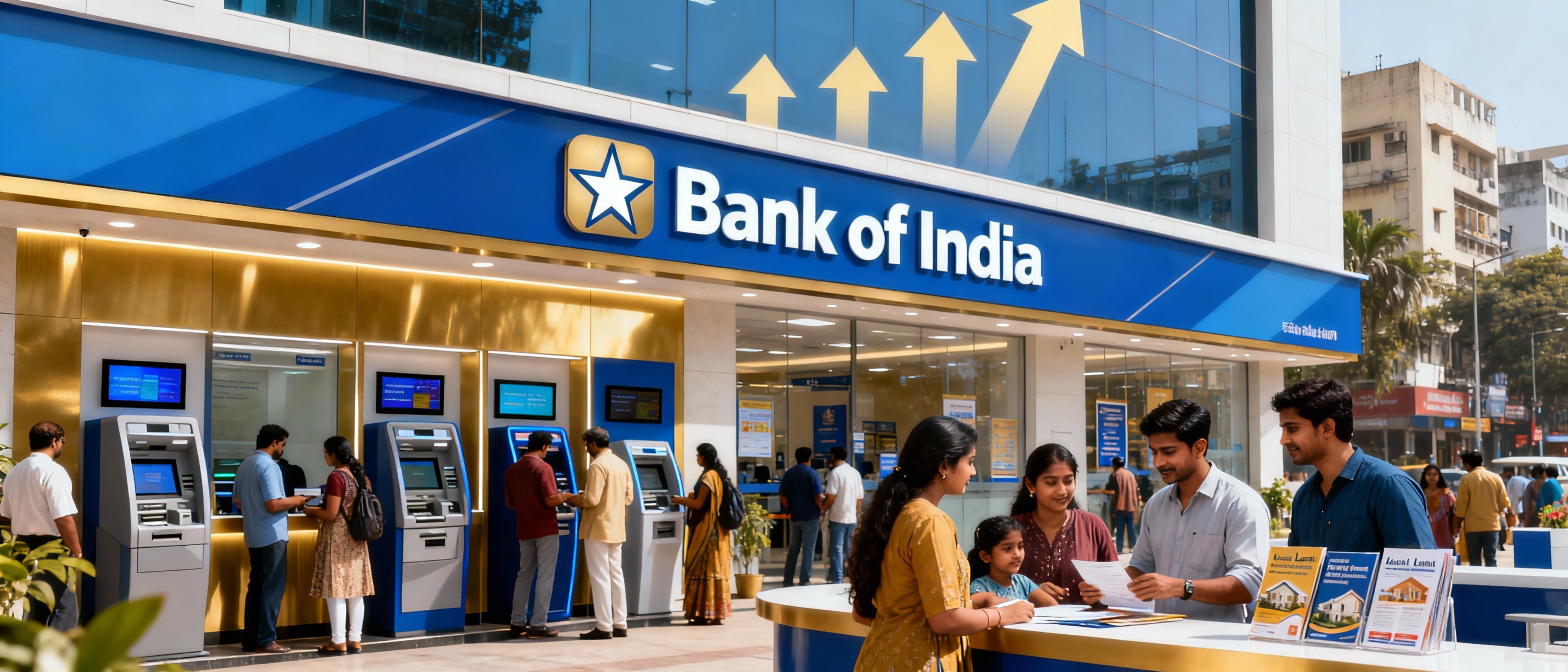
Retail Banking and Personal Loans
Retail banking continues to be one of the strongest and most rapidly expanding segments in India. Rising financial literacy, urbanization, and digitization have accelerated the adoption of personal financial products.
Bank of India has a significant presence in retail segments through:
Savings accounts
Term deposits
Personal loans
Education loans
Auto loans
Home loans
Gold loans
The Indian retail banking market is experiencing consistent growth, especially in home loans and personal credit segments. Bank of India has a strong customer base, particularly in semi-urban and rural areas, giving it a competitive advantage.
Home loans and personal loans expand rapidly due to:
Growing middle-class population
Housing demand supported by government schemes
Increasing consumer borrowing appetite
Because retail banking demonstrates high growth and BOI holds strong presence, this segment is a Star in the BCG Matrix of Bank of India.
Digital Banking and Mobile Banking Services
Digital banking is one of the fastest-growing sectors in India. With UPI dominance, mobile banking adoption, and government-driven digitization, the market has expanded extensively.
Bank of India has strengthened its digital presence through:
BOI Mobile Banking
Star Token
Internet banking
UPI services
Digital account opening
Star Connect Corporate Banking
The bank has seen strong growth in digital usage among customers, especially post-COVID.
Since digital banking is high growth and BOI is steadily increasing market share in the public-sector category, this segment is a major Star.
Cash Cows (High Market Share, Low Market Growth)

Corporate Banking and Working Capital Loans
Corporate lending has been a core business of Bank of India for decades. Although the overall corporate loan market growth is slower due to credit risk management, regulatory frameworks, and cautious lending behavior, the bank maintains strong market share in:
Working capital loans
Term loans
Project finance
Trade finance
Cash credit
Overdraft services
Forex services for businesses
Corporate banking produces stable, consistent revenue for BOI. Although growth is moderate, BOI’s strong relationships with long-established companies, public-sector units, and SMEs make it a Cash Cow.
Rural and Agriculture Banking
Agriculture continues to be a foundational sector for India, but its market growth rate remains moderate compared to urban sectors. Bank of India has historically held a strong position in rural and agricultural finance through:
Kisan Credit Cards
Farmer loans
Agricultural equipment loans
Crop loans
Self-help group financing
MUDRA loans
These programs are stable and low-growth but contribute significantly to BOI’s long-term revenues. Therefore, rural banking is a Cash Cow in the BCG Matrix of Bank of India.
Traditional Deposits (Savings and Current Accounts)
Deposits form the backbone of any bank. Although deposit growth across India is steady rather than rapid, Bank of India holds a strong market share in savings and current accounts due to:
Public trust
Widespread branch network
Government salary accounts
Pension accounts
Financial inclusion schemes
This segment generates stable funding through CASA deposits, making it a dependable Cash Cow.
Question Marks (Low Market Share, High Market Growth)

Wealth Management and Investment Advisory
Wealth advisory services in India are expanding rapidly due to:
Growing high-net-worth individuals
Rising interest in mutual funds
Demand for financial planning
Shift from traditional to market-linked investments
However, BOI’s wealth management presence is still limited compared to private-sector banks and fintech platforms such as:
HDFC Wealth
ICICI Direct
Kotak Wealth
Aditya Birla Money
Upstox
Groww
The market is high growth, but BOI’s share is small, making wealth management a Question Mark.
Insurance and Bancassurance
India’s insurance industry is growing quickly, but BOI’s share in bancassurance partnerships is not as strong as its peers. Competition from private banks like Axis, ICICI, and HDFC is intense.
Although demand for digital insurance, term plans, and health coverage is increasing, BOI’s depth in this segment remains limited.
This places insurance-related offerings in the Question Mark quadrant.
International Banking and Overseas Operations
Bank of India has branches in countries like:
United Kingdom
Singapore
France
New Zealand
USA
Kenya
Uganda
Tanzania
Japan
However, its market share overseas is significantly smaller than major global banks. Yet, international banking continues to grow with global trade and cross-border financial transactions.
This segment holds potential but requires restructuring and expansion, making it a Question Mark in the BCG Matrix of Bank of India.
Dogs (Low Market Share, Low Market Growth)
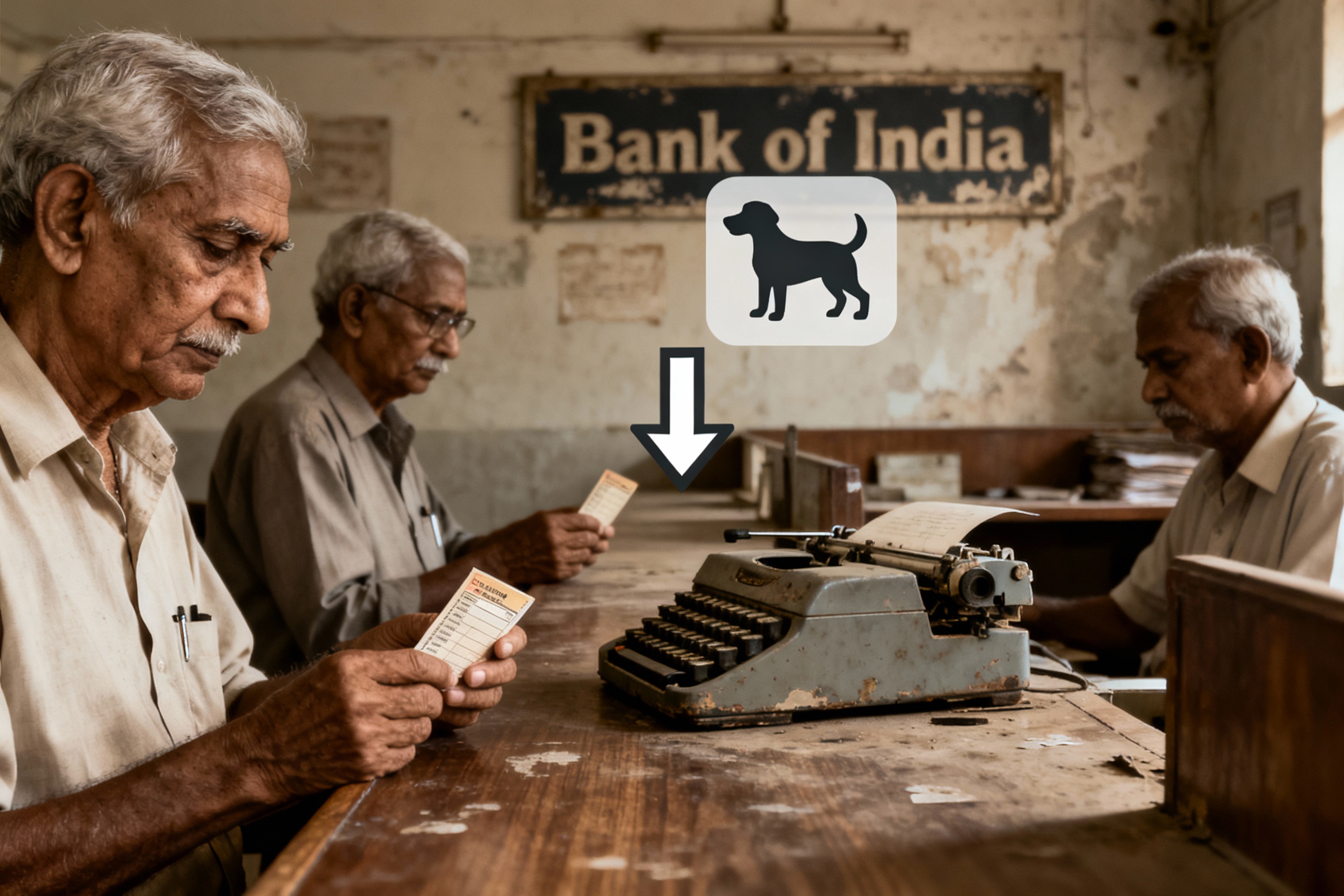
Traditional Passbook Banking and Non-Digital Banking Services
With digital adoption rising across India, traditional branch-based passbook services are declining. Customers prefer:
Mobile banking
UPI transactions
Instant digital loans
Online statements
Traditional services, although essential for some demographics, hold declining market growth and low strategic importance. This makes non-digital traditional services a Dog.
Underperforming Loan Segments
Certain loan categories such as:
Lease financing
Large corporate loans with risk exposure
Low-demand industry loans
show low market growth and lower profitability. Due to competition and risk, these segments contribute less value and fall under Dogs.
Foreign Branches with Low Profitability
Some international branches face:
High operating costs
Low transaction volume
Regulatory challenges
Such branches contribute limited profitability and therefore belong to the Dogs category.
Also Read:BCG Matrix of ICICI Bank
Strategic Insights from the BCG Matrix of Bank of India
Several important insights emerge from the BCG Matrix of Bank of India
Retail and digital banking are the strongest growth engines for the bank
Cash Cows such as corporate lending and deposits ensure financial stability
New-age segments like wealth management and insurance need strategic investment
Non-performing and outdated services require transformation or phasing out
International operations need clearer restructuring and geographic focus
Digital transformation is central to future success
Sharpened focus on profitable retail lending can strengthen the bank’s competitive advantage
This strategic structure helps Bank of India balance profitability with innovation and modernization.
Challenges of Applying BCG Matrix to Bank of India
Although the matrix is useful, some limitations exist:
Public-sector banks operate under government regulations and policies
Growth rates vary across regions and customer segments
Technological adoption differs between rural and urban markets
Competition from fintech disruptors complicates market analysis
Customer expectations change rapidly
Despite these complexities, the BCG Matrix provides clear strategic guidance for resource allocation and operational planning.
Conclusion
The BCG Matrix of Bank of India (2026) paints a clear picture of how the bank organizes its vast portfolio while addressing modern banking challenges.
Its Star segments, such as digital banking and retail loans, represent the bank’s strongest engines for growth.
Its Cash Cows, including traditional deposits, corporate lending, and rural banking, ensure financial stability.
Its Question Marks, such as wealth management, insurance, and global operations, demand targeted investment and strategic planning.
Its Dogs highlight outdated or low-performance areas that need transformation or consolidation.
Bank of India’s ability to balance traditional strengths with modern digital banking initiatives will determine its long-term competitive position in India’s evolving financial landscape.
FAQs
What is the BCG Matrix of Bank of India?
It is a framework that categorizes Bank of India’s divisions into Stars, Cash Cows, Question Marks, and Dogs based on market growth and market share.
Which segments are Stars for Bank of India?
Retail banking and digital banking are the strongest Star segments.
What are Bank of India’s Cash Cows?
Traditional deposits, rural banking, and corporate lending.
Which segments are Question Marks?
Wealth management, insurance, and international banking divisions.
Which segments fall under Dogs?
Traditional passbook services, underperforming branches, and outdated loan categories.