


Summary
The BCG Matrix of Jaguar provides a strategic evaluation of how the iconic British luxury automotive brand manages its current product portfolio while transitioning toward a fully electric future. Jaguar operates as part of Jaguar Land Rover (JLR) under Tata Motors and competes in premium luxury segments including sedans, sports cars, electric vehicles, and luxury SUVs.
This analysis classifies Jaguar’s major business units into Stars, Cash Cows, Question Marks, and Dogs based on market growth and relative market share. It highlights how the brand balances existing internal combustion engine (ICE) vehicles with its Reimagine Strategy, which aims to convert Jaguar into a 100% electric luxury brand by 2025–2030.
The blog discusses how Jaguar’s EV ambitions create new growth pathways while certain traditional models face market pressure. By examining the BCG Matrix of Jaguar, we gain insight into the company’s evolving strategy, future direction, and competitive positioning in the global luxury automotive market.
Jaguar, founded in 1922 in the United Kingdom, has built a legacy of premium craftsmanship, British elegance, and dynamic performance. Known for vehicles like the Jaguar XF, Jaguar XJ, F-Type, and F-Pace, the brand has influenced global luxury culture for decades.
Jaguar’s portfolio today consists of:
Luxury SUVs
Premium sedans
Electric vehicles (Jaguar I-Pace)
Sports and performance cars
Future electrified platforms under development
The automotive market is undergoing major disruptions:
Rise of electric vehicles
Strict environmental emission regulations
Autonomous and connected car technologies
Customer shift toward SUVs over sedans and coupes
Intense competition from Mercedes, BMW, Audi, Tesla, Volvo, Porsche
To remain competitive, Jaguar aims to reposition itself away from ICE models toward futuristic electric luxury mobility. This makes the BCG Matrix of Jaguar an essential strategic tool to understand which models contribute today and which will shape tomorrow.
What is the BCG Matrix
The Boston Consulting Group (BCG) Matrix evaluates business units based on:
Market Growth Rate
Relative Market Share
The matrix has four quadrants:
Stars – High market share in high-growth markets
Cash Cows – High market share in low-growth markets
Question Marks – Low market share in high-growth markets
Dogs – Low market share in low-growth markets
Using this framework, Jaguar’s product portfolio can be analyzed effectively.
BCG Matrix of Jaguar – Detailed Analysis
Stars (High Market Share, High Market Growth)
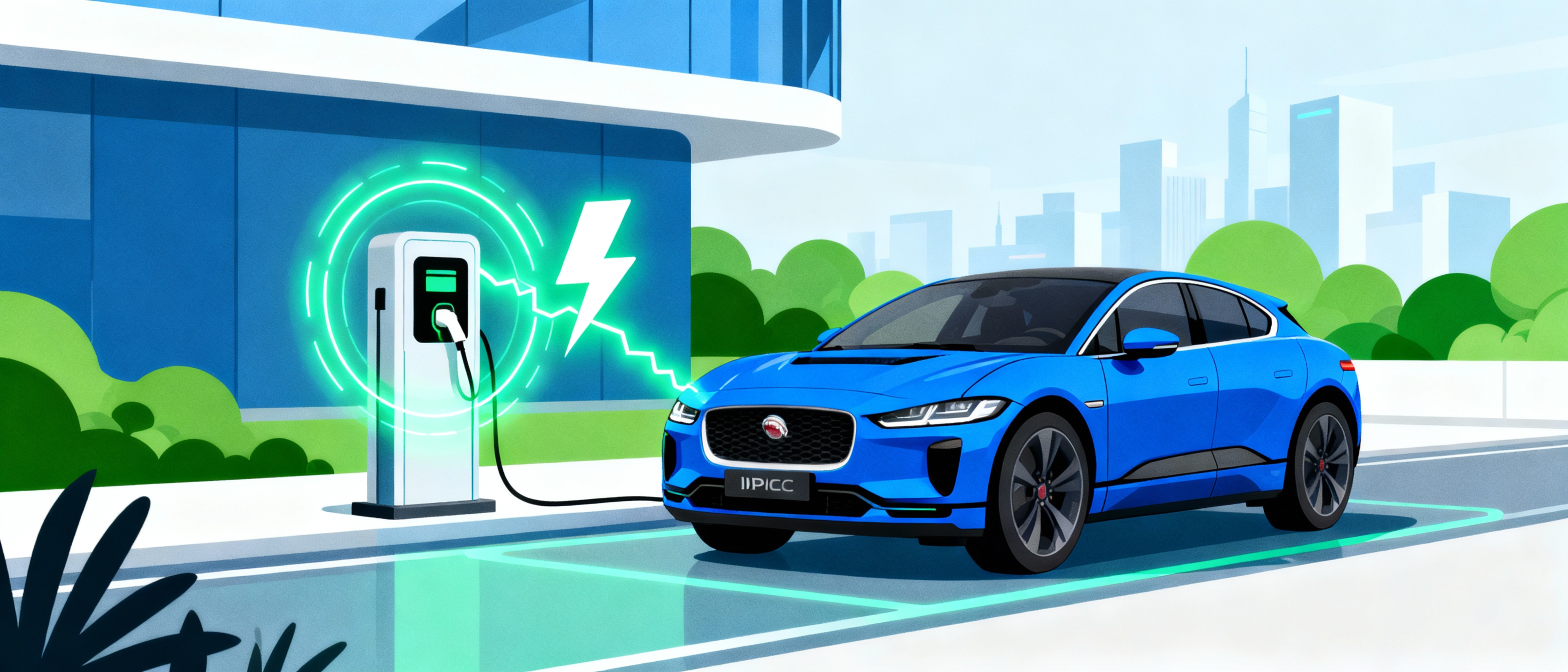
Electric Vehicles – Jaguar I-Pace and Future EV Lineup
Jaguar was an early luxury EV pioneer with the I-Pace, a premium electric SUV. The EV market has the highest growth trajectory globally due to:
Sustainability awareness
Government incentives
Lower maintenance and fuel cost
Technological advancements
The I-Pace has won multiple awards for design, performance, and engineering. Though competition is strong, Jaguar is positioned solidly in luxury EVs, competing with:
Tesla Model X
Audi e-tron
Mercedes EQC
BMW iX
With Jaguar planning a complete shift to electric vehicles, future EV models have high growth and strong potential to capture the premium niche.
Therefore, the I-Pace and upcoming EV products represent Stars in the BCG Matrix of Jaguar.
Luxury SUV Market – F-Pace
The luxury SUV segment continues to expand globally. The Jaguar F-Pace maintains competitive presence and strong brand perception in this category. Stylish design, British luxury appeal, and strong driving performance contribute to healthy sales in markets like Europe and North America.
High market growth combined with competitive market share positions the F-Pace as a Star category.
Cash Cows (High Market Share, Low Market Growth)

Jaguar XF – Premium Sedan Segment
The luxury sedan market is mature and growing slowly compared to SUVs and EVs. The Jaguar XF offers a premium driving experience and strong brand recognition. It continues to generate stable revenue especially in corporate and executive markets despite slower category growth.
Its long-standing market success and brand loyalty make the XF a Cash Cow.
Jaguar Brand Heritage and Technology Licensing
Jaguar’s heritage and intellectual property continue to generate valuable brand revenue through:
High resale value
Merchandising and branding
Engineering expertise leveraged across Tata Motors and suppliers
Even if the market itself grows slowly, Jaguar’s brand continues to hold legacy strength and revenue reliability, making this resource a Cash Cow.
Question Marks (Low Market Share, High Market Growth)

New-Generation Electric Platforms
Jaguar plans to introduce three new EV architectures under its reimagination strategy. These are in early development and still lack market performance data.
Despite limited share today, the global growth potential for advanced EV architecture is massive. If Jaguar executes effectively, these could become future Stars.
Thus, new EV platforms currently fall under Question Marks.
Autonomous and Connected Vehicle Technology
Luxury customers demand advanced:
AI driver assistance
Autonomous driving
Digital cockpit experiences
Smart connectivity
Jaguar has initiated partnerships for technological advancements, but it currently lags behind:
Tesla
Mercedes
BMW
Volvo
With high growth but low share, autonomous technology is categorized as a Question Mark.
Compact SUV and Entry-Level Luxury Space
The Jaguar E-Pace competes in a fast-growing segment. However, market share remains limited due to fierce competition.
If Jaguar invests further in marketing and electrification, this category may strengthen. For now, it remains a Question Mark.
Also Read:BCG Matrix of Reliance Industries
Dogs (Low Market Share, Low Market Growth)

Sports Car Segment – Jaguar F-Type
Sports cars once defined Jaguar’s identity, but today:
Demand is shrinking
SUVs and EVs dominate purchases
Performance EVs overshadow ICE coupes
Although the F-Type remains iconic, the market size for gasoline sports cars has contracted significantly. Thus, the sports car segment has become a Dog in the BCG Matrix of Jaguar.
Discontinued Sedans – XJ, XE
Jaguar discontinued multiple sedan models due to:
Lower sales
Shift toward SUVs
High production cost
Competition from German luxury brands
Low market growth and reduced share place older sedan models under Dogs.
Diesel-Powered Jaguar Models
Global diesel sales decline due to:
Pollution concerns
Stricter emission laws
Preference for EVs and hybrids
Jaguar diesel models are now strategically unimportant and belong to the Dogs quadrant.
Strategic Insights from the BCG Matrix of Jaguar
Major takeaways from the analysis:
Jaguar’s future is electrification
EVs will drive growth and competitive advantage
SUVs remain critical revenue pillars
Luxury SUVs like F-Pace generate volume and brand access
Sedans remain profitable but declining
XF supports financial stability but must evolve
Legacy products require exit strategy
Discontinued and diesel models are no longer priorities
High-tech investments needed
Autonomous and digital innovations are key for long-term survival
Jaguar must strategically allocate resources from Cash Cows toward developing Stars and converting Question Marks into future business leaders.
Challenges in Applying BCG Matrix to Jaguar
Several uncertainties affect predictions:
Automotive regulations vary globally
EV adoption depends on charging infrastructure
Luxury consumer preferences change quickly
Supply chain challenges affect production
Technological disruption from competitors impacts growth rates
Even with these variables, the BCG Matrix of Jaguar remains a critical tool to guide strategic prioritization.
Conclusion
The BCG Matrix of Jaguar clearly reveals that the company stands in a crucial transition phase.
Stars such as the I-Pace and growing SUV lineup will shape future success.
Cash Cows like XF and brand legacy resources continue to provide financial stability.
Question Marks—including new EV platforms, autonomous tech, and compact luxury models—demand investment and innovation to become future Stars.
Dogs such as F-Type, discontinued sedans, and diesel vehicles reflect necessary shifts in global market dynamics.
Jaguar’s Reimagine Strategy is designed to redefine its identity as a premium all-electric luxury automaker, ensuring long-term competitiveness and sustainable growth.
FAQs
What is the BCG Matrix of Jaguar?
It is a strategic tool that categorizes Jaguar’s business segments into Stars, Cash Cows, Question Marks, and Dogs based on market growth and market share.
Which are Star segments for Jaguar?
The Jaguar I-Pace and luxury SUVs like the F-Pace.
Which models are Cash Cows?
The Jaguar XF and strong legacy branding resources.
What falls under Question Marks for Jaguar?
New EV platforms, autonomous tech, and compact SUVs like the E-Pace.
Which models are Dogs in Jaguar’s portfolio?
Sports cars like F-Type, discontinued sedans like XE and XJ, and older diesel variants.

A digital marketer with a strong focus on SEO, content creation, and AI tools. Creates helpful, easy-to-understand content that connects with readers and ranks well on search engines. Loves using smart tools to save time, improve content quality, and grow online reach.