
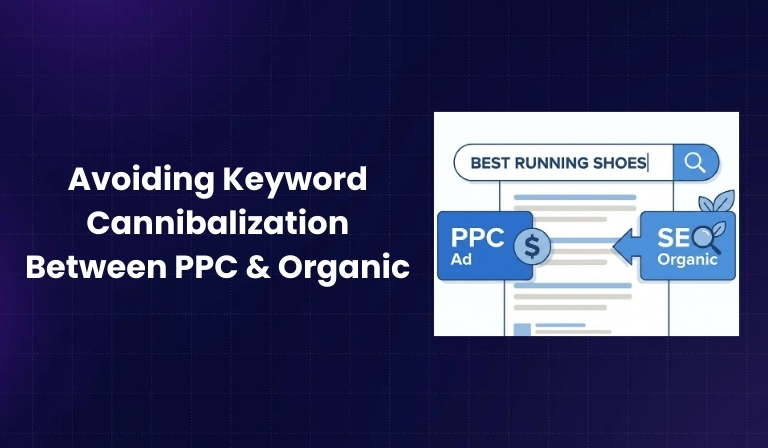

Keyword cannibalization is a common issue in digital marketing, especially when PPC (Paid Search) and SEO (Organic Search) teams work separately. When both channels target the same keywords without coordination, they start competing against each other. This leads to wasted budget, unclear performance data, and lower overall ROI.
PPC and SEO are supposed to support each other. But when they overlap incorrectly, both channels underperform. This blog explains how to identify, prevent, and manage keyword cannibalization between PPC and organic results.
What Is Keyword Cannibalization Between PPC & Organic?
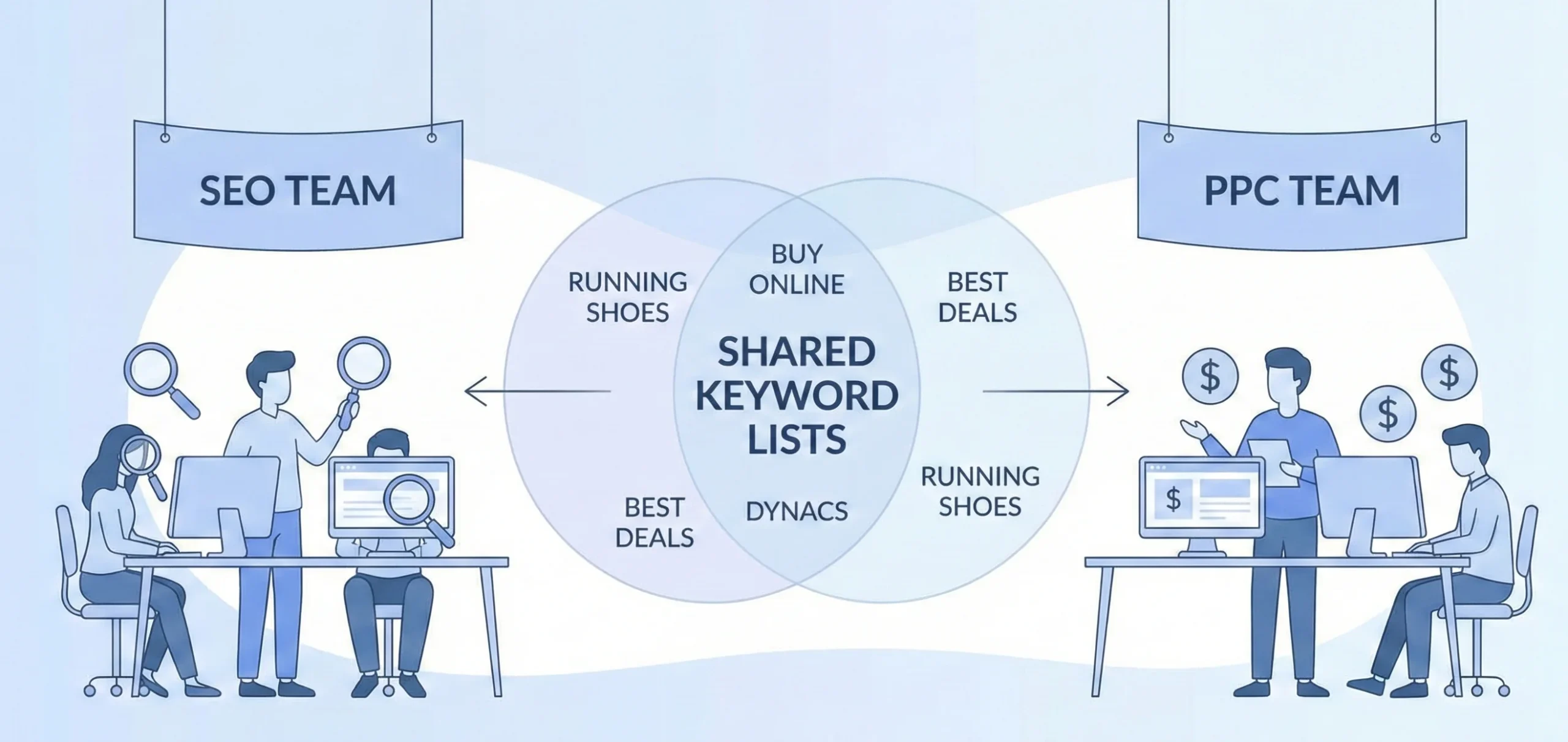
Keyword cannibalization between PPC and organic happens when both channels target the same keywords in a way that causes them to compete instead of complement.
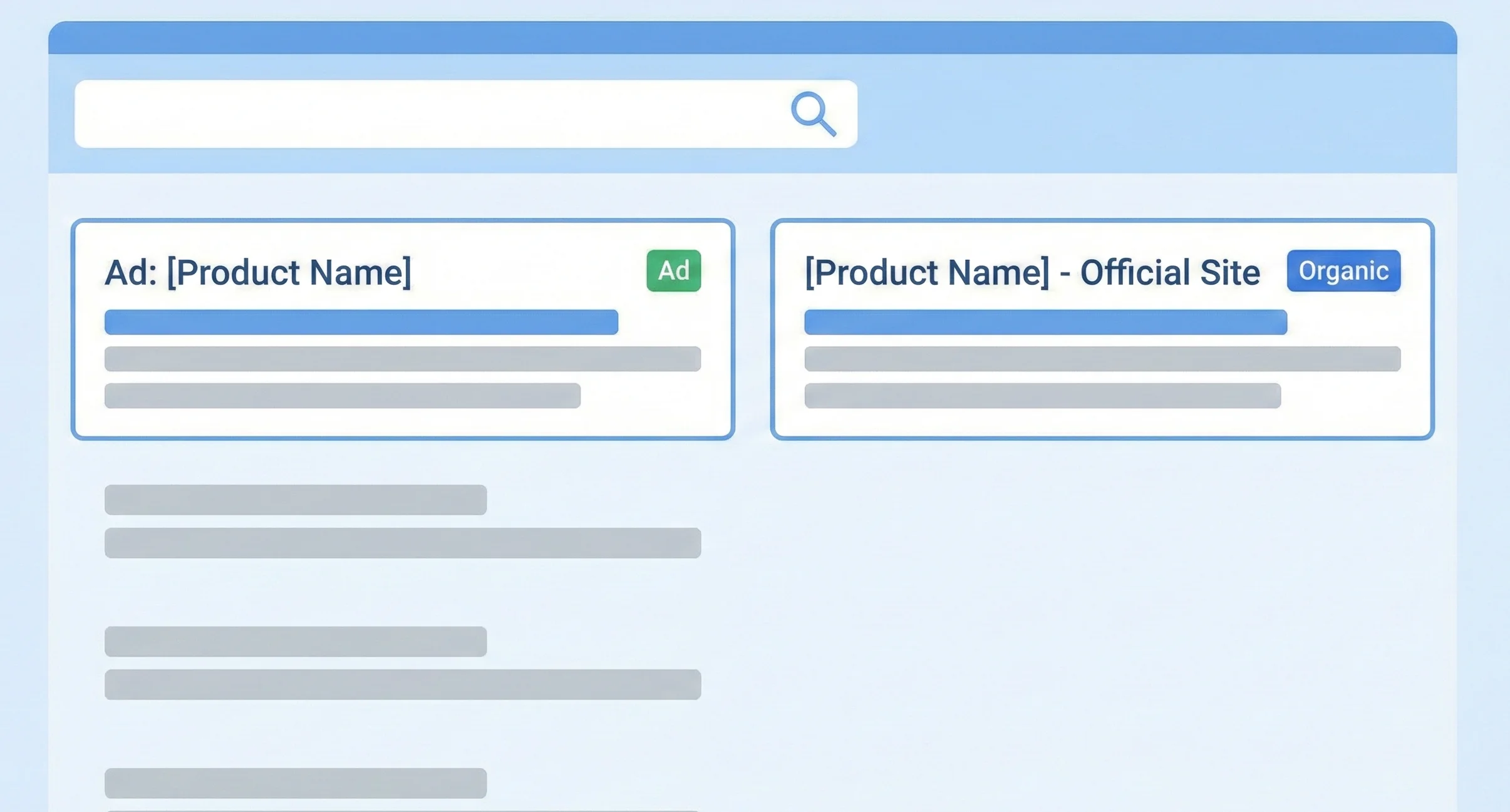
In SEO, cannibalization usually means multiple pages competing for the same keyword. In PPC vs. Organic, it means your ads and your organic listing are competing with each other for clicks and visibility.
When both channels target the same high-intent keywords without a strategy, they can create:
- Higher ad spend
- Lower organic click-through rate
- Reduced total traffic efficiency
Signs You Have PPC & Organic Cannibalization Issues
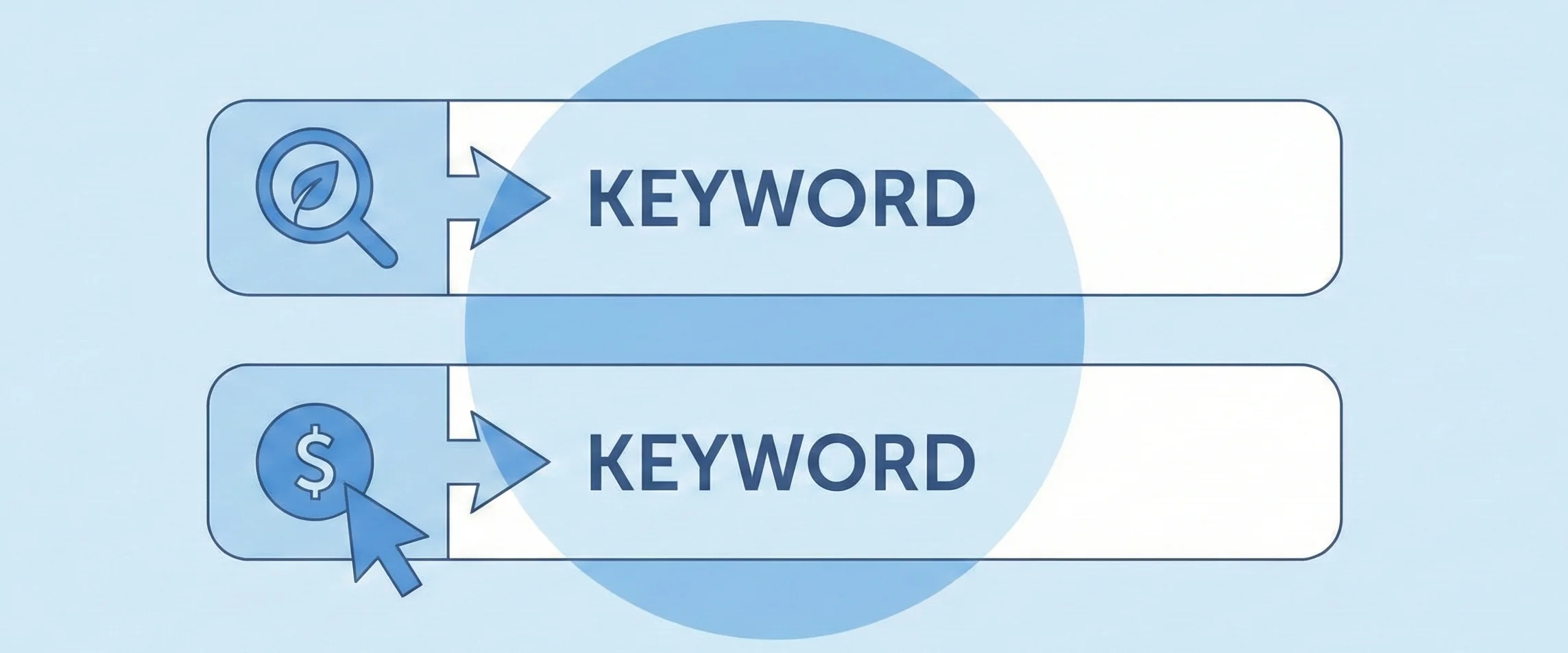
This section explains how you can identify early signals that your PPC and organic efforts are clashing.
Common signs include:
- Drop in organic clicks when PPC spend or bids increase.
- Rising CPC without improvement in conversions.
- Same landing pages competing for the same keywords in both channels.
- Branded keywords losing efficiency because PPC is capturing traffic that SEO already ranks for.
- Analytics irregularities, such as:
- Large fluctuations in impression share
- Unusual changes in organic or paid CTR
- Increased bounce rate on landing pages targeted by both PPC and SEO
When these patterns show up together, they often indicate keyword overlap issues.
Why Keyword Cannibalization Matters for Your PPC & Organic Results
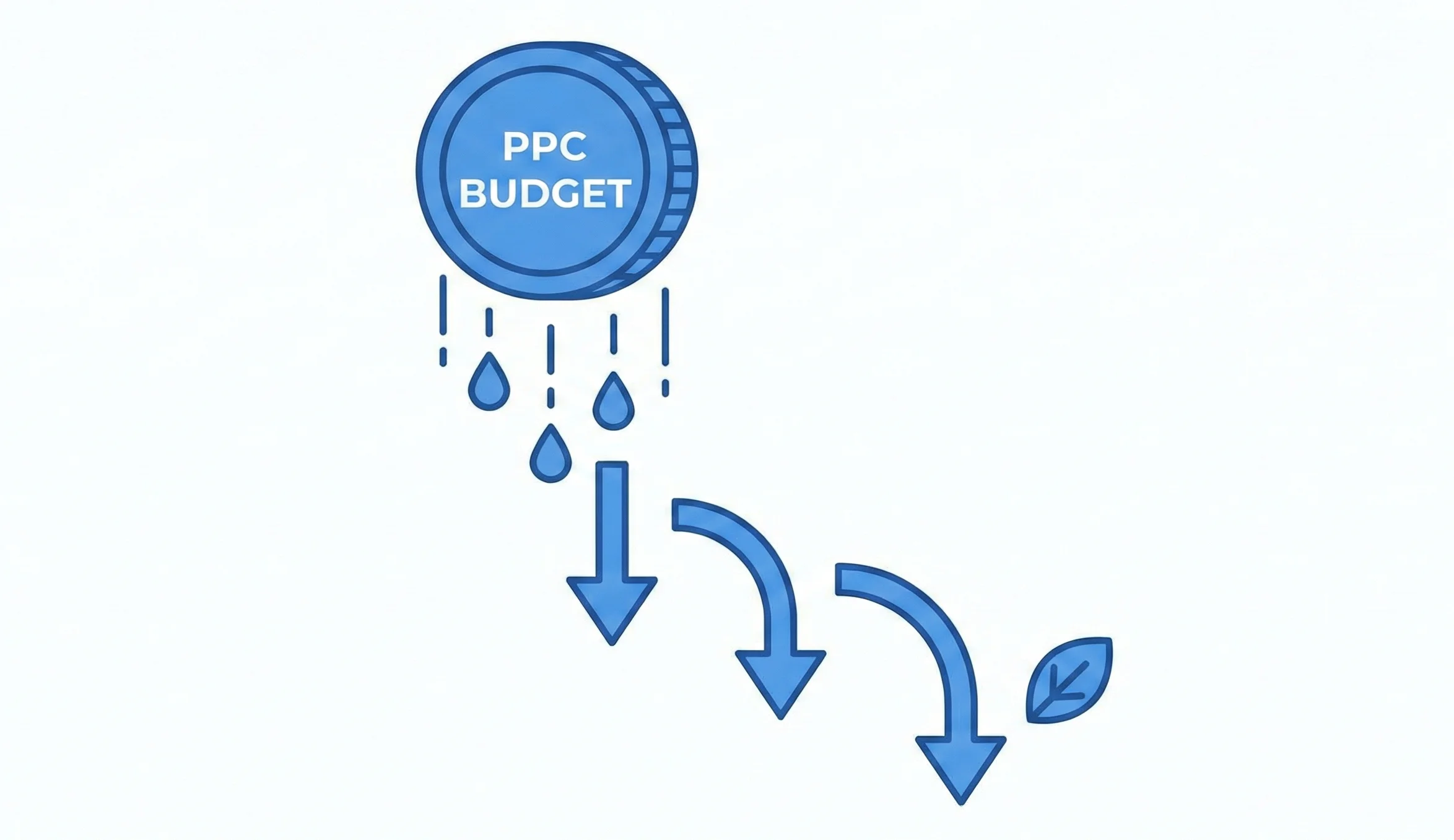
Keyword cannibalization weakens your performance across both channels. Here’s why it matters:
- Wasted ad spend: Paying for traffic you could have received for free through organic search.
- Split traffic: Users get divided between PPC and SEO listings, lowering efficiency.
- Scattered conversions: Harder to understand which channel truly drives results.
- Poor SERP strategy: Competing against yourself instead of controlling multiple positions intentionally.
- Unclear performance data: Makes optimization difficult because PPC and SEO interfere with each other’s metrics.
Common Causes of PPC & Organic Keyword Cannibalization
Keyword overlap often happens unintentionally. These are the most common causes:
- Lack of communication between PPC & SEO teams Teams work in silos and target the same keywords unknowingly.
- Targeting the same keyword groups Both channels chase the same head terms without a strategy for intent.
- Overbidding on branded search terms PPC may capture clicks that SEO could have secured for free.
- Using the same landing page Makes it difficult for Google to understand channel-specific intent.
- Broad match campaigns pulling SEO-targeted queries Broad match often triggers irrelevant or overlapping queries.
- No keyword ownership system Without rules, both teams prioritize the same keywords.
- Automated bidding strategies Algorithms may over-target keywords already strong in organic results.
How To Identify Keyword Cannibalization Between PPC & Organic
Finding cannibalization requires analyzing PPC and SEO data together.
1. Use PPC Data Sources
- Search Terms Report Shows what users actually searched before clicking your ads.
- Impression Share Helps compare visibility between paid and organic listings.
- Auction Insights Reveals how aggressively your ads compete for certain keywords.
2. Use Organic SEO Tools
- Google Search Console Check impressions, clicks, and CTR for key queries.
- SERP Coverage & Ranking Overlap Identify keywords where paid and organic listings appear together.
- Landing Page-Level Keyword Mapping Helps determine whether SEO pages conflict with PPC landing pages.
3. Combined Analysis (PPC + SEO)
- Compare PPC spend vs. organic traffic changes.
- Overlay conversion attribution across channels.
- Map keywords by intent:
- Informational → SEO priority
- Transactional → PPC priority
This combined view gives a clearer picture of overlap and inefficiency.
How To Avoid Keyword Cannibalization Between PPC & Organic
1. Create a Clear Keyword Ownership Framework
A keyword ownership system ensures each channel gets specific responsibilities.
- Assign PPC vs. SEO priority keywords
- Divide keywords based on user intent
- Set rules for branded, non-branded, and competitor terms
A clear map prevents unintentional overlap.
2. Align Campaign Goals Between PPC & SEO Teams
Both teams must work toward shared objectives.
- Decide when PPC supports organic growth (e.g., new pages).
- Decide when organic takes the lead (e.g., strong ranking keywords).
- Use shared KPIs such as:
- CPA
- ROAS
- Organic conversions
Alignment improves both efficiency and strategy.
3. Optimize Landing Pages for Each Channel
Paid and organic traffic should not always lead to the same page.
- Create separate landing pages when needed
- Tailor content for each keyword group
- Match messaging to user intent
This helps search engines clearly understand which channel the page supports.
4. Adjust Bidding Strategy to Reduce Overlap
Smart bidding adjustments can minimize conflict.
- Reduce bids on keywords with strong organic positions
- Add negative keywords where needed
- Pause low-ROI keywords that perform better organically
This ensures PPC spend goes toward areas where it adds value.
5. Coordinate Content Strategy with Paid Search Strategy
Cross-collaboration improves performance:
- Use PPC data to identify keyword gaps in SEO
- Use SEO data to eliminate low-performing PPC keywords
- Build long-tail organic content to reduce PPC pressure
This creates a balanced, data-driven approach.
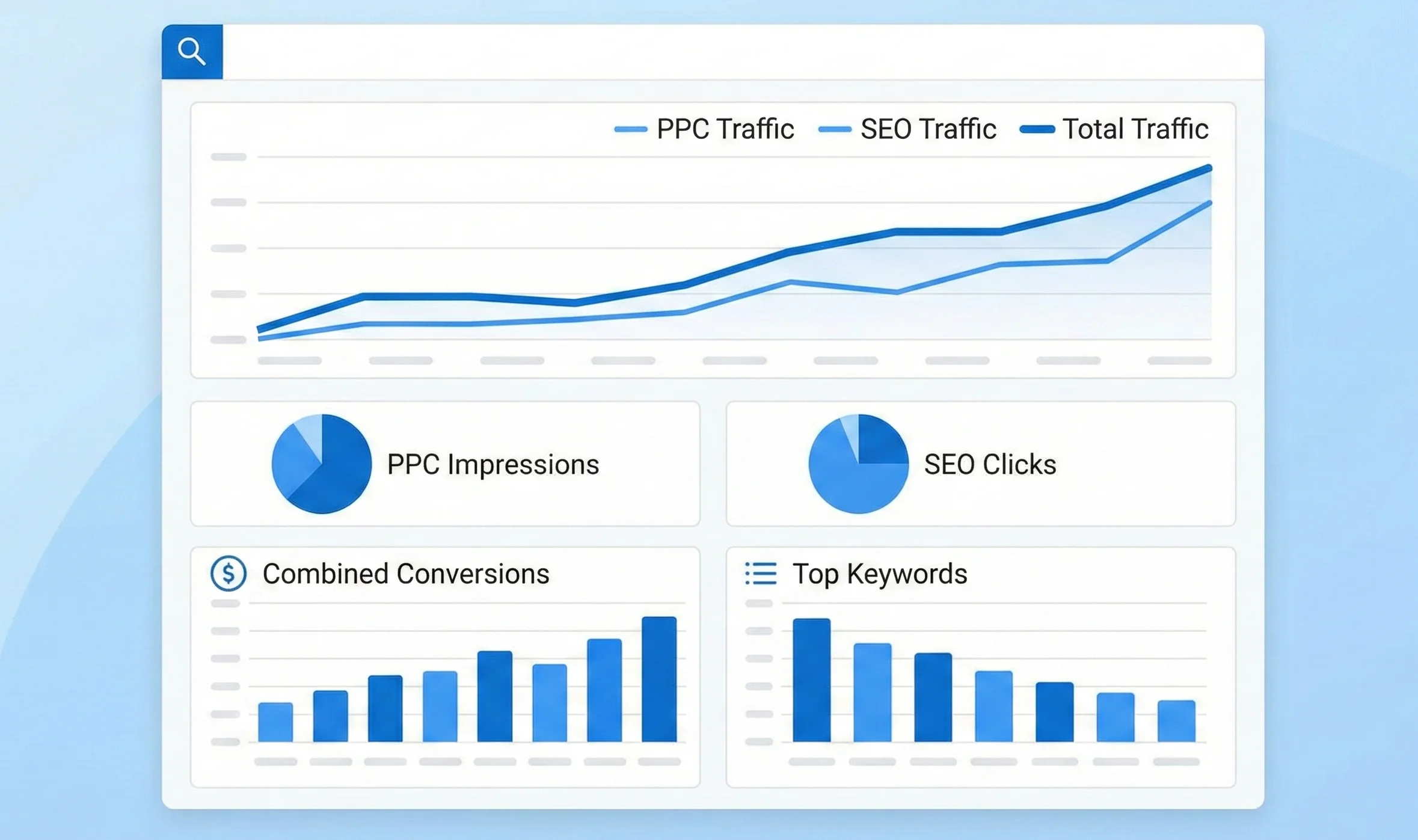
6. Use Shared Dashboards to Monitor Overlaps
Monitoring reduces long-term issues.
- Combine data from Google Ads + GSC + Analytics
- Set alerts for organic drops when PPC spend rises
- Monitor performance at the landing-page level
A shared dashboard ensures both teams stay aligned.
When Cannibalization Can Be a Good Thing
Not all cannibalization is harmful—some situations benefit from dual visibility.
- Protecting branded searches from competitor ads
- Dominating the SERP intentionally for high-value keywords
- Supporting new product or campaign launches
- High-commercial intent searches where both channels perform strongly
In these cases, appearing twice on the SERP can increase trust and conversions.
Best Practices for Balancing PPC & Organic Without Conflict
Here are strategic best practices to manage both channels smoothly:
- Use data-driven keyword grouping
- Hold monthly sync meetings between PPC & SEO teams
- Maintain a shared keyword map
- Review PPC negative keyword lists regularly
- A/B test SERP domination strategies
- Align messaging, tone, and CTA across PPC ads and organic snippets
These practices prevent internal competition and strengthen overall results.
Tools To Help Manage PPC & Organic Cannibalization
PPC Tools
- Google Ads
- SEMrush PPC Tool
- Optmyzr
- SpyFu
These tools help track keyword overlap and optimize bidding.
SEO Tools
- Google Search Console
- Ahrefs
- SEMrush Keyword Gap Tool
- Screaming Frog
Useful for identifying ranking overlap and mapping keyword usage.
Cross-Channel Tools
- Google Analytics 4
- Looker Studio (Data Studio)
- Supermetrics
These tools help combine data from both channels for unified reporting.
Conclusion
Keyword cannibalization between PPC and organic search is common, but it is completely manageable with the right strategy. When PPC and SEO compete unnecessarily, they create inefficiencies, confusion, and wasted budgets. But when both channels work together—sharing data, aligning keywords, and coordinating goals—they increase visibility, improve conversions, and maximize ROI.
The key is not to avoid overlap entirely but to control it with intention. With proper tracking, keyword ownership, communication, and strategy, PPC and SEO can work as powerful partners rather than competitors.

Passionate about blogging and focused on elevating brand visibility through strategic SEO and digital marketing. Always tuned in to the latest trends, I’m dedicated to maximizing engagement and delivering measurable ROI in the dynamic world of digital marketing. Let’s connect and unlock new opportunities together!