

Summary
The BCG Matrix Analysis of Adidas offers a strategic understanding of how the company positions its wide product range across Stars, Question Marks, Cash Cows, and Dogs. Adidas has one of the most diverse portfolios in the global sportswear industry, spanning footwear, apparel, accessories, and specialized sporting goods. Using the BCG Matrix helps identify which of these product categories lead market growth, which maintain stable profitability, which hold potential for future development, and which struggle to remain relevant in a rapidly evolving market.
This analysis explains Adidas’s business strategy in depth by placing each product segment into the appropriate BCG quadrant and exploring why certain items perform exceptionally well while others require reinvention. With shifting market trends, technological innovation, and increasing competition from brands like Nike and Puma, understanding Adidas’s BCG Matrix becomes essential for uncovering how the brand strengthens its global presence.
In an industry as competitive as athletic sportswear and accessories, brands continually need to evaluate their product portfolios to remain profitable and relevant. Adidas, one of the world’s most iconic and influential sports brands, manages hundreds of product lines ranging from performance footwear to leisure apparel, equipment, and fashion collaborations. To make informed decisions about investment, innovation, and market positioning, companies use the BCG Matrix.
The BCG Matrix, also called the Growth–Share Matrix, is a strategic planning tool that helps organizations categorize their products based on market share and market growth. Companies like Adidas use this framework to identify strong performers, underperformers, long-term revenue drivers, and high-potential opportunities.
This detailed BCG Matrix Analysis of Adidas examines the brand’s top categories and evaluates their strategic placement within the four quadrants: Stars, Cash Cows, Question Marks, and Dogs.
Background of Adidas
Adidas, officially known as Adidas AG, is a German multinational company founded by Adolf Dassler in 1949. The brand quickly gained worldwide recognition, becoming Europe’s largest sportswear producer and the world’s second-largest after Nike. Adidas is known globally for its three-stripe trademark, a symbol that has become synonymous with quality sportswear and athletic performance.
During the 1950s, Adidas rose to fame when football players began wearing its lightweight shoes featuring screw-in cleats, which significantly improved traction and performance. Throughout the following decades, Adidas expanded its offerings to include:
- Track and running shoes
• Football, basketball, and tennis footwear
• Sports apparel
• Accessories such as hats, bags, and protective gear
By the 1960s and 1970s, Adidas had become a dominant global player in sports equipment and footwear. The 21st century saw major expansions, including fashion collaborations, sustainability initiatives, and acquisition of brands like Reebok, which broadened its market reach across lifestyle and fitness categories.
Today, Adidas remains a global powerhouse backed by strong branding, technological innovation, and collaboration with athletes, teams, and designers. This diverse portfolio makes Adidas an ideal candidate for a comprehensive BCG Matrix analysis.
What is the BCG Matrix Framework
The BCG Matrix divides business units into four categories:
1. Stars
High market share and high market growth.
Stars are industry leaders and require continuous investment but generate substantial returns.
2. Question Marks
High market growth but low market share.
These require strategic evaluation to determine whether investment can turn them into Stars or if they should be discontinued.
3. Cash Cows
High market share but low market growth.
These generate steady revenue with minimal investment and fund other segments.
4. Dogs
Low market share and low market growth.
These products show low performance and may be candidates for phase-out or repositioning.
Using this framework, the BCG Matrix Analysis of Adidas provides clarity on how Adidas allocates its resources and plans future product strategies.
Adidas BCG Matrix Overview
Adidas offers a wide range of products across footwear, apparel, accessories, and performance gear. Each of these product categories performs differently based on market demand, consumer expectations, and competition. The BCG Matrix helps summarize where each product stands in terms of strategic importance and growth potential.
Stars of Adidas
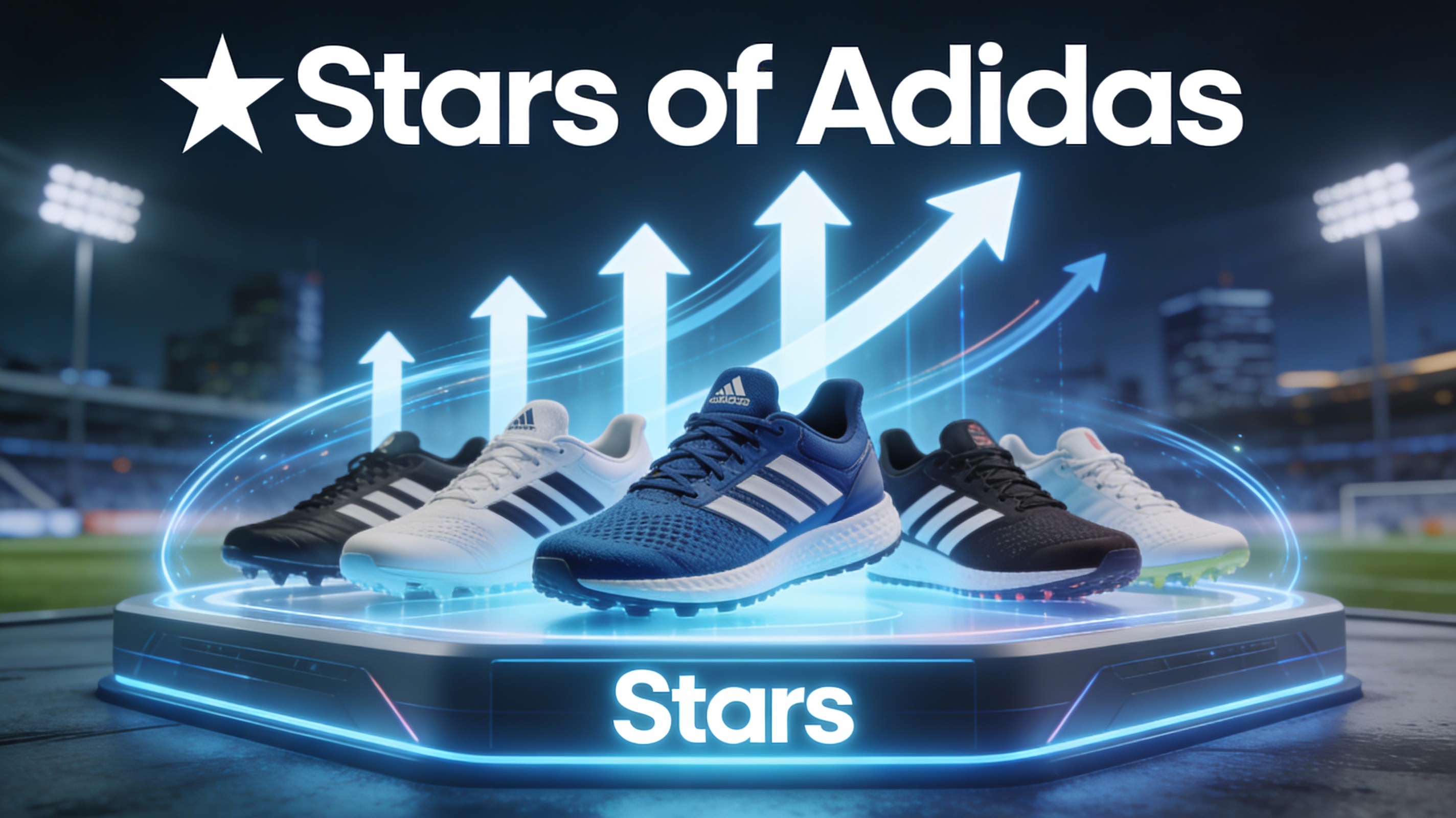
Stars represent strong-performing products with both high market share and high market growth. These are the most valuable segments in the company’s portfolio.
1. Adidas Core Footwear Line
Adidas’s footwear division, particularly performance shoes for running, football, and lifestyle use, is one of the strongest segments in the sportswear industry. These shoes incorporate technologies such as:
- Boost cushioning
• Primeknit material
• Lightweight breathable design
• Enhanced sole traction
The footwear market continues to grow due to rising health consciousness, increasing interest in fitness, and the popularity of athleisure fashion.
Adidas’s strong brand recognition and innovation place its footwear line solidly in the Stars quadrant.
2. Reebok (Before Divestment)
Although Adidas sold Reebok in 2021, historically, within the Adidas group portfolio, Reebok functioned as a Star due to:
- A large share of the fitness and training market
• Strong presence in aerobic sports and gym culture
• Celebrity and athlete endorsements
Reebok’s contributions were significant when looking at the BCG Matrix Analysis of Adidas, which historically included both brands.
Question Marks of Adidas
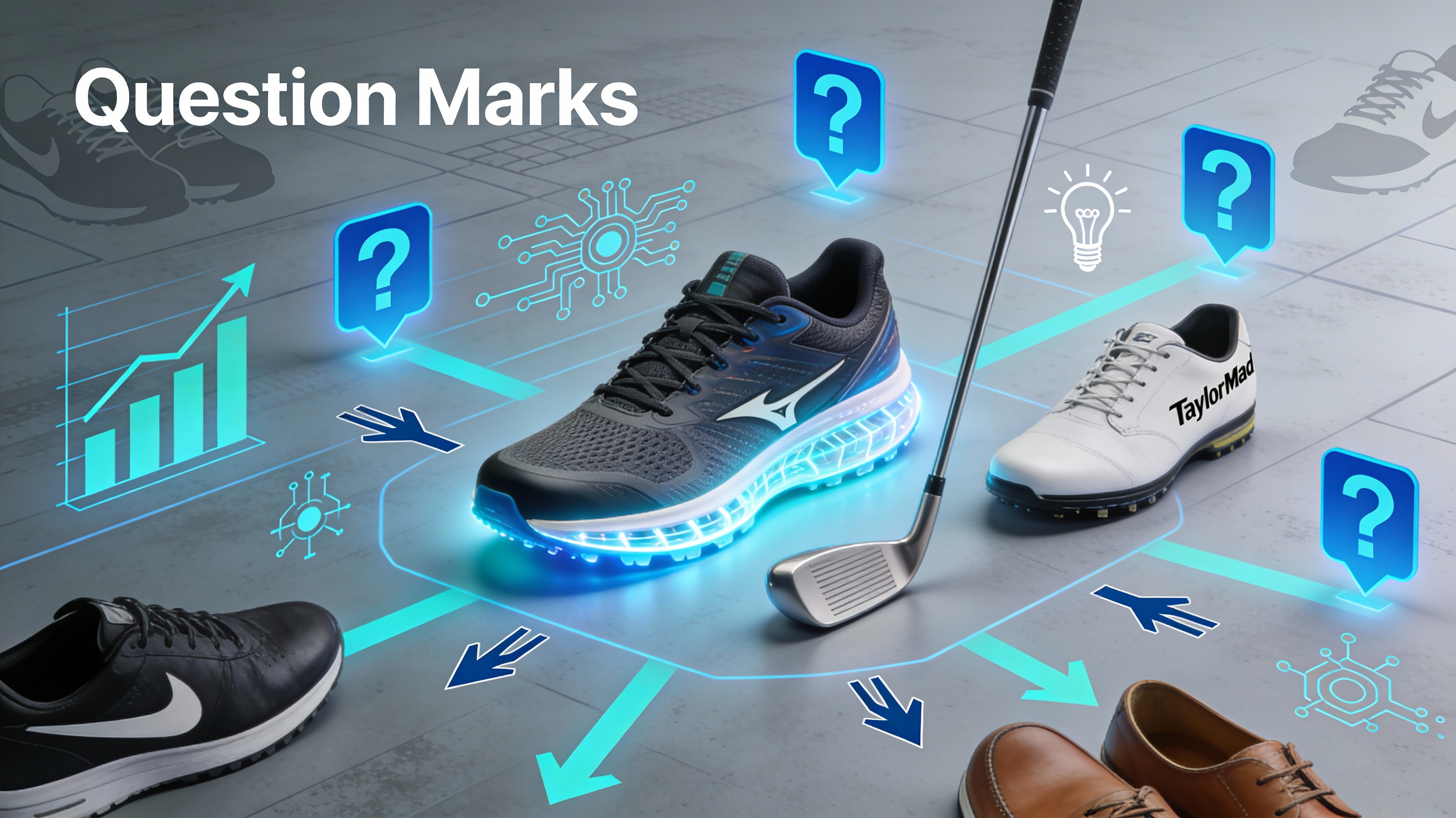
Question Marks represent product segments with high market growth but low market share. These categories could expand with the right strategy or remain small if not adequately supported.
Also Read: BCG Matrix of CEAT Tyres
1. TaylorMade (Historical Placement)
TaylorMade, which focused on golf equipment, once showed strong future potential in a growing market. While it had loyal customers, it struggled to gain dominant market share. The product category required:
- Marketing investment
• Sponsorship of golf athletes
• Innovation in materials and performance
Since the golf industry grows steadily but remains niche, TaylorMade was historically categorized as a Question Mark.
2. Rockport (Historical Placement)
Rockport specialized in casual and comfort footwear. Despite decent customer recognition, it held a small share in a highly competitive segment filled with lifestyle brands. With the right strategic investment and differentiation, it had the potential for growth but faced challenges.
Adidas eventually divested both TaylorMade and Rockport, indicating that Question Marks are often reviewed for long-term sustainability.
Cash Cows of Adidas

Cash Cows hold high market share in categories with slow or stable growth. These products offer consistent revenue and do not require heavy reinvestment.
1. Adidas Apparel (Sports & Lifestyle Clothing)
Adidas’s apparel division is a major Cash Cow. This category includes:
- Jerseys
• Track suits
• Sports bras
• T-shirts
• Compression wear
• Leisurewear
Though the global apparel market grows steadily, it is not a high-growth sector compared to footwear. However, Adidas enjoys strong brand loyalty and market share.
Reasons apparel acts as a Cash Cow:
- Established customer base
• Wide global distribution
• Strong brand associations with athletes and teams
• Reliable year-round sales
Apparel revenue helps fund innovation in higher-growth areas like footwear and performance technology.
Dogs of Adidas
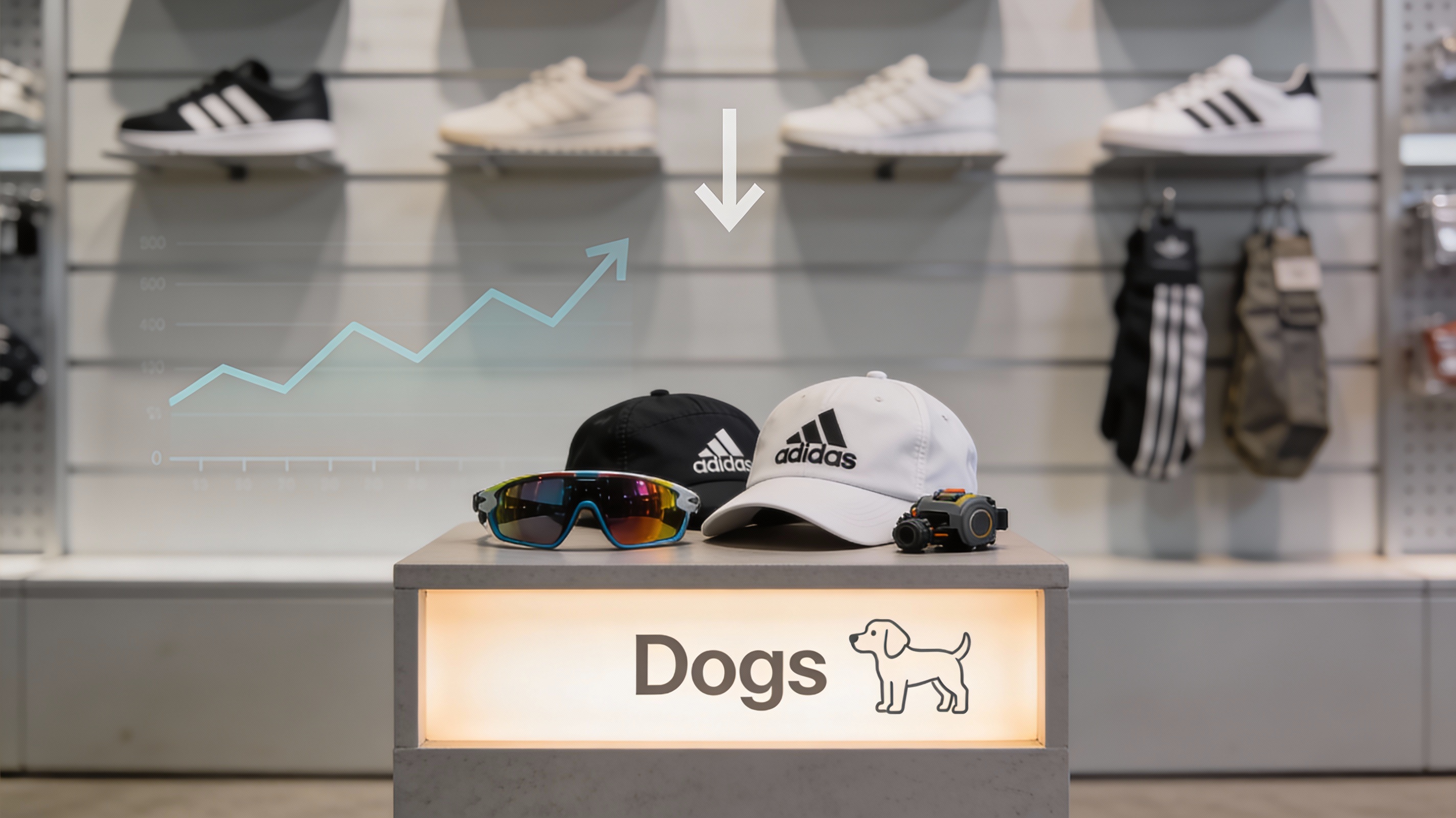
Dogs represent products with low market growth and low share. They typically struggle to contribute significantly to the company’s revenue.
1. Sunglasses
Adidas’s eyewear line competes in a saturated market dominated by specialized brands. Sunglasses tend to have low profit margins and minimal brand-driven demand. Consumers often prefer premium optical brands or inexpensive alternatives.
2. Hats and Accessories
Hats, caps, and small accessories also fall into the Dogs category. Though Adidas sells these items worldwide, they do not:
- Create high demand
• Drive significant profit
• Compete strongly against specialized or fashion-focused brands
However, Adidas continues to produce them because:
- They support brand visibility
• They provide a complete product ecosystem
• They help maintain customer loyalty through affordable items
Even if these products only break even, they serve a strategic branding purpose.
Key Takeaways from the BCG Matrix Analysis of Adidas
- Adidas continues to lead through strong-performing Stars such as performance footwear.
• Cash Cows like apparel provide consistent revenue to support investment in high-growth segments.
• Question Marks require targeted strategies to determine whether they should be grown or divested.
• Dogs, though low-performing, can serve branding or ecosystem purposes.
• The BCG Matrix helps Adidas evaluate which products to prioritize, improve, maintain, or discontinue.
• Adidas’s ability to innovate, partner with athletes, and expand into new markets ensures its strategic resilience.
Conclusion
The BCG Matrix Analysis of Adidas highlights the strategic distribution of the company’s product portfolio across the four quadrants. Adidas benefits from strong Stars, such as its performance footwear line, which continues to dominate high-growth markets. The company’s apparel category provides essential financial support as a Cash Cow, enabling reinvestment into innovative technologies.
While Question Marks like TaylorMade and Rockport once showed growth potential, Adidas ultimately divested them, demonstrating the importance of continuous evaluation. Finally, Dogs such as sunglasses and hats may not generate major profits but contribute to brand presence.
The BCG Matrix provides Adidas with a clear framework to analyze product performance, allocate resources effectively, and plan long-term strategies in a constantly evolving sportswear industry.
FAQs
What is the purpose of the BCG Matrix Analysis of Adidas?
It helps categorize Adidas’s product portfolio into Stars, Cash Cows, Question Marks, and Dogs to understand performance and strategic priorities.
Why is Adidas footwear considered a Star?
It dominates market share in a fast-growing athletic footwear industry and consistently leads in innovation.
What makes Adidas apparel a Cash Cow?
It has high market share but exists in a slow-growth industry, generating steady revenue with minimal investment.
Why are sunglasses and hats considered Dogs?
They have low demand, low growth, and minimal competitive advantage in the accessories market.
How does the BCG Matrix help Adidas strategically?
It guides decisions on investment, divestment, innovation, and resource allocation across product categories.