


Many businesses invest months into SEO only to feel stuck—optimizing pages, publishing content, and building links, yet seeing little to no growth. This frustration usually stems from focusing on shortcuts or fragmented tactics rather than following a valid white hat SEO strategy aligned with how Google actually ranks websites.
White hat SEO is not about tricking algorithms. It’s about building a website that deserves to rank by delivering relevance, quality, usability, and trust. When executed correctly, white hat techniques don’t just improve rankings—they create sustainable organic growth that compounds over time.
This guide breaks down 8 proven white hat SEO techniques that can realistically double, triple, or even multiply your search traffic when applied consistently.
How Google Determines Search Rankings
Before diving into techniques, it’s important to understand how Google evaluates websites.
Google’s ranking system uses multiple algorithms designed to deliver the most helpful results for every search. These systems analyze a wide range of signals, including:
- The meaning behind the search query
- Relevance of webpages to the query
- Content quality and expertise
- Page usability and performance
- Context such as location, device, and user preferences
The importance of each factor changes depending on the type of search. For time-sensitive topics, freshness matters more. For informational queries, authority and trust play a larger role.
To ensure consistency, Google also relies on human quality raters who evaluate search results using detailed guidelines focused on page quality and user satisfaction.
When your SEO efforts align with these core principles, you are following a valid white hat SEO strategy that stands the test of time.
The Five Core Factors That Influence Top Rankings
At a high level, Google evaluates search results using five key elements:
- Meaning of the query
- Relevance of the content
- Quality and depth of information
- Usability of the page
- Context and settings
Every technique discussed below supports one or more of these factors.
1. Mobile-First Optimization
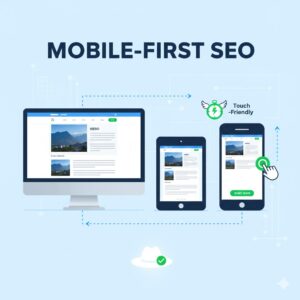
Mobile-first SEO is no longer optional—it is foundational.
Today, most searches happen on mobile devices, and Google primarily evaluates the mobile version of your website when determining rankings. If your site does not perform well on smartphones, your visibility will suffer regardless of how strong your content is.
A mobile-first approach focuses on:
- Responsive design that adapts to all screen sizes
- Readable text without zooming
- Easily clickable buttons and links
- Fast loading times on mobile networks
Mobile usability issues can silently hold your site back. Poor layout, overlapping elements, or slow loading pages frustrate users and increase bounce rates.
A valid white hat SEO strategy ensures that mobile users receive the same quality experience as desktop visitors—if not better.
2. Claim and Optimize Your Business Listing

For businesses that serve specific locations, optimizing a business listing is one of the fastest white hat wins available.
A properly optimized business profile allows your brand to appear in local search results, map listings, and location-based queries. This improves visibility exactly when users are searching with intent to visit or contact a business.
Key optimization elements include:
- Accurate business name, address, and phone number
- Updated business hours
- Relevant categories
- High-quality images
- Genuine customer reviews
Local relevance has become increasingly important as Google improves its ability to deliver hyper-local results. Surprisingly, many businesses still fail to claim or fully optimize their listings, making this an overlooked yet powerful valid white hat SEO strategy.
3. Improve Page Experience
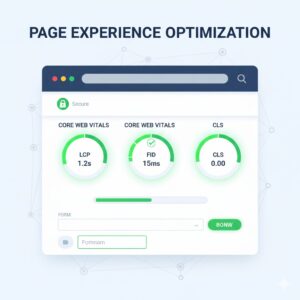
Page experience measures how users perceive interacting with a webpage beyond just the content.
It includes signals related to:
- Page loading speed
- Interactivity
- Visual stability
- Mobile-friendliness
- Secure browsing
- Non-intrusive layouts
Page experience does not override relevance, but when multiple pages offer similar information, experience often becomes the deciding factor.
In simple terms, if your page loads faster, feels smoother, and is easier to use than competitors, it gains an edge.
A white hat approach prioritizes user satisfaction over manipulation—exactly what page experience is designed to reward.
4. Focus on User Experience (UX)

User experience goes beyond performance metrics. It’s about how users feel when navigating your website.
A strong UX strategy begins with understanding user intent. Visitors should be able to:
- Instantly understand what a page offers
- Navigate easily without confusion
- Find information quickly
- Feel confident and engaged
Good UX reduces friction. Bad UX increases abandonment.
What separates high-performing websites from average ones is testing. Assumptions about layout, design, and structure are often wrong. A/B testing allows data—not opinions—to guide decisions.
Optimizing UX is a long-term investment and a critical component of any valid white hat SEO strategy.
5. Do In-Depth Keyword Research
Keyword research is still essential—but it has evolved.
Modern search systems understand context, intent, and natural language rather than relying on exact keyword matches. This means keyword research must go deeper than volume numbers.
Effective keyword research now focuses on:
- Search intent behind queries
- Related topics and subtopics
- Semantic relevance
- Question-based and conversational searches
Instead of targeting a single keyword, strong SEO content addresses an entire topic comprehensively.
When keyword research aligns with real user intent, it leads to content that ranks naturally and satisfies users—hallmarks of a valid white hat SEO strategy.
6. Build a Well-Rounded Content Marketing Plan
Content remains one of the strongest ranking signals—but competition for attention is higher than ever.
Great content is not just well-written; it is useful, engaging, and relevant to a specific audience. It solves problems, answers questions, and provides value beyond surface-level explanations.
A balanced content strategy includes multiple formats, such as:
- Educational blog posts
- Visual content and original data
- Infographics and illustrations
- Videos and presentations
Content success comes from empathy. Understanding what your audience struggles with—and addressing it clearly—creates trust and authority over time.
White hat SEO favors content that genuinely helps users, not content created solely for rankings.
Also Read:BCG Matrix of Airbus [2025 Analysis]
7. Pay Attention to On-Page Optimization
On-page optimization ensures that search engines and users can clearly understand your content.
Core on-page elements include:
- Clear and descriptive page titles
- Logical header structure
- Compelling meta descriptions
- Optimized image alt text
- Clean URLs
- Strong internal linking
These elements help search engines interpret content and improve accessibility for users.
Ignoring on-page fundamentals is like building a house without clear signage—people may find it, but they won’t navigate it efficiently.
Consistent on-page optimization strengthens every other SEO effort and reinforces a valid white hat SEO strategy.
8. Link Building That Amplifies Everything Else
Links remain a strong ranking signal—but only when earned the right way.
White hat link building focuses on relevance, editorial judgment, and value. High-quality links come from websites that choose to reference your content because it is useful, authoritative, or unique.
One effective approach is creating resource-driven content that naturally attracts citations. Resource hubs, guides, and original research not only earn links but also build credibility.
Manipulative link schemes may offer short-term gains, but they undermine long-term growth. Sustainable link building supports trust, authority, and visibility—all pillars of white hat SEO.
How These Techniques Work Together
SEO is not about isolated tactics. Each of these techniques reinforces the others.
- Mobile optimization improves UX
- UX increases engagement
- Engagement supports rankings
- Content attracts links
- Links strengthen authority
When executed together, they form a system—not a checklist.
This holistic approach is what turns consistent effort into exponential organic growth.
Conclusion
There is no single trick that guarantees top rankings. Organic search growth happens through small, intentional improvements made consistently over time.
By focusing on these eight techniques, you align your website with how Google evaluates quality, relevance, and usability. More importantly, you create a better experience for real users.
A valid white hat SEO strategy is not about chasing algorithms—it’s about earning visibility by delivering value.
When you commit to doing SEO the right way, traffic growth becomes not just possible, but predictable.
FAQs
What is white hat SEO?
White hat SEO refers to ethical optimization practices that follow search engine guidelines and focus on user experience, quality content, and long-term growth.
How long does white hat SEO take to show results?
Results typically appear within a few months, depending on competition, website health, and consistency. Growth compounds over time.
Can white hat SEO really double traffic?
Yes. When executed properly and consistently, white hat SEO can significantly increase organic traffic without risking penalties.
Is mobile optimization still important?
Absolutely. Mobile performance is a core factor in rankings and user satisfaction.
Are backlinks still necessary?
Yes, but quality matters more than quantity. Relevant, earned links provide authority and trust signals.