
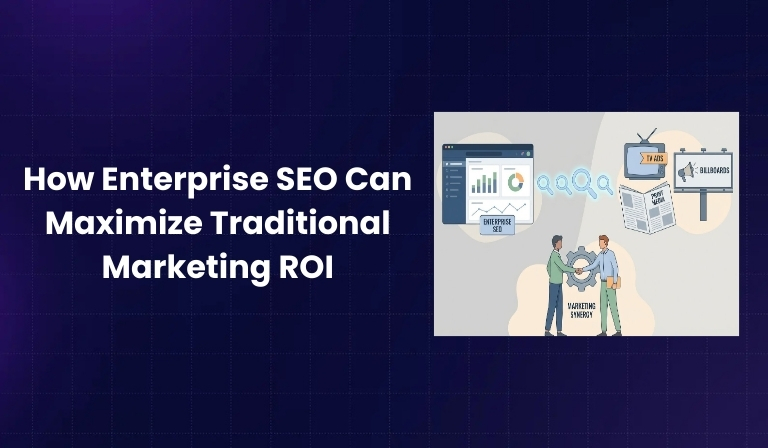

Marketing leaders today are under constant pressure to justify spending with measurable returns. Traditional marketing channels—such as print ads, TV commercials, radio spots, and events—still play a major role in building brand awareness and trust. However, these channels often struggle to clearly show how they contribute to revenue.
Enterprise SEO helps solve this problem. It does not replace traditional marketing. Instead, it strengthens it by capturing demand created by offline campaigns, extending their impact, and adding measurable data layers. When enterprise SEO and traditional marketing work together, businesses can improve visibility, attribution, and long-term ROI.
This blog explains how enterprise SEO supports traditional marketing efforts and helps organizations extract more value from their existing marketing investments.
What Is Enterprise SEO?
Enterprise SEO refers to search engine optimization practices designed for large organizations with complex websites, multiple products or services, and diverse stakeholders. It focuses on scale, consistency, and governance rather than isolated optimizations.
Definition of Enterprise SEO
Enterprise SEO is the strategic management of organic search visibility across large websites and multiple business units. It involves aligning SEO with business goals, marketing campaigns, and organizational processes.
Unlike small-scale SEO, enterprise SEO must account for thousands or even millions of pages, multiple regions, and strict brand guidelines.
Key Characteristics of Enterprise SEO
Enterprise SEO typically includes the following characteristics:
- Large and complex website structures with many templates
- Coordination across marketing, IT, product, PR, and leadership teams
- Use of advanced SEO platforms and automation tools
- Standardized processes for content, technical changes, and governance
- Focus on long-term demand growth rather than short-term rankings
Understanding Traditional Marketing ROI
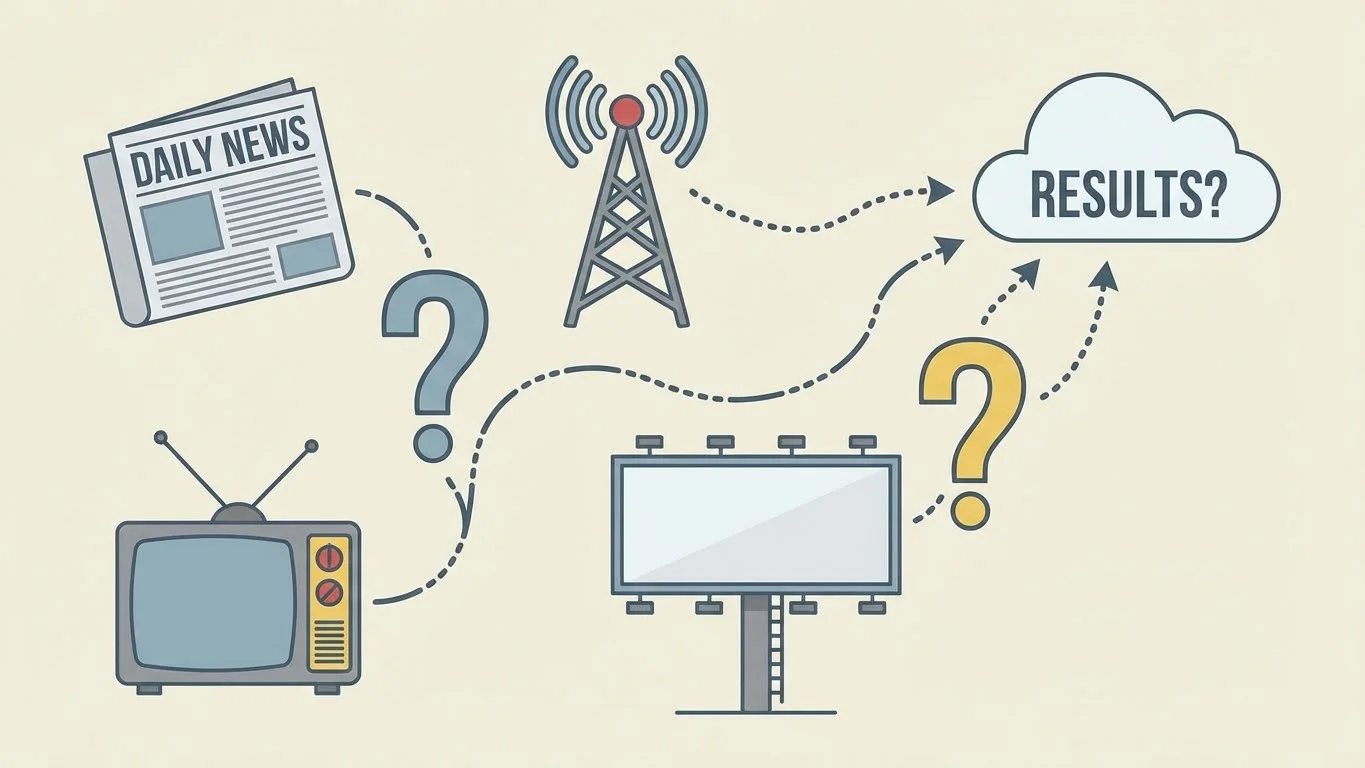
Traditional marketing ROI measures the return generated from offline marketing activities. While these channels are effective at building awareness, they are often difficult to track accurately.
What Counts as Traditional Marketing?
Traditional marketing usually includes offline channels that do not rely on digital interactions as their primary medium:
- Print advertising such as newspapers, magazines, flyers, and brochures
- Television and radio advertisements
- Outdoor advertising including billboards and transit ads
- Events, trade shows, sponsorships, and exhibitions
Common ROI Challenges in Traditional Marketing
Measuring ROI in traditional marketing is challenging for several reasons:
- Limited tracking options compared to digital channels
- High upfront costs with delayed or unclear returns
- Short campaign lifespans once ads stop running
- Difficulty linking exposure directly to sales or conversions
Why Traditional Marketing ROI Often Plateaus
Traditional marketing often reaches a performance ceiling when used alone. While it builds awareness, it struggles to drive consistent, measurable growth over time.
Offline channels mainly rely on one-way communication. Audiences see or hear the message but may not act immediately. Additionally, traditional campaigns are not easily discoverable after they end, which limits long-term value.
Without data feedback loops, marketers also lack insight into which messages resonate most, making optimization difficult.
How Enterprise SEO Complements Traditional Marketing
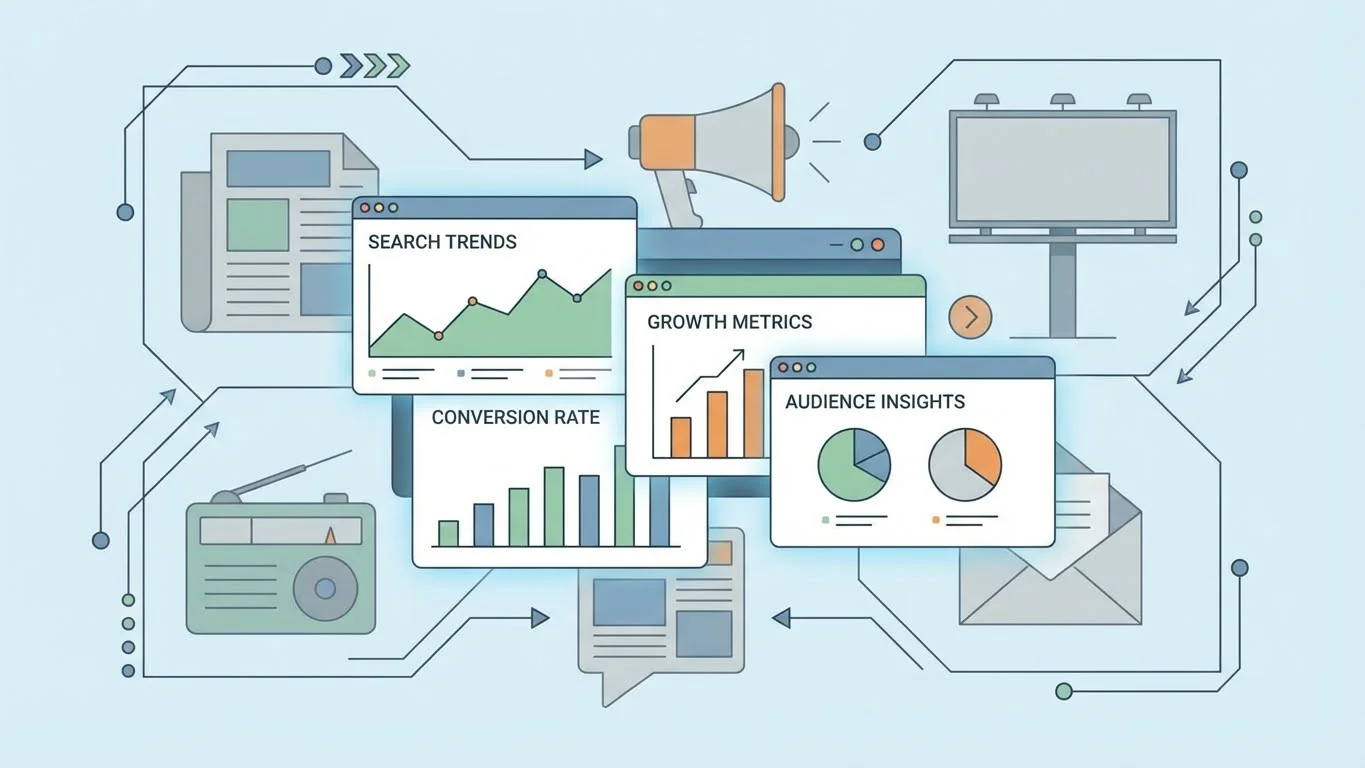
Enterprise SEO fills the gaps left by traditional marketing by capturing intent, extending reach, and enabling measurement.
SEO as a Demand Capture Channel
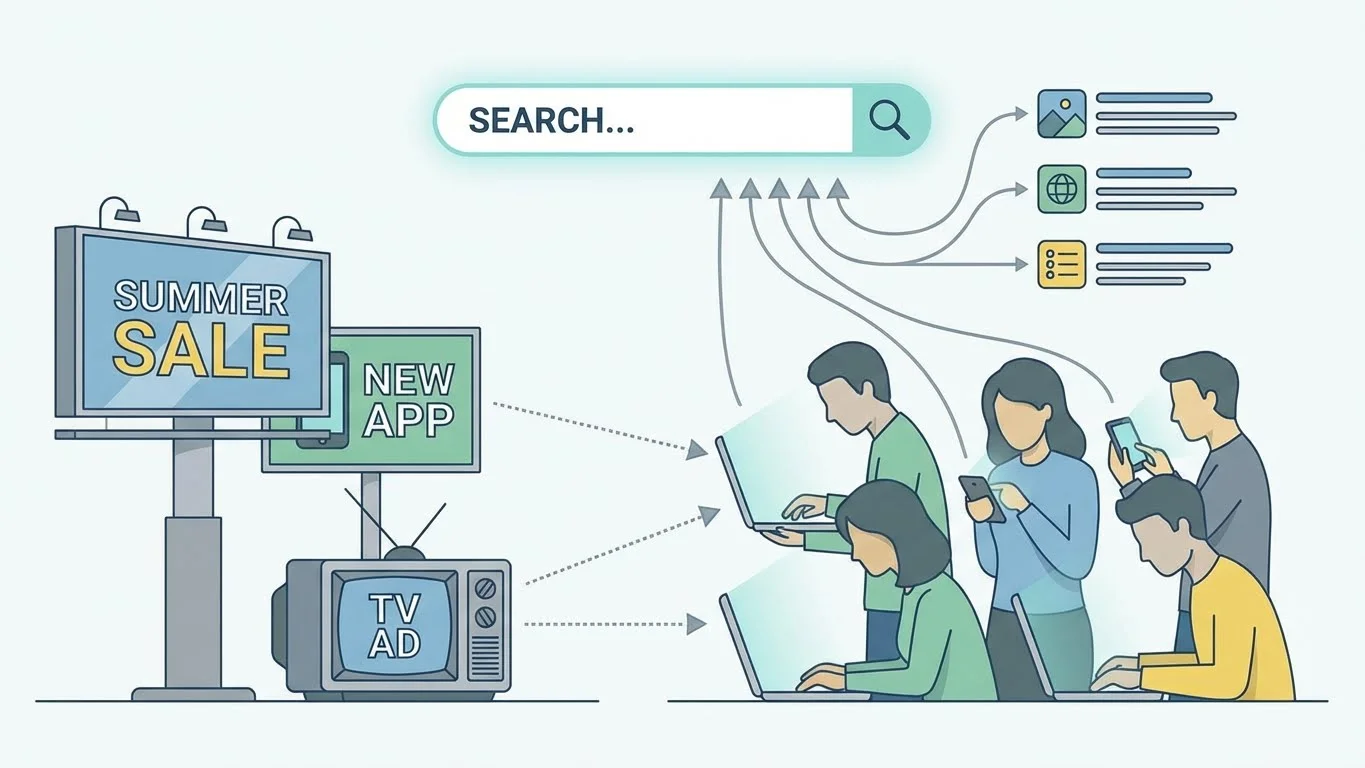
Offline campaigns often spark curiosity. People respond by searching online for the brand, product, or message they encountered.
Enterprise SEO helps capture this demand by ensuring:
- Brand and campaign-related searches lead to relevant pages
- Search results reinforce the messaging seen offline
- Interested users find accurate and helpful information
This ensures that offline awareness turns into measurable online engagement.
SEO as a Measurement Layer
Enterprise SEO provides data that traditional marketing alone cannot offer. Search trends, organic traffic, and engagement metrics help marketers understand how offline campaigns influence behavior.
SEO data makes it possible to connect brand exposure with measurable actions such as site visits, content engagement, and assisted conversions.
Key Ways Enterprise SEO Maximizes Traditional Marketing ROI
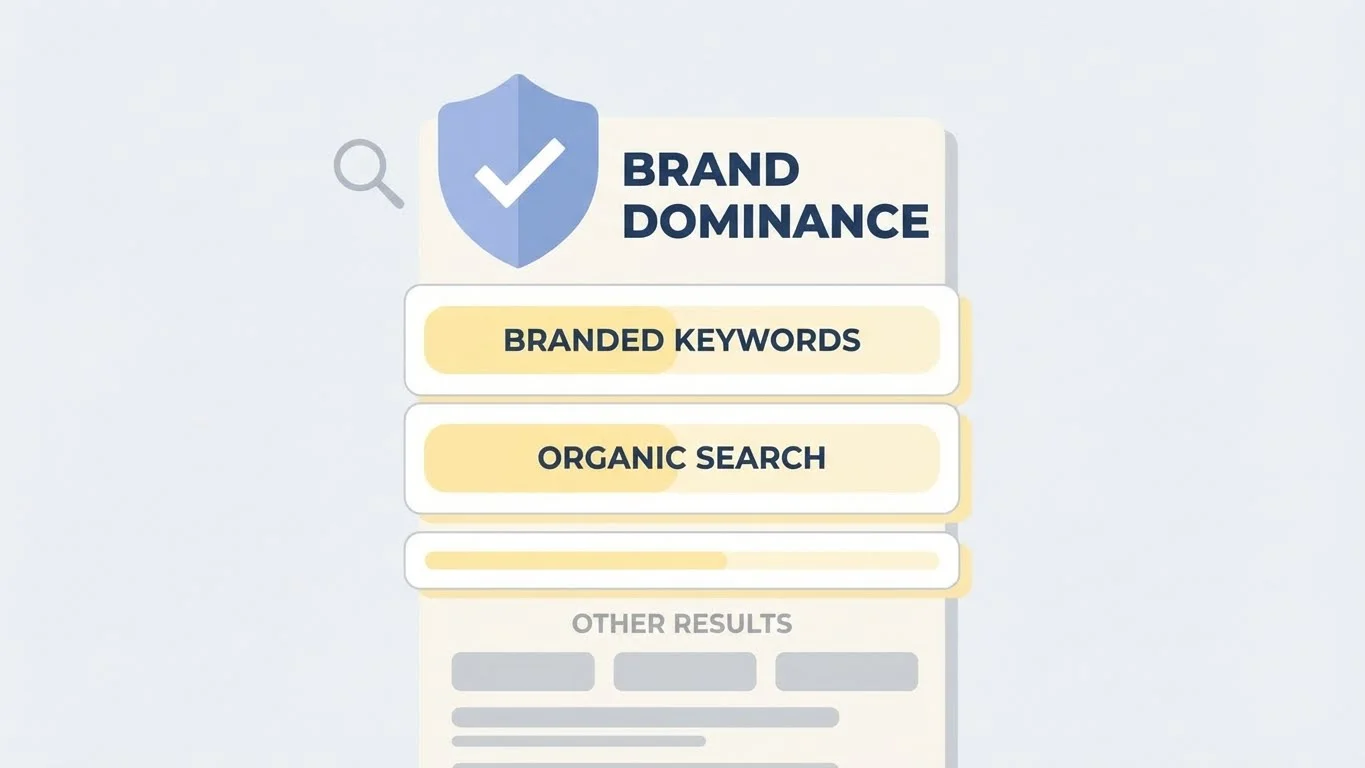
Enterprise SEO increases the return on traditional marketing by improving visibility, relevance, and longevity.
Improving Brand Search Visibility
Offline campaigns often increase branded searches. Enterprise SEO ensures the brand fully owns these moments of intent.
- Dominating branded search results builds trust and credibility
- Prevents competitors from capturing brand-driven searches
- Reinforces offline messaging with consistent online presence
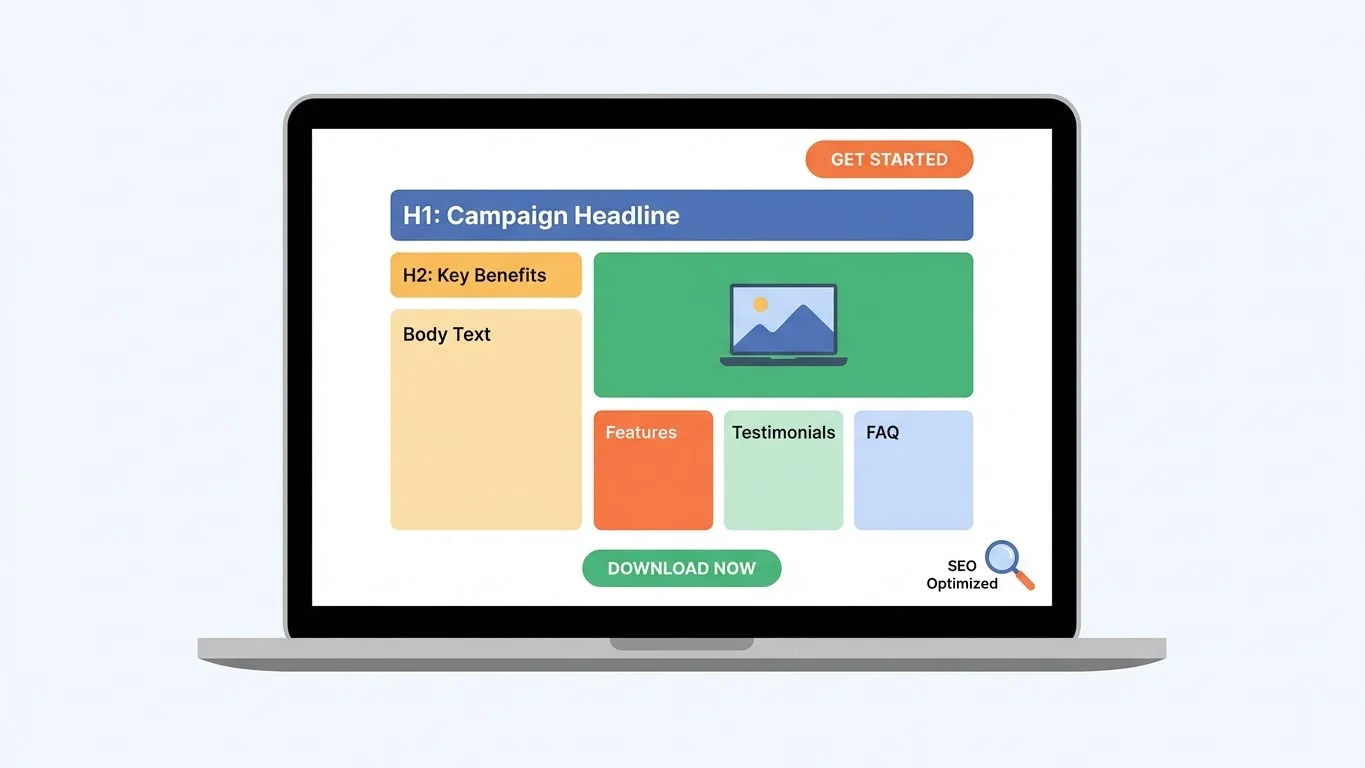
Strengthening Campaign Landing Pages
Traditional campaigns are more effective when supported by SEO-optimized landing pages.
- Pages designed around campaign themes improve relevance
- Clear messaging aligns with what users search after seeing ads
- SEO-friendly structure improves discoverability and conversions
Enhancing Local and Regional Campaign Performance
Many traditional campaigns are region-specific. Enterprise SEO supports this by optimizing location-based visibility.
- Local search optimization supports regional ads and events
- Accurate location pages improve user experience
- Consistent messaging strengthens trust across regions
Repurposing Traditional Campaign Assets for SEO
Traditional marketing assets can be transformed into long-term digital resources.
- Print content can be converted into optimized web pages
- Event materials can become searchable content hubs
- Campaign messages gain extended lifespan through organic traffic
Using Enterprise SEO Data to Optimize Traditional Marketing
Enterprise SEO does not just support campaigns—it improves future ones through insights.
Keyword & Search Trend Insights
Search data reveals how audiences react to offline marketing.
- Identifies common questions and interests after campaigns launch
- Highlights which messages drive the most curiosity
- Helps refine messaging for future traditional campaigns
Content Performance Signals
SEO performance shows which themes resonate most with audiences.
- Pages with high engagement indicate strong messaging
- Low-performing content highlights areas for improvement
- Insights help optimize creative direction and media planning
Organizational Benefits of Integrating Enterprise SEO
The impact of enterprise SEO goes beyond campaign performance and improves organizational efficiency.
Better Cross-Team Alignment
Enterprise SEO encourages collaboration across teams.
- Marketing, SEO, PR, and brand teams share common goals
- Messaging becomes consistent across offline and online channels
- Fewer silos lead to more efficient execution
Smarter Budget Allocation
SEO insights help guide investment decisions.
- Identifies which traditional channels drive real interest
- Reduces spend on low-impact campaigns
- Supports data-backed decisions for future budgets
Common Mistakes Enterprises Make When Combining SEO and Traditional Marketing
Many organizations fail to fully benefit from integration due to avoidable mistakes:
- Treating SEO as a separate digital task rather than a strategic partner
- Launching offline campaigns without SEO-ready assets
- Ignoring technical SEO issues that limit visibility
- Focusing only on short-term campaign metrics instead of long-term value
How to Build an SEO-Led Traditional Marketing Strategy
A successful integration starts with planning and alignment.
Align Campaign Planning With Search Intent
SEO should be considered before campaigns launch.
- Map campaign messages to expected search behavior
- Prepare optimized pages in advance
- Ensure consistent terminology across channels
Set Shared KPIs Across Teams
Shared metrics encourage collaboration and accountability.
- Growth in branded and non-branded search demand
- Organic traffic increases during and after campaigns
- Assisted conversions influenced by organic search
Measuring the True ROI of SEO-Enhanced Traditional Marketing
True ROI includes both immediate and long-term impact.
- Attribution models should account for organic search influence
- Brand search growth reflects rising awareness
- Long-term organic traffic shows lasting campaign value
SEO turns traditional campaigns into assets that continue delivering returns long after media spend ends.
Conclusion
Enterprise SEO is no longer optional for organizations investing heavily in traditional marketing. While offline channels build awareness, enterprise SEO captures, measures, and extends that demand.
By integrating SEO with traditional marketing, enterprises can improve visibility, gain actionable insights, and create long-term value from short-term campaigns. The result is not just better marketing performance, but a more measurable, scalable, and profitable marketing strategy overall.

Passionate about blogging and focused on elevating brand visibility through strategic SEO and digital marketing. Always tuned in to the latest trends, I’m dedicated to maximizing engagement and delivering measurable ROI in the dynamic world of digital marketing. Let’s connect and unlock new opportunities together!