


Enterprise SEO reporting is very different from regular SEO reporting. Large organizations manage thousands or even millions of pages, multiple markets, and several internal teams. In such environments, raw SEO data alone is not useful unless it is clearly organized, easy to understand, and connected to business outcomes.
This is where SEO dashboards become critical. A well-built enterprise SEO dashboard helps stakeholders understand performance, spot issues early, and make informed decisions without digging through multiple tools. In this guide, you will learn what enterprise SEO reporting is, the challenges involved, the core metrics that matter, and 10 practical tips to build effective SEO dashboards for enterprise teams.
What Is Enterprise SEO Reporting?

Enterprise SEO reporting is the process of tracking, analyzing, and presenting SEO performance data for large-scale websites and organizations. It focuses on high-volume data, long-term trends, and business-level impact rather than individual keywords or single pages.
Enterprise SEO reporting typically covers:
- Websites with large page counts
- Multiple brands, subdomains, or regions
- Cross-functional teams such as SEO, content, product, and engineering
The goal is not just to show data, but to provide insights that support strategic decisions.
Why Dashboards Matter at the Enterprise Level

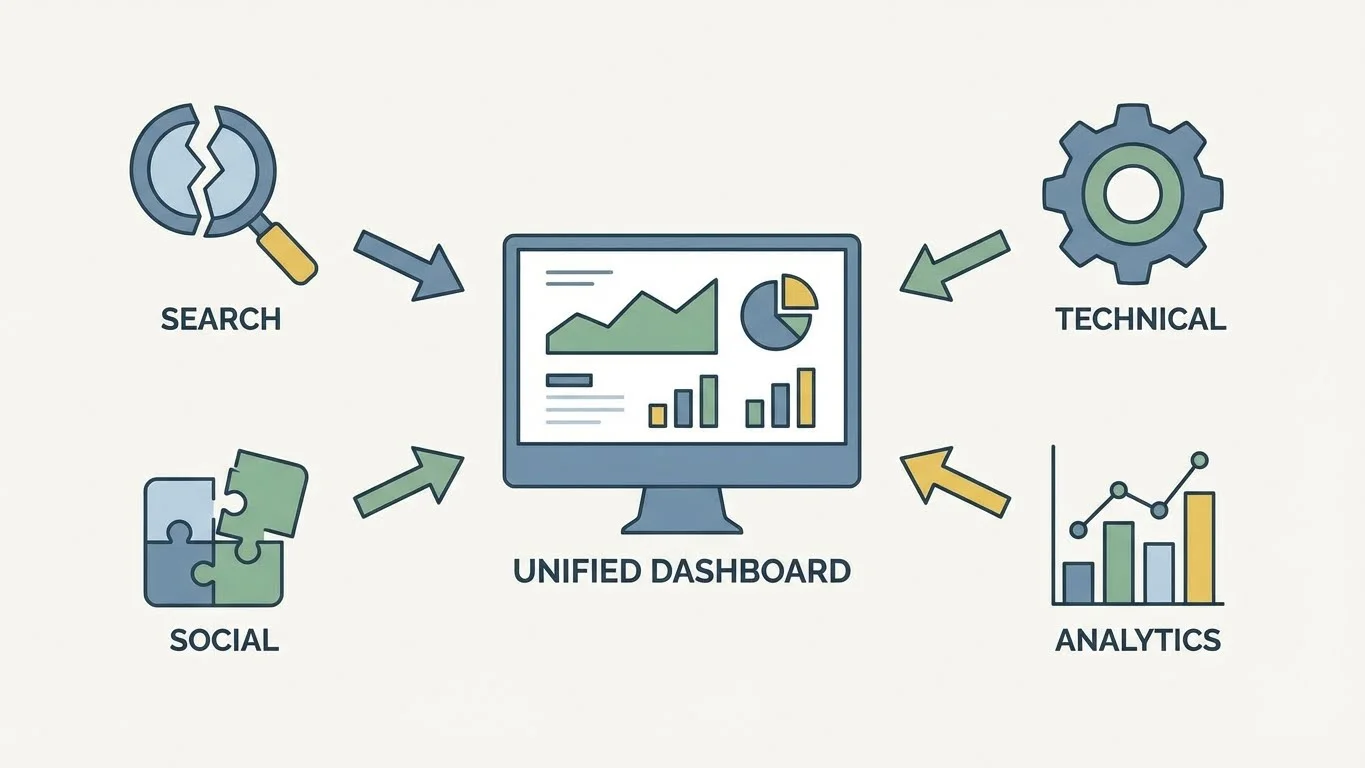
Dashboards play a central role in enterprise SEO reporting because they bring complex data into one clear view. Instead of exporting multiple reports, dashboards allow teams to monitor performance continuously.
Key reasons dashboards matter:
- They centralize data from different SEO and analytics tools
- They provide real-time or near-real-time visibility
- They help different stakeholders focus on the metrics that matter to them
Key Challenges in Enterprise SEO Reporting
Enterprise SEO reporting comes with unique challenges due to scale and complexity. Understanding these challenges helps in designing better dashboards.
Common challenges include:
- Managing large data volumes across thousands of URLs
- Aligning SEO metrics with business KPIs like revenue and conversions
- Dealing with data silos across different tools and teams
- Avoiding information overload that makes dashboards hard to use
Effective dashboards are designed to reduce these challenges rather than add to them.
Core Metrics Every Enterprise SEO Dashboard Should Track
Visibility and Performance Metrics
Visibility metrics show how well a dashboard is performing in search results over time. These metrics help measure reach and discoverability.
Important visibility and performance metrics include:
- Organic traffic trends over time
- Keyword visibility and ranking distribution
- Clicks and impressions from search results
These metrics help identify growth patterns and performance shifts.
Technical SEO Metrics
Technical SEO metrics ensure that search engines can crawl, index, and understand large websites efficiently. At the enterprise level, small technical issues can affect thousands of pages.
Key technical metrics include:
- Crawl errors and indexation status
- Core Web Vitals and page speed performance
- Server response and accessibility signals
Tracking these metrics helps prioritize technical fixes.
Business Impact Metrics
Business impact metrics connect SEO performance to real business outcomes. This is especially important for executive-level reporting.
Common business-focused metrics include:
- Conversions driven by organic search
- Revenue attributed to organic traffic
- Assisted conversions and attribution paths
These metrics help justify SEO investment and demonstrate ROI.
Stakeholder-Specific Reporting: Who Is the Dashboard For?
Enterprise SEO dashboards must serve different audiences. A single dashboard rarely works for everyone, so customization is essential.
Executive Leadership
Executive dashboards focus on high-level performance and business impact rather than detailed SEO metrics.
Executives typically need:
- Organic traffic growth trends
- Revenue and conversion impact
- ROI indicators tied to SEO efforts
The emphasis is on clarity and strategic insight.
SEO and Marketing Teams
SEO and marketing teams require actionable data to guide optimization work.
Their dashboards usually include:
- Keyword and page-level performance
- Technical health indicators
- Content and landing page insights
These dashboards support daily and weekly decision-making.
Product, Content, and Engineering Teams
Non-SEO teams need data that connects SEO to their responsibilities.
Relevant metrics include:
- Impact of product releases on organic traffic
- Content performance and engagement trends
- Technical issues affecting crawlability or speed
This helps teams collaborate more effectively.
10 Tips for Building Effective Enterprise SEO Dashboards
Tip 1: Start With Clear Business Objectives

Effective dashboards begin with a clear understanding of business goals. SEO metrics should support these goals rather than exist in isolation.
Key considerations:
- Identify what success looks like for the business
- Map SEO metrics directly to those outcomes
- Avoid tracking metrics that do not influence decisions
Tip 2: Focus on KPIs, Not Vanity Metrics
Vanity metrics can look impressive but often fail to provide real value. Enterprise dashboards should focus on KPIs that show meaningful progress.
Best practices include:
- Prioritizing metrics tied to growth and performance
- Reducing emphasis on isolated keyword rankings
- Highlighting metrics that indicate impact
Tip 3: Segment Data for Better Insights

Segmentation allows teams to understand performance at a deeper level. Without segmentation, large datasets become difficult to interpret.
Useful segmentation options include:
- Brand or subdomain
- Region or market
- Device type or page category
This makes problem-solving faster and more accurate.
Tip 4: Combine SEO and Business Data
SEO performance is most valuable when it is connected to business data. Dashboards should integrate analytics and conversion data.
Benefits of combining data:
- Clear visibility into SEO-driven revenue
- Better attribution understanding
- Stronger business alignment
Tip 5: Use Automation for Data Collection
Manual reporting is time-consuming and error-prone at scale. Automation ensures consistency and reliability.
Automation helps by:
- Reducing manual effort
- Ensuring data is updated regularly
- Allowing teams to focus on analysis instead of data gathering
Tip 6: Choose the Right Dashboarding Tool
The right tool makes a significant difference in usability and scalability. Enterprise dashboards must handle large datasets and multiple integrations.
When choosing a tool, consider:
- Integration with SEO and analytics platforms
- Scalability for large data volumes
- Customization and access controls
Tip 7: Design for Clarity and Readability
Dashboard design directly affects usability. Clear layouts help users quickly understand performance.
Design principles include:
- Logical grouping of related metrics
- Consistent labels and timeframes
- Minimal visual clutter
Tip 8: Highlight Trends, Not Just Snapshots
Single data points can be misleading. Trend-based reporting shows performance over time.
Trend-focused dashboards help:
- Identify growth or decline patterns
- Understand seasonality effects
- Support long-term planning
Tip 9: Enable Drill-Down Capabilities
High-level summaries are useful, but teams also need details. Drill-down features allow deeper analysis when needed.
Drill-down capabilities support:
- Root cause analysis
- Faster issue identification
- Better collaboration between teams
Tip 10: Review and Optimize Dashboards Regularly
Business goals and SEO priorities change over time. Dashboards should evolve as well.
Regular reviews help:
- Remove outdated metrics
- Add new KPIs as strategies change
- Keep dashboards relevant and useful
Best Practices for Maintaining Enterprise SEO Dashboards
Maintaining dashboards is just as important as building them. Consistency and accuracy are critical at scale.
Best practices include:
- Regularly validating data sources
- Defining clear metric definitions
- Setting reporting schedules for different stakeholders
These practices ensure dashboards remain trustworthy.
Common Mistakes to Avoid in Enterprise SEO Reporting
Even well-designed dashboards can fail if common mistakes are not avoided.
Frequent mistakes include:
- Reporting too many metrics without context
- Ignoring business impact and ROI
- Creating dashboards that only SEO specialists understand
Avoiding these mistakes improves adoption and effectiveness.
Conclusion
Enterprise SEO dashboards are essential tools for managing SEO at scale. When built correctly, they turn complex data into clear insights that support business decisions. By focusing on relevant KPIs, aligning with business goals, and designing for different stakeholders, organizations can create dashboards that truly drive value.
Effective enterprise SEO reporting is not about tracking everything, but about tracking what matters and presenting it in a way that enables action and long-term success.

Passionate about blogging and focused on elevating brand visibility through strategic SEO and digital marketing. Always tuned in to the latest trends, I’m dedicated to maximizing engagement and delivering measurable ROI in the dynamic world of digital marketing. Let’s connect and unlock new opportunities together!