

In today’s fast-moving digital landscape, businesses need marketing channels that deliver speed, precision, and measurable results. While organic strategies like SEO and content marketing are essential for long-term growth, they often take months to show impact. This is where PPC advertising stands out as one of the most powerful and flexible digital marketing tools available.
Pay-per-click advertising allows brands to appear instantly in front of people who are actively searching for products, services, or information. Whether you’re a B2B company, an ecommerce brand, a local business, or even a nonprofit organization, PPC offers a low-risk, high-reward way to drive traffic, leads, and sales.
In this in-depth guide, we’ll explore seven powerful benefits of using PPC advertising, explaining each point in detail so you can understand why PPC continues to be a core part of modern marketing strategies.
What Is PPC Advertising?
PPC advertising is a digital marketing model where advertisers pay a fee each time someone clicks on their ad. Instead of waiting for organic rankings to grow over time, PPC allows you to buy visibility on platforms such as search engines, display networks, video platforms, and social channels.
What makes PPC advertising especially effective is intent. In many cases, ads are shown to users at the exact moment they are searching for something specific. This intent-driven nature makes PPC one of the most efficient ways to reach potential customers who are already interested.
1. PPC Advertising Directly Contributes to Business Goals
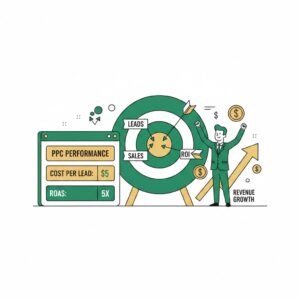
One of the biggest benefits of PPC advertising is its direct alignment with business objectives. Unlike some marketing channels that focus primarily on awareness or engagement, PPC can be built around clear, measurable goals.
With PPC, you can track almost any action that matters to your business, including:
- Lead form submissions
- Ecommerce purchases
- Phone calls
- App installs
- Newsletter sign-ups
- File downloads
- In-store visits or directions
This makes PPC highly attractive to decision-makers because it connects marketing activity directly to revenue and growth. You can measure cost per lead, cost per acquisition, and return on ad spend with precision.
For organizations that need to justify budgets and prove ROI, PPC advertising offers transparency that few other channels can match.
2. PPC Tracks Users Across the Entire Marketing Funnel

Another powerful advantage of PPC advertising is the ability to track user behavior from the first interaction to the final conversion. From the moment someone sees an ad to the moment they complete a desired action, PPC platforms provide detailed insights into the customer journey.
You can see:
- Which keywords triggered the ad
- Which ad copy earned the click
- Which landing page performed best
- How users behaved after clicking
- Where drop-offs occurred in the funnel
This level of visibility allows marketers to continuously refine campaigns, reduce wasted spend, and improve conversion rates.
Traditional marketing methods such as print or outdoor advertising cannot offer this kind of attribution. PPC advertising removes guesswork and replaces it with data-driven decision-making.
3. PPC Advertising Is Fast With a Low Barrier to Entry
Speed is one of the most compelling reasons businesses adopt PPC advertising. Unlike SEO, which can take months to gain traction, PPC campaigns can go live within hours.
Once your campaigns are launched:
- Ads can start appearing immediately
- Traffic can begin flowing the same day
- Results can be measured in real time
This makes PPC ideal for:
- New product launches
- Limited-time promotions
- Seasonal campaigns
- New businesses entering competitive markets
There is also a low barrier to entry. You don’t need years of domain authority or a massive content library to compete. With proper keyword research, compelling ad copy, and a well-optimized landing page, even smaller brands can compete alongside larger players.
4. PPC Advertising Offers Unmatched Control and Flexibility
One of the most underrated benefits of PPC advertising is the level of control it gives advertisers. You decide exactly where, when, and how your ads appear.
With PPC, you can control:
- Daily and monthly budgets
- Geographic targeting
- Time of day and day of week
- Devices (mobile, desktop, tablet)
- Keywords and search intent
- Audiences and demographics
If something is working, you can scale it instantly. If something is underperforming, you can pause or adjust it without delay. There’s no long waiting period or locked-in commitment.
This flexibility is especially valuable in times of budget tightening or changing business priorities. PPC allows you to adapt quickly without disrupting your entire marketing strategy.
5. PPC Advertising Works Seamlessly With Other Marketing Channels
PPC advertising does not exist in isolation. In fact, it works best when combined with other marketing channels such as SEO, content marketing, email marketing, and social media.
Some key synergies include:
- Using PPC keyword data to guide SEO priorities
- Promoting high-performing content through paid ads
- Retargeting website visitors from organic or social traffic
- Reinforcing brand visibility across multiple touchpoints
For example, if a blog post is performing well organically, PPC can amplify its reach. Conversely, PPC data can reveal which keywords and messages resonate most with users, informing future content creation.
By integrating PPC advertising with your broader marketing ecosystem, you avoid silos and create a more cohesive strategy focused on business outcomes.
6. PPC Advertising Provides Advanced Targeting Options
One of the strongest advantages of PPC advertising is its advanced targeting capabilities. You can reach users based not only on what they search for, but also on who they are and how they behave.
Targeting options may include:
- Keywords and search queries
- Demographics such as age and gender
- Geographic location
- Interests and online behavior
- Previous website visits
- Engagement with past ads or content
This flexibility allows you to cast a wide net for brand awareness or narrow your focus for high-intent conversions. You can test different audiences, compare performance, and optimize toward the segments that deliver the best results.
PPC advertising gives you the power to reach both new prospects and users who are already familiar with your brand.
7. PPC Advertising Delivers a Wealth of Marketing Data
Beyond traffic and conversions, PPC advertising provides a deep well of data that can benefit your entire marketing strategy.
Through PPC platforms, you can uncover:
- High-converting keywords
- Emerging search trends
- Audience behavior patterns
- Competitive insights
- Content gaps and opportunities
This data can be applied far beyond paid campaigns. It can inform SEO strategies, shape content calendars, improve landing page design, and even influence product or service positioning.
In many cases, PPC acts as a testing ground. You can quickly experiment with messaging, offers, and audiences before committing to larger investments in other channels.
Evaluating the Risk vs Reward of PPC Advertising
One concern businesses often have about PPC advertising is cost. While it’s true that PPC requires budget allocation, it also offers predictability and control.
You can:
- Set clear spending limits
- Forecast traffic and conversions
- Adjust bids based on performance
- Compare cost per acquisition across channels
When evaluated properly, PPC often compares favorably to traditional advertising and even some organic efforts, especially when speed and scalability are priorities.
Also Read: BCG Matrix Analysis of PepsiCo
Why Businesses Should Test PPC Advertising
If you’re still unsure about investing in PPC advertising, testing is the best approach. Start with a small, controlled budget and clear goals. Measure performance carefully and evaluate results against your existing channels.
PPC is especially valuable when:
- You need immediate visibility
- You want reliable performance data
- You’re launching something new
- You want to complement long-term SEO efforts
Testing PPC doesn’t require abandoning other strategies. Instead, it adds a powerful layer to your overall marketing mix.
Conclusion
PPC advertising remains one of the most effective and adaptable digital marketing channels available today. Its ability to drive immediate traffic, track results precisely, and align directly with business goals makes it a valuable asset for organizations of all sizes.
From speed and control to targeting and data insights, the benefits of PPC advertising extend far beyond clicks. When used strategically, PPC becomes not just a traffic source, but a growth engine that informs and strengthens your entire marketing strategy.
As digital competition continues to increase, businesses that embrace PPC advertising with a thoughtful, data-driven approach will be better positioned to stay visible, relevant, and profitable.