

If you’ve ever run ads, monetized a website, managed a YouTube channel, or worked in digital marketing, you’ve probably seen terms like CPM, eCPM, and RPM thrown around.
And if we’re being honest—these abbreviations can be confusing at first.
- Advertisers talk about CPM like it’s the most important metric.
- Publishers mention RPM as the key to revenue.
- Ad networks report eCPM to show “performance.”
- YouTube creators focus on RPM because it reflects actual earnings.
So what do these terms really mean?
What’s the difference between CPM vs. eCPM vs. RPM?
And which one should you track depending on your goals?
In this guide, we’ll break everything down in a simple, practical way—including definitions, formulas, examples, and how these metrics apply to websites, blogging, display ads, and YouTube monetization.
We’ll also cover exactly what is RPM in marketing, how eCPM works, why RPM often looks lower than CPM, and how to improve rpm ads revenue without relying on guesswork.
Why These Metrics Matter in 2026
Digital advertising is more competitive than ever. Brands are bidding aggressively for high-quality audiences, and platforms are using AI to optimize ad auctions in real time.
At the same time, publishers and creators want to maximize revenue while keeping a good user experience. That makes understanding ad metrics essential.
If you don’t understand CPM, eCPM, and RPM, you may:
- overestimate how much money you’ll earn from traffic
- misjudge the performance of ad campaigns
- waste money on low-performing placements
- make incorrect decisions during optimization
Whether you’re an advertiser or publisher, these numbers are not just reporting—they’re decision-making tools.
What Is CPM?
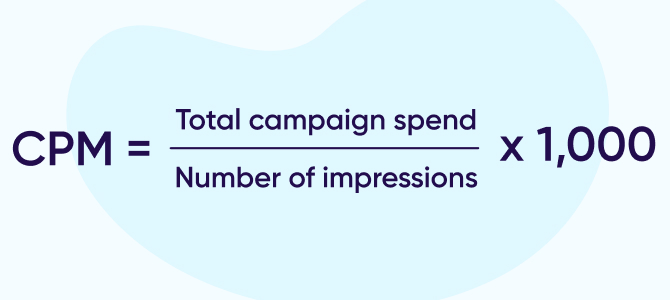
CPM stands for Cost Per Mille, where “mille” means 1,000.
CPM Meaning (Simple)
CPM is the amount an advertiser pays for 1,000 impressions (views) of an ad.
So if a website shows your ad 1,000 times and the CPM is ₹200, you pay ₹200.
Who Uses CPM?
CPM is mainly an advertiser-focused metric, commonly used in:
- display advertising
- YouTube ads
- programmatic advertising
- brand awareness campaigns
- social media ads (Meta, LinkedIn, etc.)
CPM Formula
CPM = (Total Ad Spend ÷ Total Impressions) × 1,000
CPM Example
Let’s say you run a campaign:
- Spend: ₹5,000
- Impressions: 50,000
CPM = (5,000 ÷ 50,000) × 1,000
CPM = ₹100
So you paid ₹100 per 1,000 impressions
Also Read: 29 Must-Have Features For Ecommerce Websites
What Impacts CPM?
CPM rates change based on:
- Audience location (US/UK often higher than many other regions)
- Niche (finance and software pay more than entertainment)
- Seasonality (Q4 usually has higher CPMs due to more ad spending)
- Ad placement quality (above-the-fold vs low visibility)
- Competition (more bidders = higher CPM)
CPM is useful because it helps advertisers control the cost of reach.
But CPM alone doesn’t tell you if the campaign made money. That’s why you also need conversion metrics like:
- CTR
- CPC
- CPA
- ROAS
Still, CPM is one of the most common metrics you’ll see in advertising dashboards.
What Is eCPM?

Now comes the term that confuses people the most.
eCPM meaning is “Effective Cost Per Mille.”
It’s a performance metric that tells you how much revenue is earned per 1,000 impressions—regardless of the ad pricing model.
What Does eCPM Actually Measure?
eCPM allows publishers to compare earnings across different campaign types like:
- CPM campaigns
- CPC campaigns
- CPA campaigns
Because even if advertisers pay per click or per action, publishers still want to know earnings per 1,000 views.
eCPM Formula
eCPM = (Total Earnings ÷ Total Impressions) × 1,000
eCPM Example
Suppose your website earns:
- Total earnings: ₹1,200
- Total ad impressions: 40,000
eCPM = (1,200 ÷ 40,000) × 1,000
eCPM = ₹30
This means you earned ₹30 for every 1,000 impressions.
Who Uses eCPM?
eCPM is mainly used by:
✅ publishers
✅ ad networks
✅ app developers
✅ YouTube monetized creators (in some reporting)
It helps you compare the earning efficiency of traffic and placements.
What Impacts eCPM?
Your eCPM changes when:
- your CTR increases
- your audience quality improves
- your content matches advertiser demand
- your ad viewability improves
- your traffic sources are more premium
In short: eCPM is a profitability indicator for publishers.
What Is RPM?
Now let’s talk about the metric publishers and creators love the most: RPM.
RPM Meaning (Simple)
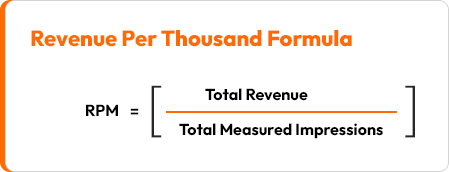
RPM stands for Revenue Per Mille, meaning revenue earned per 1,000 impressions or views.
But here’s the most important part:
✅ CPM is what advertisers pay
✅ RPM is what publishers earn
This is why RPM is often called the “real revenue metric.”
RPM Meaning Marketing (In One Line)
If you’re asking rpm meaning marketing, the best definition is:
RPM is the amount of money you earn per 1,000 views/impressions from ads and monetization.
This applies to:
- websites
- YouTube channels
- blogs
- publishing networks
That’s why many people ask:
- what is RPM in marketing
- rpm in marketing
- rpm meaning advertising
Because it directly connects marketing performance with earnings.
CPM vs RPM: Quick Difference
CPM
- Advertiser metric
- Cost per 1,000 impressions
- Shows how expensive ads are
RPM
- Publisher/creator metric
- Revenue earned per 1,000 impressions/views
- Shows how much you actually make
Even if CPM is high, RPM might still be low due to:
- platform fees
- ad fill rate
- low viewability
- limited monetized impressions
So yes, CPM and RPM are related—but not identical.
Page RPMs
Page RPM is usually used by website owners, especially those running ads on blogs or content websites.
What is Page RPM?
Page RPM shows how much revenue you earn per 1,000 pageviews.
Page RPM Formula
Page RPM = (Estimated Earnings ÷ Number of Pageviews) × 1,000
Example
- Earnings: ₹800
- Pageviews: 20,000
Page RPM = (800 ÷ 20,000) × 1,000
Page RPM = ₹40
This means you earn ₹40 for every 1,000 pageviews.
Why Page RPM Matters
Page RPM is useful because it helps you understand:
- which pages are most profitable
- which content categories monetize better
- how ad placement affects revenue
If your blog has 100 articles, Page RPM can show you which ones drive the most revenue per view.
Session RPMs
Session RPM takes it one step deeper.
Instead of focusing only on a single page, it measures revenue per 1,000 sessions.
What Is Session RPM?
Session RPM calculates how much revenue you earn from 1,000 user visits (sessions).
Why Session RPM Is Important
A user session might include:
- multiple pages visited
- multiple ad impressions
- better engagement
- higher overall earning potential
Session RPM is often higher than Page RPM because it reflects the full experience, not just one page.
How to Improve Session RPM
To improve session RPM, focus on:
✅ internal linking to keep users exploring
✅ better site navigation
✅ strong related-post sections
✅ improving page speed and UX
✅ topic clusters that encourage deeper reading
Session RPM is especially important if you rely on content marketing and blog traffic.
What Is RPM on YouTube?
Now let’s cover YouTube RPM, because it’s one of the most talked-about monetization metrics.
What Does RPM Mean on YouTube?
YouTube RPM is the revenue you earn per 1,000 video views.
And this includes:
- ad revenue (where applicable)
- Premium revenue (if part of it is included)
- other earnings shown inside analytics
This is why many creators focus heavily on RPM—it’s closer to “real money earned.”
YouTube RPM Formula
All Revenue Reported in YouTube Analytics × 1,000 / Total Views in the Same Time Period
Example
If your YouTube channel earned:
- Revenue: ₹10,000
- Views: 500,000
RPM = (10,000 × 1,000) / 500,000
RPM = ₹20
So your YouTube RPM is ₹20.
Why YouTube RPM Changes So Much
RPM fluctuates depending on:
- niche/category
- audience location
- video length and mid-roll placement
- seasonality
- advertiser demand
- watch time quality
A finance channel often has higher RPM than a comedy channel because advertisers pay more for finance audiences.
Why It’s Important to Know These Abbreviations
Understanding CPM, eCPM, and RPM helps you avoid common mistakes in monetization and advertising strategy.
If you’re an advertiser…
CPM helps you measure:
- cost of reach
- impression efficiency
But you should combine it with: - conversions
- ROAS
- engagement rate
If you’re a publisher…
RPM and eCPM tell you:
- how much you’re earning
- which placements are profitable
- which traffic sources are valuable
This is especially useful when you’re optimizing rpm ads and trying to increase revenue without harming user experience.
If you’re a YouTuber…
RPM helps you:
- forecast income
- understand monetization strength
- improve content strategy for higher revenue
Knowing these metrics is not just “terminology knowledge.” It’s the difference between guessing and optimizing.
How to Improve RPM Ads Revenue (Practical Tips)
If you want better earnings from rpm ads, focus on these proven areas:
1. Improve Traffic Quality
Traffic quality impacts advertiser bidding. Organic search traffic often converts better and pays higher than low-quality clickbait traffic.
2. Increase User Engagement
Higher engagement = more pageviews/session = better session RPM.
3. Optimize Ad Placement
Don’t overload ads. Instead:
- place ads in high-visibility areas
- use responsive ad layouts
- avoid hurting readability
4. Create High-Value Content Categories
Some niches naturally attract higher RPM:
- finance
- insurance
- education
- business tools
- software
5. Increase Returning Visitors
Loyal audiences are valuable. Email lists and push notifications help increase repeat sessions.
FAQs
1) What is RPM in marketing?
What is RPM in marketing? RPM is a revenue metric that shows how much money you earn per 1,000 impressions or views from ads and monetization.
2) What is the RPM meaning marketing wise?
The rpm meaning marketing is “Revenue Per Mille,” which represents earnings per 1,000 impressions/views.
3) What is RPM meaning advertising?
RPM meaning advertising refers to the revenue a publisher earns per 1,000 ad impressions or views, unlike CPM which reflects advertiser cost.
4) What is eCPM meaning?
eCPM meaning is “Effective Cost Per Mille.” It measures earnings per 1,000 impressions, regardless of whether ads were paid via CPC, CPM, or CPA.
5) Which is better: CPM or RPM?
It depends on your role:
- Advertisers prefer CPM
- Publishers prefer RPM
Both are important but measure different things.
6) Why is my RPM lower than CPM?
Because CPM is what advertisers pay, and RPM is what you receive after:
- platform cuts
- ad fill limitations
- non-monetized views
- performance factors
7) What is a good RPM?
A “good” RPM depends on niche, country, and platform. Focus on improving RPM month-over-month rather than comparing blindly.
Conclusion
Understanding CPM vs. eCPM vs. RPM is essential if you want to make smarter decisions in advertising and monetization.
To summarize:
- CPM = what advertisers pay per 1,000 impressions
- eCPM = earnings effectiveness per 1,000 impressions
- RPM = what publishers/creators earn per 1,000 impressions or views
If you’re working on monetizing content, improving rpm ads, or analyzing revenue performance, RPM and eCPM are powerful indicators. And if you’re running campaigns, CPM helps you measure reach and awareness cost.