

If you’re targeting Russian-speaking audiences or planning to expand your business in Russia and neighboring countries, Yandex SEO should be on your radar. While Google dominates search globally, Yandex is Russia’s largest search engine, with its own unique ranking algorithm, tools, and user preferences.
In this guide, we’ll explore everything you need to know to optimize your website for Yandex search results — from how its algorithm works to practical tips for higher visibility.
What Is Yandex?

Yandex is a Russian multinational IT company best known for its search engine, which holds a major share of the market in Russia and parts of Eastern Europe. It offers a full suite of digital services including:
- Yandex Browser
- Yandex.Maps
- Yandex.Direct (Ad Platform)
- Yandex.Metrica (Analytics Tool)
- Yandex.Zen (Content Feed Platform)
Why Yandex Matters for SEO
If your business targets audiences in Russia, Belarus, Kazakhstan, Ukraine, or Turkey, optimizing for Yandex is essential. Local consumers tend to prefer Yandex for its deep understanding of the Russian language and localized search capabilities.
How Yandex’s Search Algorithm Works
Yandex uses AI-powered algorithms similar to Google but optimized for Russian linguistic and regional nuances.
Major Algorithm Updates
- Palekh (2016): Introduced neural network-based ranking
- Korolyov (2017): Improved long-tail query understanding
- Vega (2019): Focused on quality content, expert sources, and faster indexing
Unlike Google, which places more weight on backlinks and domain authority, Yandex focuses heavily on user behavior, relevance, and local signals.
Key Ranking Factors in Yandex SEO
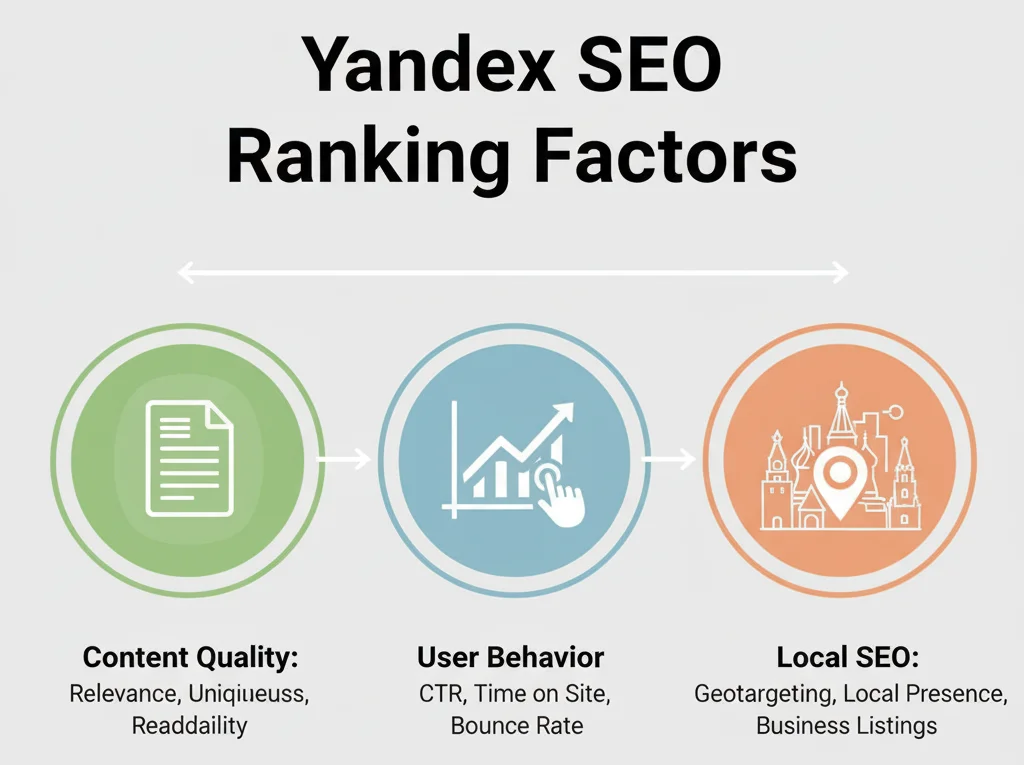
1. Content Relevance and Quality
Yandex highly values high-quality, unique, and localized content written for Russian-speaking users. Keyword usage should be natural, and content must be grammatically correct in Russian. Avoid machine translations.
2. User Behavior Signals
Yandex collects and uses behavioral data from its browser and Metrica to rank sites. Key signals include:
- Click-Through Rate (CTR)
- Bounce Rate
- Time on Site
3. Website Structure & Technical SEO
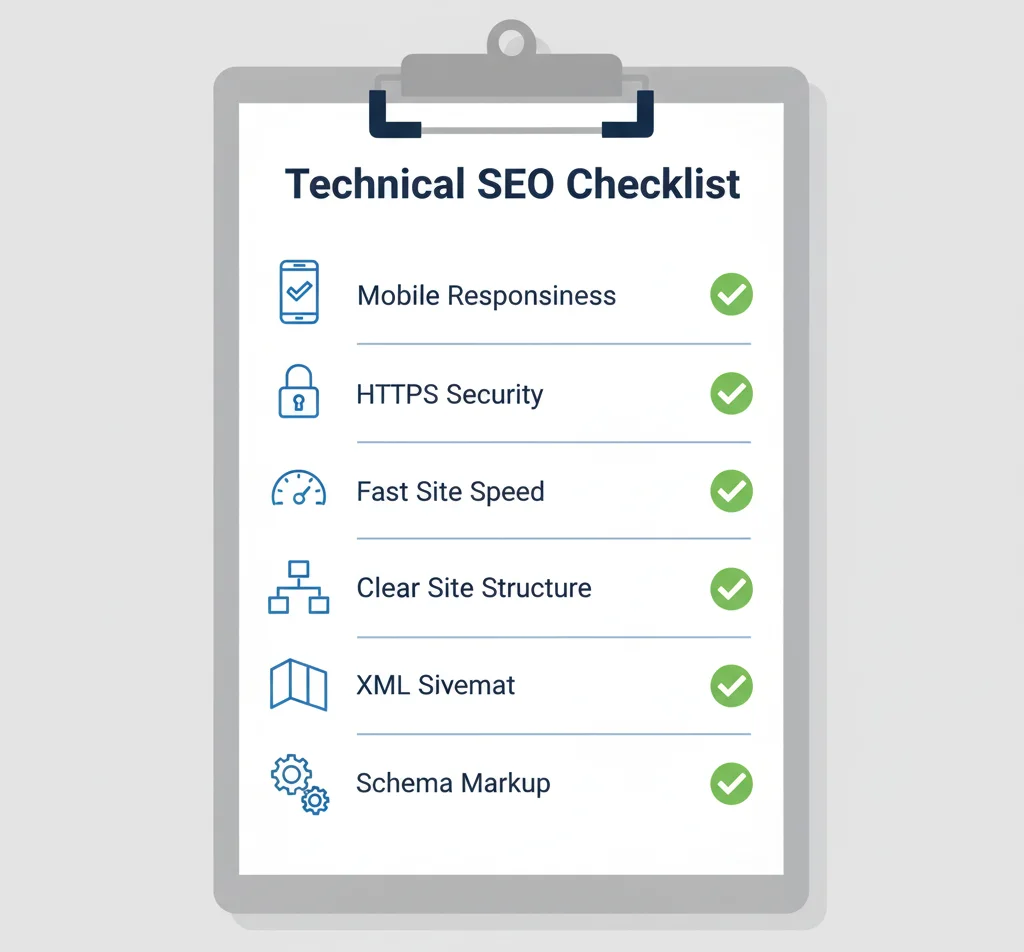
- Ensure your site is easily crawlable and logically structured
- Yandex prefers mobile-friendly websites
- Site speed is important, especially for Russian users
- Use HTTPS to meet trust and ranking requirements
4. Local SEO for Yandex
Register your business on Yandex.Sprav (Business Directory) to show up in local search and maps. Local signals such as address, phone number, and region tags influence local rankings.
5. Backlinks and Authority
Yandex values quality over quantity in backlinks. Paid links can be penalized. It also considers site trustworthiness, which includes behavioral data and business legitimacy.
6. Freshness and Content Updates
Yandex prioritizes recent and frequently updated content. News sites and blogs that consistently publish new content tend to rank higher.
How to Optimize Your Website for Yandex
1. Use Yandex Webmaster Tools
Register your site with Yandex Webmaster Tools. It offers features like:
- Search query reports
- Crawl errors
- Indexing status
- Site structure analysis
2. Register on Yandex Business Directory
Go to Yandex.Sprav and list your business. Include:
- NAP (Name, Address, Phone)
- Business hours
- Photos and descriptions
- Categories and tags
3. Implement Yandex Metrica
Yandex Metrica is a powerful analytics tool similar to Google Analytics but includes:
- Session Replay
- Heatmaps
- User Path Tracking
These insights help you improve UX and monitor user behavior that directly affects rankings.
4. Optimize for Russian-Language Users
- Conduct keyword research in Russian
- Use native Russian writers instead of translation tools
- Make sure your site handles Cyrillic characters correctly in URLs and metadata
5. Improve Site Load Speed in Russia
- Use local or nearby hosting servers for faster access
- Implement CDNs with coverage in Eastern Europe
- Compress images and reduce unnecessary scripts
Also check: Yelp SEO: How to Optimize Your Listings & Rank Higher
Common Yandex SEO Mistakes to Avoid

- Ignoring localization: Always tailor content to the local audience
- Keyword stuffing: Yandex penalizes unnatural keyword use
- Duplicate content: Can lead to ranking drops
- No mobile optimization: Mobile-friendliness is a key ranking factor
- Skipping Yandex tools: Not using Yandex Webmaster and Metrica means missing out on vital data
Yandex vs. Google: Key SEO Differences
| Feature | Yandex | |
| Language Processing | Advanced Russian NLP | Strong global NLP |
| Link Building | Low emphasis on link volume | High emphasis on backlinks |
| Behavioral Signals | Highly influential | Important but less transparent |
| Indexing Speed | Slightly slower than Google | Faster and more dynamic |
| Webmaster Tools | Yandex Webmaster Tools | Google Search Console |
| Analytics | Yandex Metrica (with heatmaps) | Google Analytics |
Tools to Help With Yandex SEO
- Yandex Webmaster Tools – Monitor indexing and crawl errors
- Yandex Metrica – Behavioral analytics and heatmaps
- Serpstat – Keyword tracking in Russian markets
- TopVisor – Position tracking for Yandex
- SE Ranking – All-in-one SEO platform with Yandex integration
Final Tips for Success with Yandex SEO
- Focus on user satisfaction and intent
- Use original content tailored to Russian culture and language
- Optimize for mobile and fast loading times
- Make use of Yandex Metrica to identify UX issues
- Keep up with algorithm changes and updates
Success in Yandex SEO is about local relevance, technical readiness, and understanding Russian users.
FAQs
1. Is Yandex SEO still relevant in 2025?
Yes, Yandex continues to dominate the Russian market, making it highly relevant for businesses targeting that region.
2. Can I use the same SEO strategy for Google and Yandex?
Not entirely. While the fundamentals overlap, Yandex puts more weight on behavioral data, local signals, and language accuracy.
3. How long does it take to rank on Yandex?
It may take longer than Google. Indexing and ranking can be slower, especially for new websites.
4. What language should I use for Yandex optimization?
Russian. Use natural and grammatically correct Russian content, especially for region-specific pages.
Conclusion
Yandex SEO is a crucial strategy for businesses looking to gain visibility in Russia and neighboring countries. While many SEO principles are similar to Google’s, Yandex has its own unique algorithm, user behavior patterns, and tools.
By understanding how Yandex works and focusing on user experience, language accuracy, local optimization, and behavioral metrics, you can significantly improve your presence in Yandex search results.
Start with Yandex Webmaster Tools and Metrica, tailor your content for the Russian market, and remember — it’s not just about keywords, it’s about delivering value to real users in a localized and culturally relevant way.

Passionate about blogging and focused on elevating brand visibility through strategic SEO and digital marketing. Always tuned in to the latest trends, I’m dedicated to maximizing engagement and delivering measurable ROI in the dynamic world of digital marketing. Let’s connect and unlock new opportunities together!