
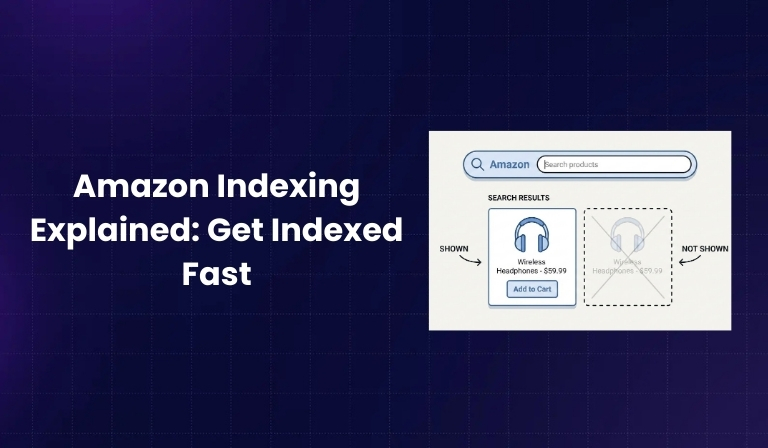

Amazon indexing is the foundation of how your products become discoverable in Amazon search results, which directly affects your traffic and sales potential. In 2026, with increased competition and evolving algorithms, understanding how to get indexed fast for the right keywords is one of the most impactful levers you can pull to grow your Amazon business.
What is Amazon Indexing?
This section explains what Amazon indexing means and how it differs from other core concepts like ranking.
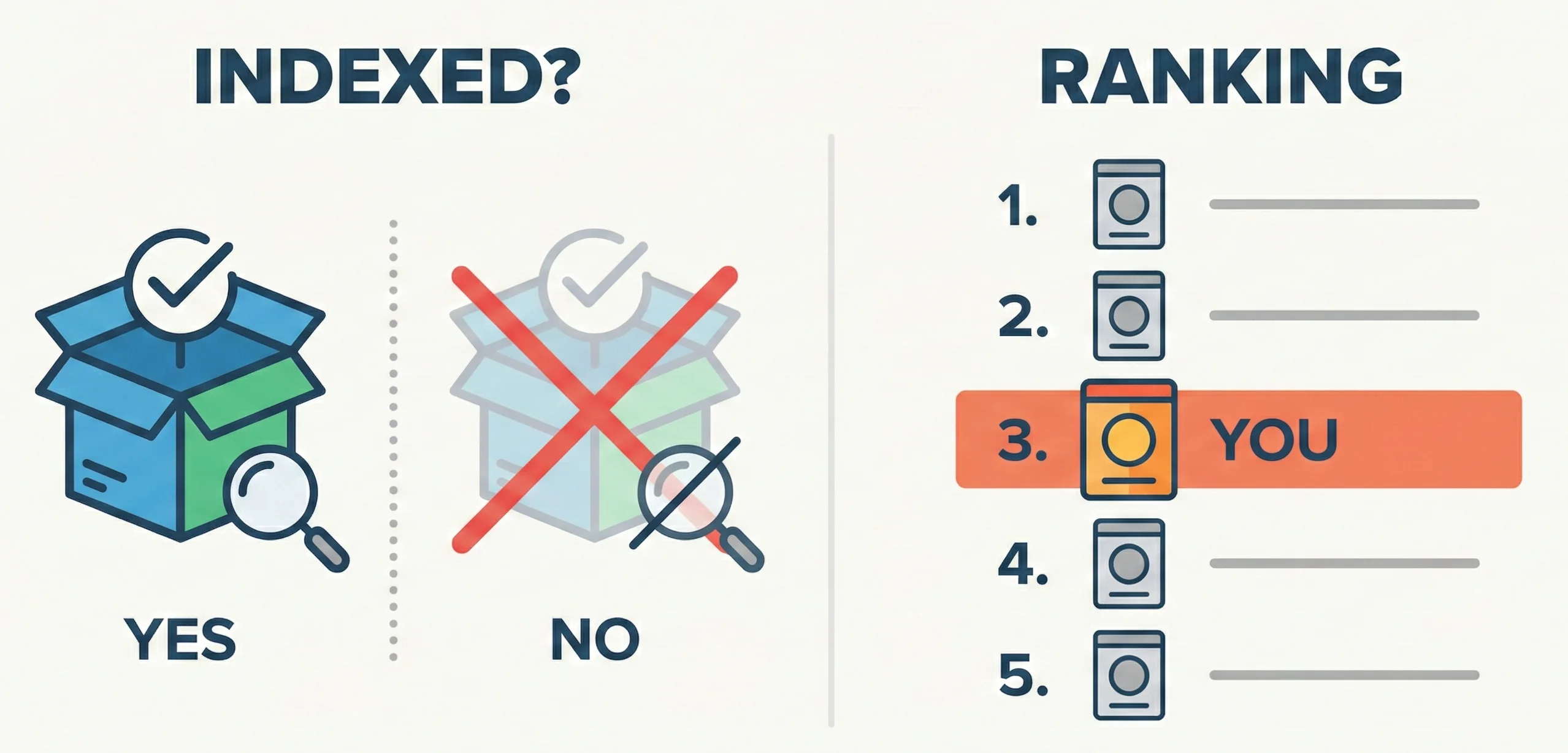
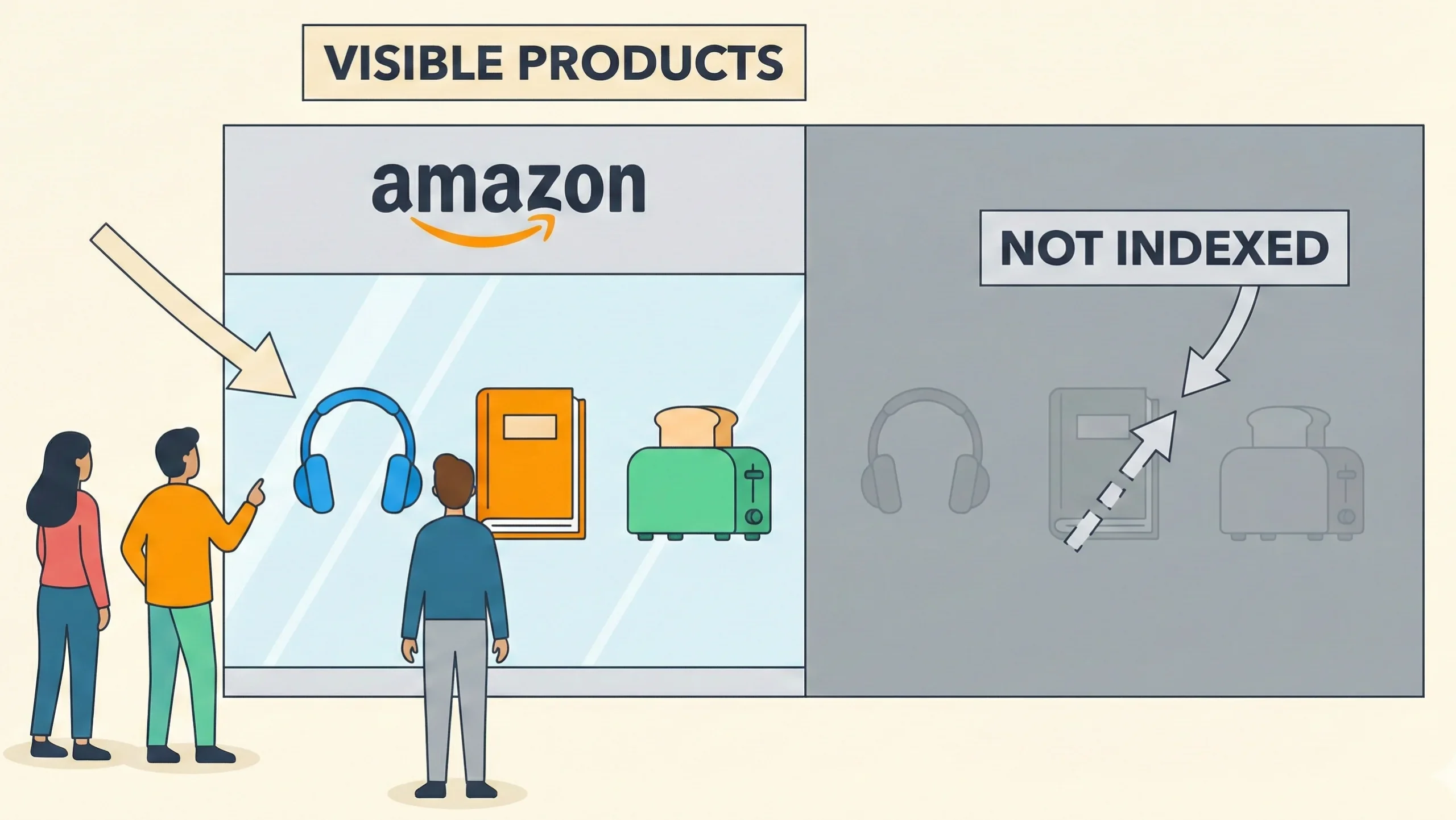
Amazon indexing is the process by which Amazon’s search engine decides which products are eligible to appear for a given search term. If your listing is indexed for a keyword, your product will show somewhere in the results when a shopper types that term into the Amazon search bar; if it is not indexed, your product will not appear at all for that search. Indexing is therefore a binary status: you are either indexed for a term or you are not.
Keyword ranking, by contrast, is about where your indexed product appears in the results, such as position 1 or position 150 for a specific keyword. Indexing determines visibility eligibility, while ranking determines how prominent that visibility is, which is then heavily influenced by relevance, conversions, and other performance signals.
Why is Amazon Indexing Crucial in 2026?
This section explains why indexing remains strategically important given Amazon’s current search landscape.
Amazon continues to refine its search and recommendation algorithms, but the fundamentals remain the same: if your products are not indexed for relevant, high-intent keywords, they cannot generate organic traffic from those searches. In 2026, more sellers, more products, and richer category structures mean that being correctly and comprehensively indexed is a prerequisite for competing at all.
Indexing for relevant, purchase-intent keywords (for example, “nonstick baking dish” instead of just “dish”) helps attract shoppers who are more likely to convert, which in turn boosts your organic ranking and improves the efficiency of your advertising campaigns. Because Amazon heavily rewards listings that convert well, indexing for the right terms, rather than the most terms, is critical for long-term performance.
Key Components to Get Indexed Fast
This section breaks down the listing elements and data fields that most directly influence how quickly and effectively you get indexed.
Optimizing product titles for primary keywords and character limits
Your product title is one of the strongest on-page signals for indexing and relevance on Amazon. Including your primary keyword, brand, core product type, and key differentiators (such as material or size) in a concise, readable format helps Amazon connect your listing to the right searches.
Most categories have recommended or enforced title length limits, and exceeding them can lead to suppressed listings or truncated titles, especially on mobile. Working within those limits and placing your most important keywords early in the title helps ensure both indexation and better click-through rates.
Writing keyword-rich bullet points that emphasize product benefits and relevance
Bullet points (key product features) offer additional space for Amazon to understand what your product is and who it is for. Strategically incorporating secondary and long-tail keywords (such as use cases, audience, or style) into clear, benefit-driven bullets can expand your index coverage without sacrificing readability.
Overstuffing bullets with repetitive or awkward keyword phrases, however, can hurt conversion rates and potentially violate Amazon style guidelines, which indirectly harms rankings and overall visibility. The goal is to naturally integrate relevant terms while focusing on customer benefits, use cases, and objections you can address.
Effective use of backend search terms
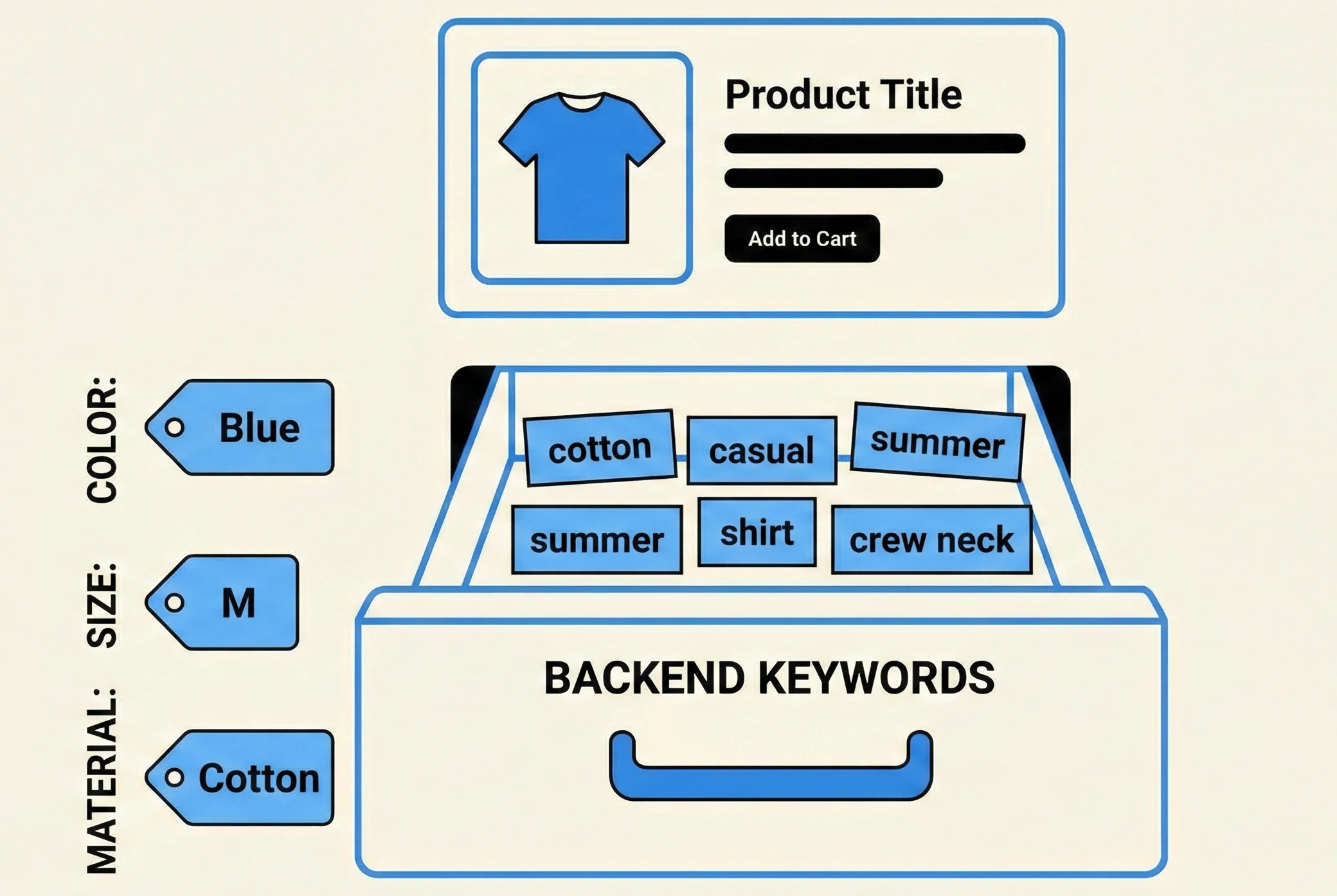
Backend search terms (often called backend or “generic” keywords) are hidden fields used specifically for indexing additional relevant keywords that do not appear on the front end. Amazon provides a limited byte allowance for these fields, so you must prioritize unique, relevant terms to maximize indexing impact.
Best practices include avoiding duplication of words already present in your title and bullets, excluding stop words and punctuation, and not using prohibited phrases like “best” or “#1.” Including long-tail phrases, common misspellings, abbreviations, and alternate product names here can help you capture extra search traffic without cluttering your visible content.
Leveraging structured data fields and correct categories
Beyond titles and keywords, Amazon relies on structured data fields such as color, size, material, style, and other attribute fields to understand and index your product. Accurately completing these attributes improves your chances of appearing in filtered searches and for attribute-specific queries (for example, “blue cotton socks” or “salt-free seasoning”).
Selecting the most accurate category and subcategory also affects indexing and ranking potential because different categories support different valid attributes and search refinements. Being placed in the wrong or overly broad category can limit exposure in relevant filters and reduce your relevance score for critical keywords.
Importance of correct categorization and subcategory selection
Category and subcategory choice can influence how Amazon interprets your listing and which keyword and filter sets are available to you. Some categories offer specialized attributes (such as “salt-free” in grocery or “fabric type” in apparel) that can add powerful indexing signals when completed correctly.
Researching competing top-performing listings in your niche and aligning your category and subcategories with where successful products live can help you access similar indexing opportunities and ranking criteria. Periodically reviewing category performance and ensuring Amazon has not migrated or merged categories also helps retain indexing stability over time.
Also Check: The Ultimate Guide to App Store Optimization (ASO) in 2025
Advanced Indexing Strategies
This section covers additional tactics to refine and expand your indexing beyond basic listing optimization.
Managing parent-child variations and indexing per child
Parent-child (variation) listings—such as different sizes, colors, or flavors—do not automatically share indexing for all keywords across all child ASINs. Each child variation can have its own indexing profile, and relying on a single well-optimized child can leave others under-indexed.
Optimizing titles, bullets, and backend keywords at the child level where possible, and checking indexing for each key variation, helps ensure consistent visibility across the full product family. This is especially important when certain colors or sizes are top sellers or are featured in ads, because they drive the majority of traffic and conversion signals.
Impact of reviews, Q&A, and cross-product behavior (anecdotal)
There is anecdotal evidence from sellers and tool providers that customer-generated content such as reviews and Q&A can correlate with indexing for additional phrases that shoppers use. For example, if multiple reviews mention a specific use case or nickname for your product, some sellers report later indexation for those terms even when they were not originally included in the listing.
Similarly, cross-product behaviors such as frequently bought-together patterns may influence which related terms and products Amazon surfaces to shoppers, although this is not officially documented as an indexing factor. Because these effects are not formally confirmed, they should be treated as potential secondary signals rather than primary optimization levers.
Adjusting listings based on new keyword opportunities
Indexing should be treated as an ongoing process rather than a one-time task. Over time, you may discover new valuable keywords through search term reports, advertising data, competitor research, or direct customer feedback about alternative uses for your product.
Regularly revisiting your titles, bullets, backend keywords, and attributes to incorporate high-converting, relevant new terms helps you maintain and expand your index coverage. At the same time, you should remove underperforming or misleading terms that drive traffic but not conversions, as these can lower your conversion rate and harm organic rankings.
Tools to Check and Monitor Amazon Indexing
This section describes practical methods and tools to verify and track your indexing status over time.
Manual ASIN + keyword check
The simplest way to check if your product is indexed for a specific keyword is to use a manual search within Amazon. By typing your ASIN followed by the target keyword into the Amazon search bar (for example, “B08XYZ1234 baking dish”), you can see whether your listing appears in the results; if it does, that keyword is indexed, and if it does not, it is not indexed.
This method is free and quick for spot checks, but it becomes time-consuming when you need to test many ASINs or large keyword lists. It is best suited for verifying priority terms, validating recent listing changes, or confirming suspected de-indexing for a handful of critical keywords.
Automated index checker tools
Dedicated index checker tools can test multiple keywords at scale and provide structured reports on indexing status. Popular options include:
- Helium 10 Index Checker: Tests whether a product is indexed for specific keywords and identifies how it is indexed (traditional search, ASIN field, or storefront).
- Other third-party tools that integrate indexing checks with keyword research and rank tracking.
These tools save time when managing large catalogs or when running routine checks on your most important keywords. However, their data can lag behind real-time Amazon changes, so results should be complemented with occasional manual checks for the most critical terms.
Monitoring indexing changes and algorithm shifts
Monitoring changes in traffic, sessions, and conversion rates helps you detect potential indexing or ranking issues that tools may not immediately surface. Reports in Seller Central, such as detailed traffic and sales reports by child ASIN, can reveal sudden drops in sessions that may coincide with de-indexing for important keywords or changes in category structure.
Combining performance data with scheduled indexing checks (for example, monthly for core products and quarterly for the broader catalog) allows you to respond faster to algorithm updates or listing issues. When you notice significant traffic fluctuations, re-check indexing for your main keywords, review recent listing edits, and confirm that your products are still assigned to the correct categories and subcategories.
Common Indexing Challenges and Solutions
This section highlights frequent problems that prevent or disrupt indexing and suggests practical ways to resolve them.
Listings not indexing despite optimization
Sometimes a product does not index for certain keywords even when they appear in the title, bullets, or backend fields. Common causes include violating byte limits in backend fields, using disallowed terms, or having suppressed or incomplete listings.
In such cases, reviewing category-specific style guides, trimming backend keywords to within the allowed byte limit, and ensuring there are no listing violations or suppressed statuses should be your first steps. After making changes, wait for Amazon to process the updates—typically up to 24 hours—before re-checking indexing.
Keyword stuffing and irrelevant terms
Overloading titles, bullets, or backend fields with loosely related or misleading keywords can harm both customer experience and algorithmic trust. Traffic that does not convert well sends negative signals to Amazon’s ranking system, potentially reducing your visibility for important keywords.
Focusing on highly relevant, purchase-intent keywords and removing unrelated or clickbait-style terms is essential for sustainable indexing and ranking. Adhering to Amazon guidelines—such as avoiding subjective claims and competitor brand names—also reduces the risk of enforcement actions affecting your listing.
Category misalignment and incomplete attributes
Being placed in the wrong category or failing to complete key attribute fields can limit your indexation and ability to appear in filtered searches. For example, missing size, color, or material attributes may reduce your visibility when shoppers refine search results using filters or use those attributes in their search terms.
Regularly reviewing your category, subcategory, and attribute choices against top-ranking competitors and Amazon’s current category templates helps keep your data aligned with how the marketplace is structured. If you find misalignment, use flat files or Seller Central’s advanced editing to update categories and backfill missing attributes.
Conclusion
Achieving fast and effective Amazon indexing in 2026 depends on structuring your data correctly, targeting the right keywords, and maintaining an ongoing optimization process. By aligning your titles, bullets, backend keywords, categories, and attributes with Amazon’s guidelines—and supporting them with regular indexing checks and performance monitoring—you create a strong foundation for organic visibility and profitable growth.

Passionate about blogging and focused on elevating brand visibility through strategic SEO and digital marketing. Always tuned in to the latest trends, I’m dedicated to maximizing engagement and delivering measurable ROI in the dynamic world of digital marketing. Let’s connect and unlock new opportunities together!