
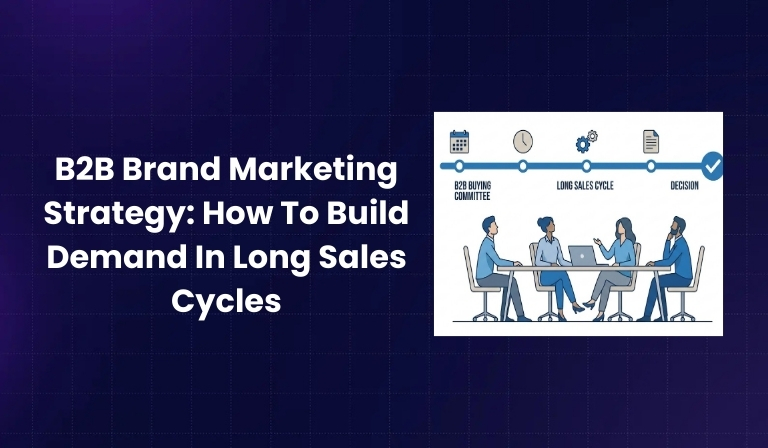

Long B2B sales cycles are common in high-value purchases, where deals involve multiple stakeholders, high perceived risk, and often months or years of internal evaluation. Research shows that only a small minority of potential B2B buyers are “in-market” at any time, meaning most of your audience is future demand rather than current leads. This reality makes pure short-term lead generation insufficient; brand marketing is what ensures buyers know, trust, and remember you before they ever talk to sales.
Why B2B Brand Marketing Matters More In Long Cycles
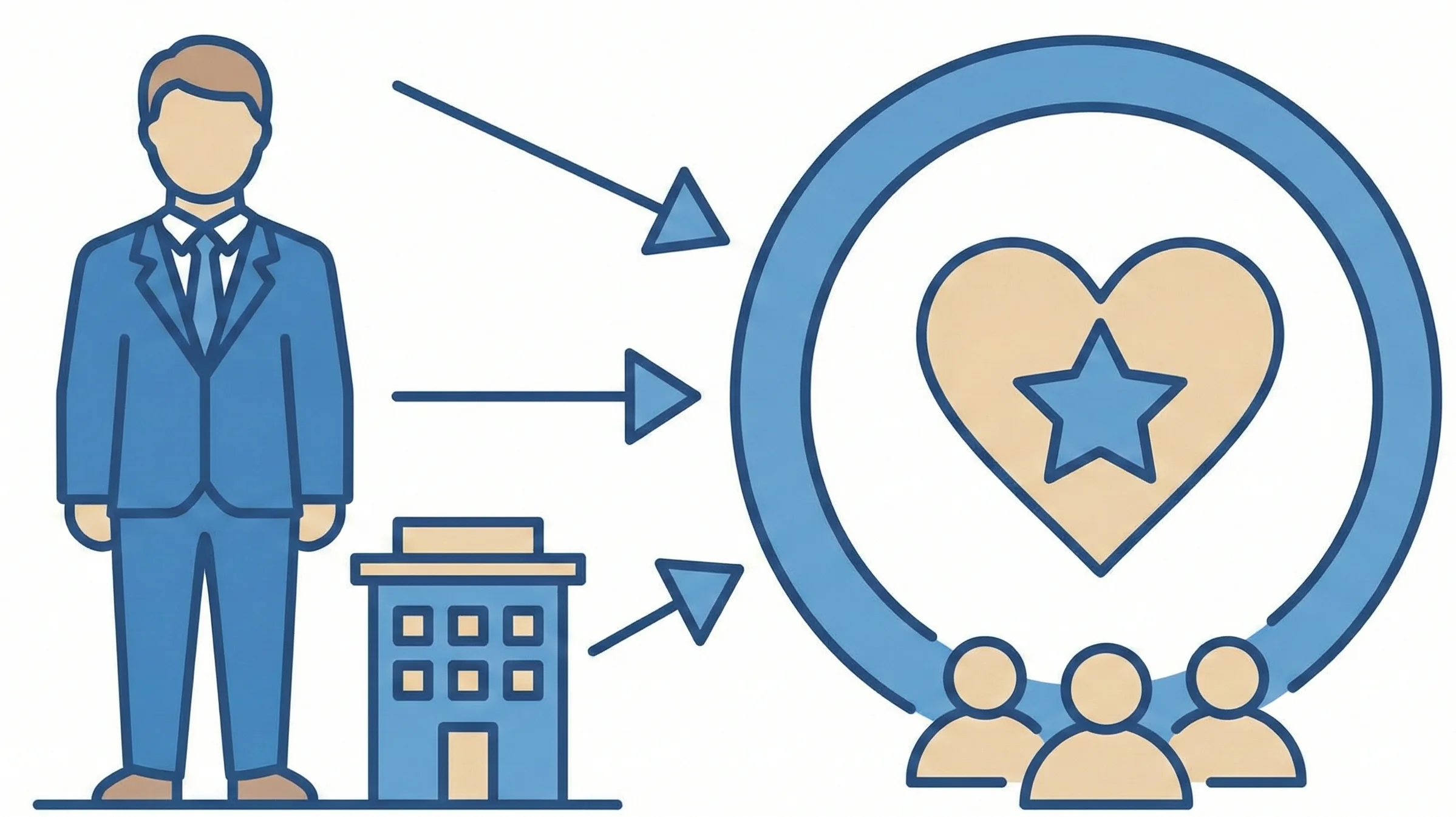
B2B purchases often impact entire departments or companies, so buyers tend to choose vendors that feel familiar, credible, and low risk. A recognizable, trusted brand reduces perceived risk, aligns stakeholders, and makes it easier for buying committees to justify a decision internally. When marketing focuses only on short-term lead capture without building brand, deals slow down, discounting increases, and buyers default to incumbent or “safe” options even when alternatives may be more effective.
Clarify Your Foundation: Purpose, Positioning, And Promise
A durable brand strategy rests on three elements: why your company exists (purpose), how you’re different (positioning), and what you reliably deliver (brand promise). Getting these wrong leads to generic messaging, weak differentiation, and campaigns that change constantly without building any long-term memory structure in the market.
1. Define Your Brand Purpose For B2B Buyers
Brand purpose is the reason your company exists beyond making revenue; in B2B, it typically connects to helping customers achieve specific outcomes such as efficiency, risk reduction, or growth. A clear purpose gives direction to messaging and helps employees and customers understand what your company stands for, which strengthens trust and emotional connection over long cycles. When purpose explicitly reflects the communities and industries you serve, it becomes a filter for which opportunities, partnerships, and campaigns to pursue.
2. Sharpen Brand Positioning In A Competitive Space
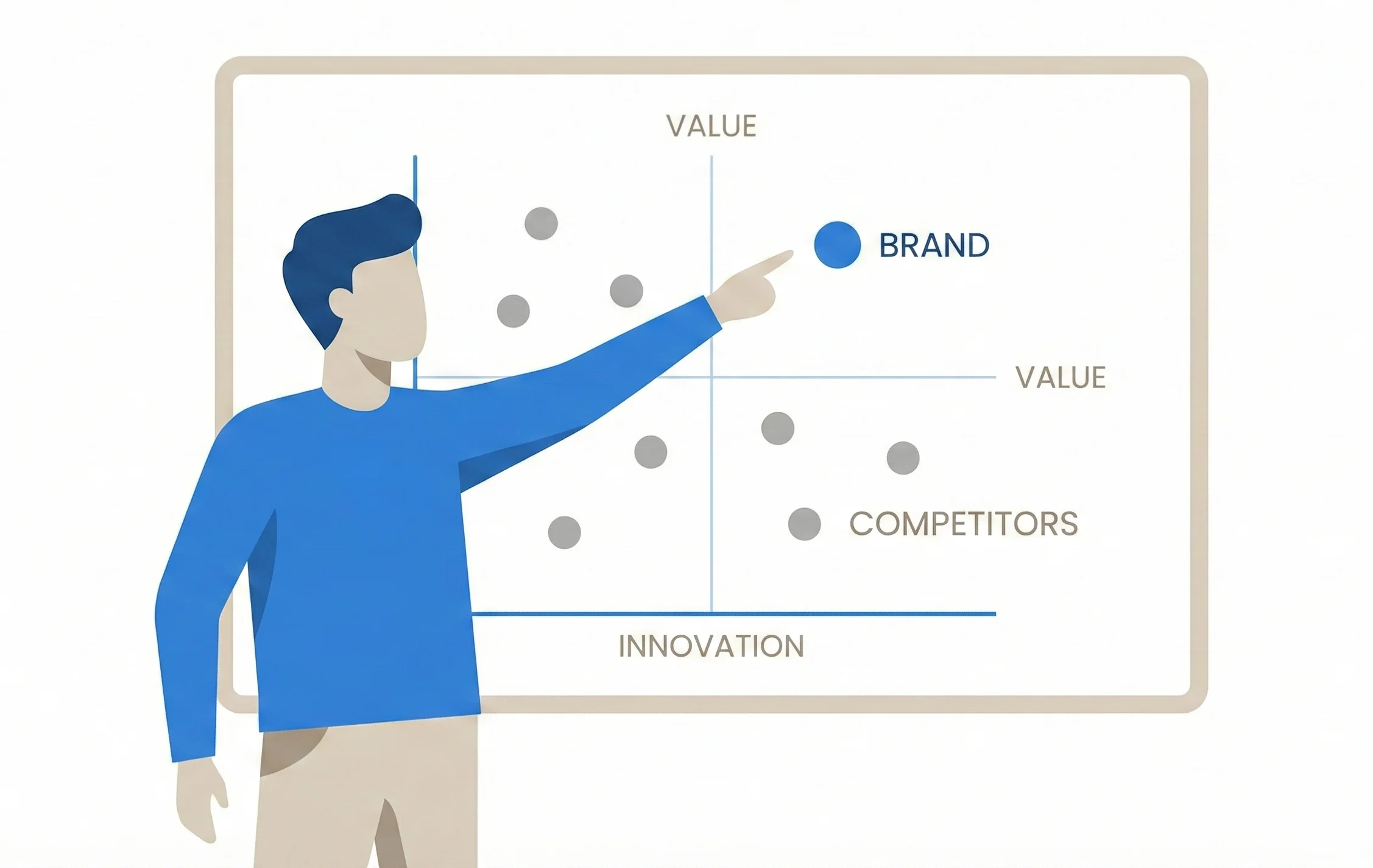
Brand positioning describes how you sit in the market relative to alternatives: what you do, who you do it for, and why a specific group should choose you. Competitive mapping—such as plotting perceived price versus quality or specialization versus generalization—helps reveal crowded spaces and under-served gaps. Effective positioning avoids vague claims like “innovative” or “end-to-end” and instead commits to clear trade-offs, such as serving a specific industry segment or prioritizing premium service over lowest cost.
3. Craft A Credible Brand Promise
A brand promise is a concise statement of what customers can reliably expect from your company whenever they engage with you. In B2B, this might involve outcomes like measured ROI, faster implementation, or lower operational risk, all of which must be backed by evidence to be credible. Overstated or vague promises damage trust; aligning the promise tightly with your actual delivery capabilities protects long-term reputation and makes referrals and renewals more likely.
Understand Your Buying Committees And Demand Dynamics

B2B decisions are increasingly made by groups rather than individuals, which changes how brand marketing must work. Instead of persuading a single decision-maker, your brand must feel relevant and safe to a mix of executives, specialists, and users whose priorities differ.
1. Map The Buying Group
Many B2B purchases involve an economic buyer (budget owner), technical gatekeepers (IT, security, operations), day-to-day users, and internal champions who advocate for a solution. Each role evaluates value differently: executives focus on financial impact, technical approvers worry about risk and integration, and users care about usability and workload. A strong brand marketing strategy tailors stories and proof points to these perspectives while keeping the core narrative consistent so all stakeholders feel confident in the same decision.
2. Identify Triggers And Category Entry Points
Buying journeys in long cycles often start with triggers such as rapid growth, regulatory changes, rising costs, customer complaints, or competitive pressure. Category entry points are the situations or moments when people think about your category—like planning a new fiscal year, responding to an audit, or rolling out a new product line. Brand marketing should aim to build memory links between these triggers and your company, so that when the moment arrives, buyers recall you quickly and positively.
Build A B2B Brand Messaging Architecture
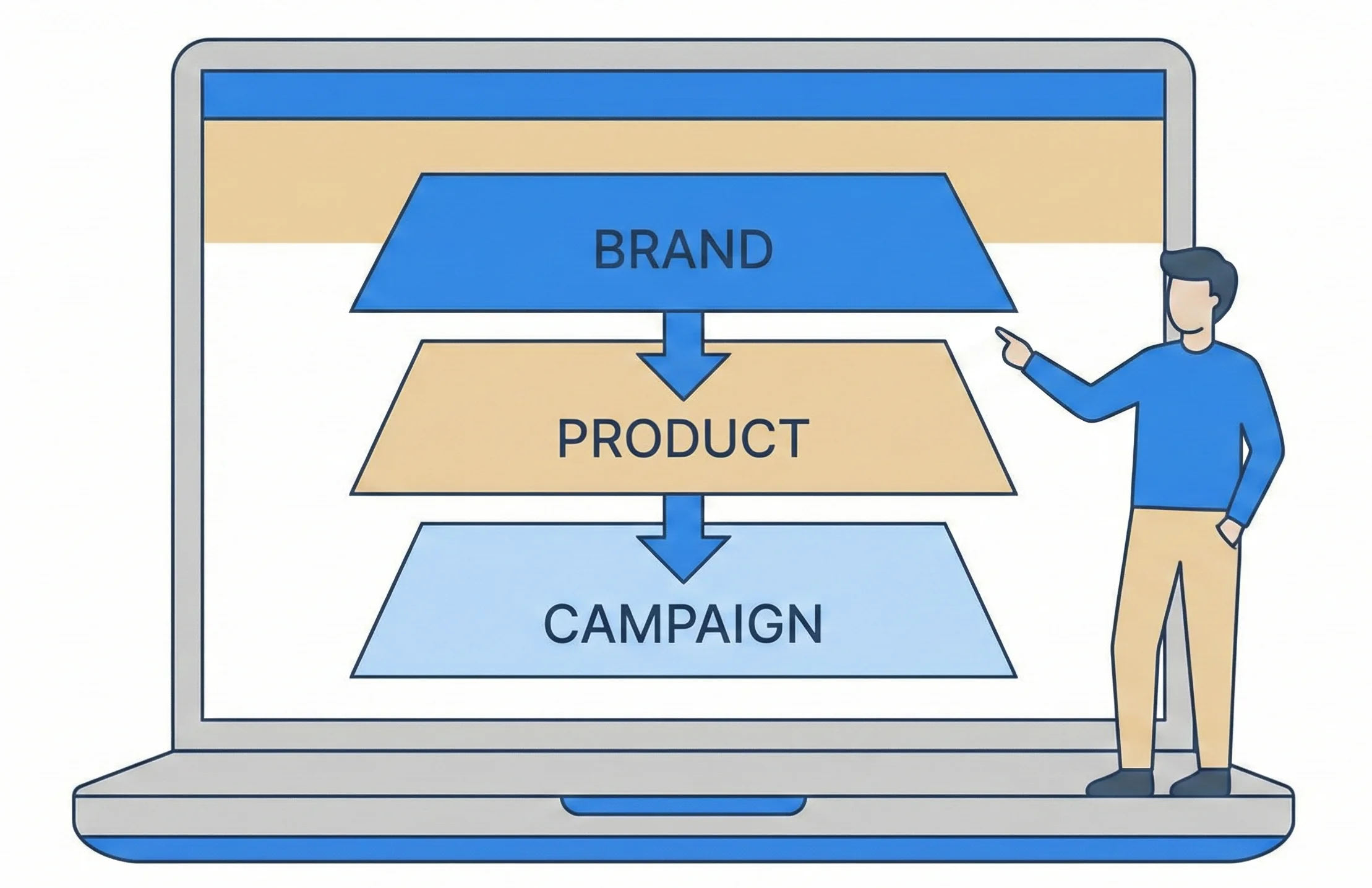
A messaging architecture is the system that organizes what you say at brand, product, and campaign levels so everything connects. Without this structure, teams create disconnected messages that confuse buyers and dilute brand impact over time.
1. Core Brand Narrative
The core brand narrative explains who you serve, what problems you solve, and why your approach is distinct in today’s environment. In B2B, this narrative should emphasize customer outcomes rather than internal features, tying your solution to real business challenges such as cost control, compliance, or growth. When consistently used across website copy, sales decks, and thought leadership, this narrative becomes the “story spine” buyers remember even if they forget individual tactics.
2. Layered Messaging: Brand, Product, And Campaign
Brand-level messaging sets enduring themes and pillars, such as reliability, specialization, or innovation in a specific domain. Product-level messaging translates these themes into concrete benefits, use cases, and features tailored to specific solutions or packages. Campaign-level messaging builds on both, adapting language and angles to timely topics, industries, or segments without contradicting the underlying brand.
3. “Reasons To Believe”: Proof That Reduces Risk
B2B buyers rely heavily on evidence such as case studies, benchmark data, references, analyst reports, and testimonials to reduce perceived risk. These “reasons to believe” should be integrated into all major touchpoints—from ads and landing pages to sales presentations and renewal conversations—rather than isolated in a separate section. When proof points directly support your brand promise and positioning, they reinforce your story instead of feeling like generic social proof.
Channels: Where B2B Brand Marketing Actually Happens
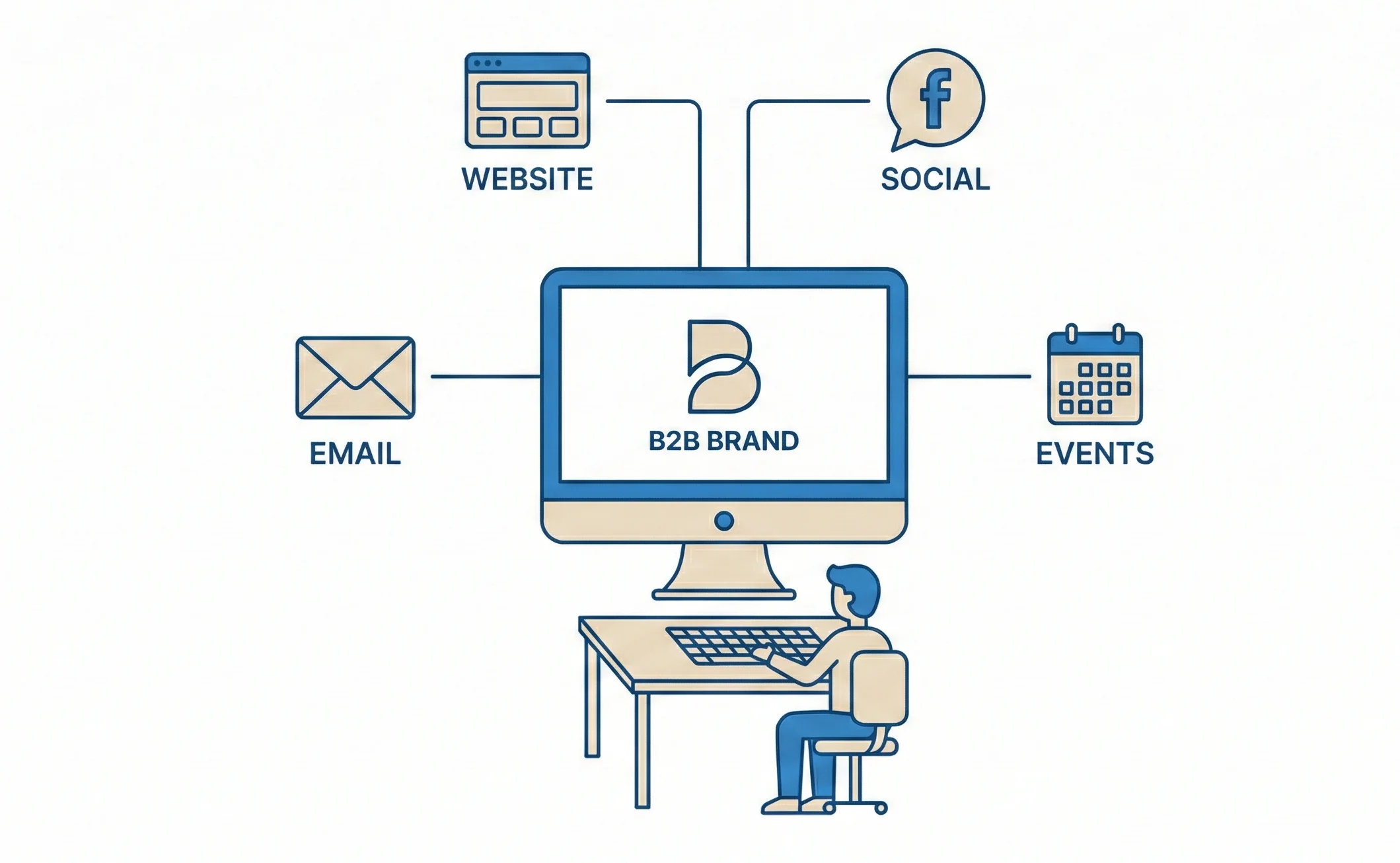
Brand is not built in a single campaign; it is reinforced across every place your audience encounters you over time. For long sales cycles, channels must work together to deliver consistent ideas, visuals, and experiences rather than disconnected messages optimized only for short-term clicks.
1. Owned Channels
Your website is often the first or second place buying committees visit when evaluating your credibility, so it must clearly express your brand narrative, positioning, and proof. A structured resource center—with articles, guides, webinars, and tools aligned to your core themes—helps educate buyers at different stages without forcing them immediately into sales conversations. Email newsletters and nurture flows let you maintain a gentle, ongoing relationship with out-of-market buyers by offering insights, updates, and stories rather than only promotions.
2. Paid And Organic Demand Channels
Organic and paid social channels, particularly LinkedIn for many B2B segments, are effective for distributing thought leadership and narrative campaigns that shape how people think about their problems and options. Search plays a dual role: capturing existing demand (e.g., “best [solution] for [industry]”) and creating demand through educational and strategic content that addresses early-stage questions. Display, programmatic, and other awareness formats can extend reach among target accounts when they consistently use your brand’s visual and messaging cues.
3. “Trust And Proof” Channels
Events, trade shows, and webinars give prospects direct access to your experts and customers, allowing them to assess your competence and culture first-hand. Podcasts and interviews let leaders share nuanced perspectives, which can be especially persuasive in long, complex categories where trust and expertise are crucial. Partnerships with complementary vendors, associations, and analysts help your brand borrow existing trust and surface in curated contexts where buyers already pay attention.
Content Strategy For Long Sales Cycles
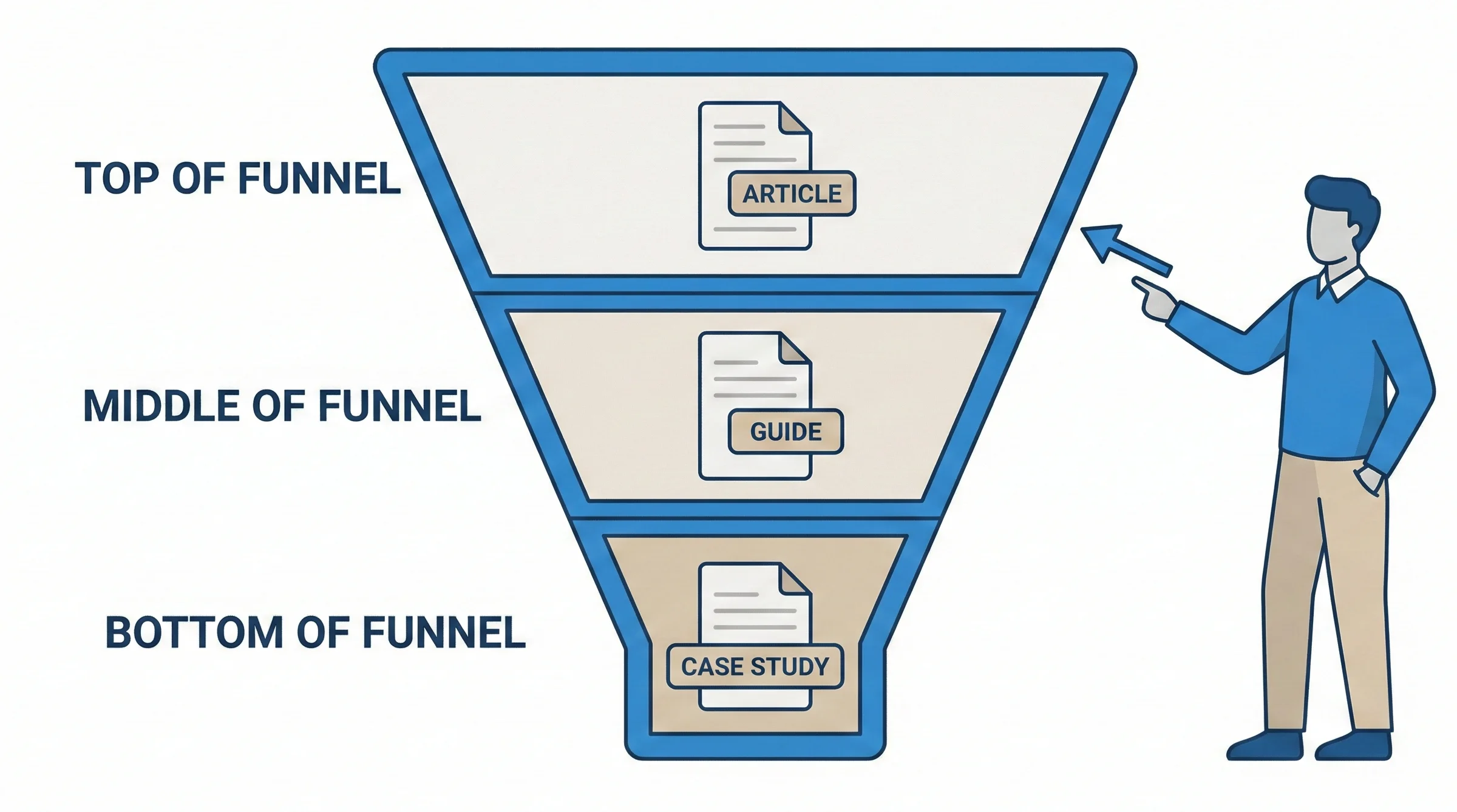
Content is the primary vehicle through which B2B brand marketing shows up day-to-day, especially when buyers are not talking to sales. To support long cycles, content must serve both out-of-market and in-market audiences, with formats and topics aligned to where they are in their journey.
1. Content For Out-Of-Market Buyers
Most potential buyers are not actively evaluating vendors, so they look for content that helps them understand trends, risks, and opportunities rather than vendor-specific pitches. Effective out-of-market content includes opinion pieces on where the category is heading, analysis of industry data, and frameworks that help teams think about their challenges. This kind of content positions your brand as a trusted guide, building familiarity and positive associations that pay off later when a buying cycle begins.
2. Content For In-Market And Late-Stage Buyers
Once buyers are actively exploring solutions, they seek specific, comparative, and practical information that reduces uncertainty and supports internal justification. Useful content at this stage includes detailed case studies, implementation roadmaps, ROI models, evaluation checklists, and competitor-comparison style guides that transparently address trade-offs. When these assets align directly with your brand promise and positioning, they reinforce your narrative while helping champions make the case internally.
3. Storytelling Frameworks That Stick
Structured stories are easier to remember than isolated facts, which is why narrative formats perform well in both B2B and B2C contexts. A simple pattern—customer situation, tension or risk, turning point with your solution, and measurable results—can be applied across case studies, webinars, videos, and written content. Repeating similar story structures across formats builds a recognizable style for your brand and makes it easier for sales and marketing to create new assets quickly.
Connecting Brand Marketing To Sales And Revenue
Brand marketing for long sales cycles is most effective when it is tightly integrated with sales processes rather than operating as a separate track. Shared narratives, mutual feedback, and aligned metrics ensure that brand activity ultimately supports pipeline quality, win rates, and customer lifetime value.
1. Align With Sales On Brand Narrative
Sales teams are often the primary human expression of your brand, so they need to understand and use the same core story that marketing communicates. Regular collaboration—through messaging workshops, joint content reviews, and win–loss discussions—helps refine the narrative based on real customer reactions. When sales and marketing speak in one voice about who you serve, what problems you solve, and how you are different, prospects receive a coherent experience across every touchpoint.
2. Build A Demand Creation → Capture → Expansion Flow
Demand creation activities, such as thought leadership and narrative campaigns, aim to shape problem definitions and preferences before buyers enter an active evaluation. Demand capture tactics, including search, retargeting, and conversion-optimized pages, convert that awareness into measurable opportunities when buyers signal intent. Expansion efforts—like customer marketing, training, and advocacy programs—continue the brand story after the initial sale, helping drive adoption, renewals, and cross-sell opportunities.
Measurement: Proving Brand Impact In Long Cycles
Because brand effects compound over time, measurement must combine early indicators with long-term business outcomes. Over-focusing on short-term metrics can cause teams to under-invest in the very activities that make future pipeline easier to create and close.
1. Leading Indicators Of Brand Health
Leading indicators track whether your brand is becoming more familiar and trusted among the right audiences. Useful signals include branded and direct search, engagement from target accounts, growth in relevant followers, and qualitative recall from brand or awareness surveys. Rising consumption of top- and mid-funnel content by priority segments can also indicate growing mindshare, even before opportunities appear.
2. Lagging Indicators Tied To Revenue
Lagging indicators link brand strength to commercial outcomes such as opportunity volume, average deal size, win rate, and sales cycle length. Strong brands often see larger deal values, fewer price-based negotiations, and higher renewal and expansion rates because buyers feel more confident in long-term partnership. Tracking these metrics by segment and campaign over time helps clarify how sustained brand activity supports pipeline and revenue growth.
3. Practical Reporting Cadence
A practical approach is to review engagement and activity metrics monthly, pipeline and opportunity quality quarterly, and brand health measures annually. This cadence respects the slower nature of B2B buying while still providing regular feedback loops for optimization. Pairing quantitative dashboards with qualitative insights from sales calls and customer interviews provides a more complete picture than numbers alone.
Examples And Mini-Playbooks
Different types of B2B companies use brand marketing in ways that reflect their product complexity, deal sizes, and industries, but the underlying principles are similar. Whether you sell SaaS, professional services, or industrial solutions, the goal is to become the default choice in the buyer’s mind when a relevant trigger occurs.
- SaaS companies often lean on thought leadership, product-led content, and communities to educate digitally savvy buyers and reduce perceived switching risk.
- Professional services firms rely heavily on expertise signals, such as published research, speaking engagements, and in-depth case stories to demonstrate credibility.
- Industrial and manufacturing firms frequently use a mix of trade shows, application notes, and field stories to bring complex, physical offerings to life.
Short, time-bound playbooks—such as a 90-day initiative to unify messaging, update key content, and launch a brand-led campaign—help teams move from theory to execution.
Action Plan: Turning Strategy Into A Roadmap
A practical roadmap turns brand marketing from an abstract idea into a repeatable operating rhythm. The aim is to align teams on clear foundations, build consistent narratives, and execute focused experiments that compound over time.
- Clarify purpose, positioning, and brand promise so everyone agrees why you exist, who you serve, and how you’re different.
- Build a messaging architecture and proof library, organizing core messages, personas, and “reasons to believe” in a shared system.
- Choose three to five core channels where your buyers actually spend time, and standardize how your brand shows up across them.
- Launch one or two narrative campaigns that address key problems or triggers for your ideal customers and run them long enough to build memory.
- Define a small set of leading and lagging metrics to track over 12 months, combining brand, demand, and revenue indicators.
Treating B2B brand marketing as a long-term system rather than a one-off campaign positions your company to create, capture, and expand demand in even the longest of sales cycles.
Conclusion
A strong B2B brand marketing strategy is ultimately about playing the long game: shaping how your market thinks, steadily building trust with buying committees, and being the obvious choice when a trigger finally pushes a company into an active buying cycle. By grounding your efforts in clear purpose, sharp positioning, and a credible brand promise, then reinforcing that story consistently across channels, content, and sales motions, you create a system that makes every future deal easier to start and easier to win. When you treat brand not as a one-off campaign but as an operating rhythm—measured with both leading and lagging indicators—you set your organization up to generate, capture, and expand demand even in the longest and most complex B2B sales cycles.

Passionate about blogging and focused on elevating brand visibility through strategic SEO and digital marketing. Always tuned in to the latest trends, I’m dedicated to maximizing engagement and delivering measurable ROI in the dynamic world of digital marketing. Let’s connect and unlock new opportunities together!