

For content creators, relying on a single income source is risky. Platform rules change, algorithms shift, and traffic can fluctuate without warning. In 2026, ad networks continue to play an important role in helping creators earn steady income from their content.
Ad networks allow creators to monetize blogs, websites, videos, and apps without negotiating directly with advertisers. This guide is written for beginners as well as growing creators who want a clear understanding of how ad networks work and which options are available today.
In this blog, you will learn what ad networks are, how they work, how to choose the right one, and a detailed breakdown of the 17 best ad networks for content creators in 2026.
What Is an Ad Network?
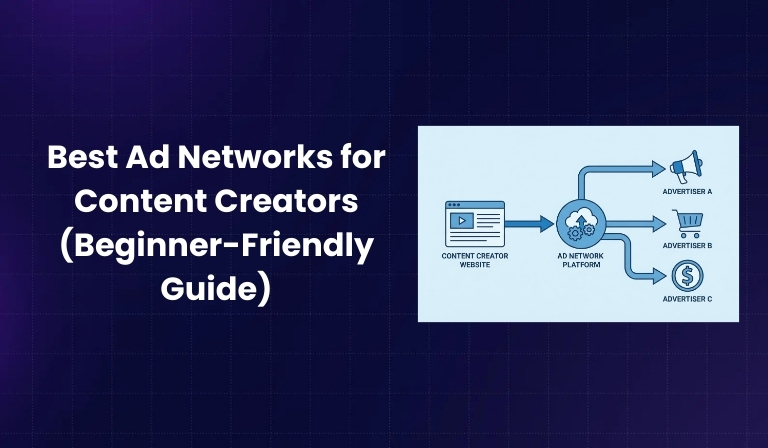
An ad network is a platform that connects advertisers with content creators (also called publishers). Advertisers want their ads shown to relevant audiences, and creators want to earn money by displaying those ads on their content.
Instead of dealing with advertisers one by one, creators join an ad network that handles ad selection, placement, tracking, and payments. This makes monetization simpler and more accessible, especially for beginners.
Ad networks are increasingly important in 2026 due to privacy regulations, reduced third-party cookie usage, and the growing use of AI-driven ad targeting. These networks help manage complexity while still enabling creators to earn revenue.
How Ad Networks Work (Step-by-Step)
Ad networks follow a fairly standard process from signup to payment. Understanding this process helps creators set realistic expectations.
- The creator signs up for an ad network and submits their website, channel, or app for review
- Once approved, the network provides ad code or integration instructions
- The creator places the ad code on their content
- Ads are automatically displayed to visitors based on targeting rules
- The network tracks impressions, clicks, or actions
- Earnings accumulate in the creator’s account
- Payments are issued once the minimum payout threshold is reached
Types of Ad Networks for Content Creators
Different ad networks specialize in different ad formats and platforms. Knowing these types helps creators choose networks that match their content.
- Display ad networks show banner and display ads on websites
- Video ad networks focus on video ads for platforms like YouTube and mobile apps
- Native advertising networks blend ads naturally within content
- Mobile and in-app ad networks are designed for mobile applications
- Programmatic ad networks use automated auctions to serve ads
- Affiliate-based ad networks focus on performance-based commissions rather than impression.
How to Choose the Right Ad Network in 2026
Choosing the right ad network depends on your content type, traffic level, and monetization goals. Not every network is suitable for beginners.
- Traffic requirements and minimum pageviews
- Platform compatibility (website, blog, YouTube, app)
- Types of ad formats supported
- Payment models such as CPM, CPC, CPA, or revenue share
- Payment thresholds and payout frequency
- Impact on user experience and website performance
- Approval difficulty and policy strictness
17 Best Ad Networks for Content Creators in 2026
1. Google AdSense
Google AdSense is one of the most popular ad networks and is often the first choice for beginners. It provides automated ads and access to Google’s advertiser ecosystem.
- Best for blogs and small websites
- No strict traffic minimum, but quality content is required
- Wide range of ad formats
- Easy setup and reliable payments
- Earnings may be lower compared to premium networks
2. Media.net

Media.net is powered by Yahoo and Bing and focuses heavily on contextual advertising. Ads are shown based on page content rather than user behavior alone.
- Works well for text-heavy content
- Strong presence in English-language markets
- Offers display and native ads
- Approval standards are moderate
- Earnings vary by niche
3. PropellerAds
PropellerAds is known for offering monetization options even for very low-traffic websites. It supports several aggressive ad formats.
- Supports push notifications and interstitial ads
- Easy approval process
- Suitable for international traffic
- May impact user experience if not managed carefully
4. Infolinks

Infolinks places ads directly within content text rather than using traditional banners. This makes it less intrusive visually.
- No minimum traffic requirement
- Simple integration
- Works alongside other ad networks
- Earnings depend heavily on content relevance
5. Revcontent
Revcontent is a native advertising network that focuses on high-quality placements and premium advertisers.
- Native ads blend with site content
- Higher standards compared to entry-level networks
- Works well for content-focused sites
- Approval may take time
6. Ezoic
Ezoic uses machine learning to test ad placements and optimize revenue automatically. It integrates deeply with website infrastructure.
- Designed for growing websites
- Focus on site speed and user experience
- Requires some technical setup
- Offers detailed analytics
7. Monumetric
Monumetric provides managed ad services and focuses on long-term revenue optimization.
- Best for niche websites
- Personalized support
- Requires minimum monthly pageviews
- Setup fees may apply
8. AdThrive (Raptive)
AdThrive, now known as Raptive, focuses on premium publishers and lifestyle content creators.
- Strong RPM optimization
- High traffic requirements
- Strict content quality standards
- Ideal for established creators
9. SHE Media
SHE Media focuses on female-driven content and lifestyle niches.
- Best for creators in specific verticals
- Offers both ads and community support
- Requires consistent traffic
- Niche-focused eligibility
10. BuySellAds
BuySellAds allows creators to sell ad space directly to advertisers through a marketplace.
- More control over pricing
- Direct advertiser relationships
- Best for recognizable brands
- Requires steady traffic
11. Mediavine
Mediavine is a premium ad network known for strong revenue performance and publisher support.
- High traffic requirements
- Emphasis on content quality
- Strong ad optimization tools
- Long-term publisher focus
12. OpenX
OpenX is a programmatic advertising platform serving large publishers.
- Advanced auction-based system
- Suitable for enterprise-level sites
- Requires technical expertise
- Not beginner-friendly
13. PubMatic
PubMatic operates as a supply-side platform connecting publishers to global demand sources.
- Focus on transparency and control
- Works best with large traffic volumes
- Requires industry knowledge
- Enterprise-level monetization
14. Sovrn
Sovrn offers advertising and publisher tools including display ads and affiliate monetization.
- Flexible monetization options
- Access to analytics tools
- Approval depends on traffic quality
- Suitable for mid to large publishers
15. AdRecover
AdRecover focuses on monetizing users who use ad blockers.
- Targets previously unmonetized traffic
- User-consent based approach
- Works alongside other networks
- Specialized use case
16. YouTube Partner Program (YPP)
The YouTube Partner Program allows creators to earn revenue from ads shown on their videos.
- Eligibility based on watch time and subscribers
- Revenue share model
- Integrated directly into YouTube
- Income depends on audience and niche
17. AdColony
AdColony specializes in mobile and video advertising, particularly for apps.
- High-quality video ad formats
- Strong presence in mobile gaming and apps
- Best for app developers and video-first creators
- Requires technical integration
Ad Networks Comparison Table
This comparison helps creators quickly evaluate which networks may suit their needs.
- Minimum traffic requirements
- Supported platforms (blog, video, app)
- Primary ad formats
- Payment models
- Beginner friendliness
Ad Network Payment Models Explained
Understanding how ad networks pay is essential for setting expectations.
- CPM (Cost Per Mille): Payment per 1,000 impressions
- CPC (Cost Per Click): Payment when users click ads
- CPA (Cost Per Action): Payment when users complete actions
- Revenue share: Percentage-based earnings
- CPM is generally more predictable for beginners
Common Mistakes Content Creators Make with Ad Networks
Many creators struggle with ad revenue due to avoidable mistakes.
- Applying before meeting quality standards
- Overloading pages with ads
- Ignoring page speed and user experience
- Choosing networks with unrealistic requirements
- Failing to test and optimize placements
Tips to Increase Ad Revenue in 2026
Ad revenue depends on more than just traffic volume.
- Focus on high-quality, relevant traffic
- Optimize ad placements without harming usability
- Combine ads with other monetization methods
- Improve mobile performance and Core Web Vitals
- Choose niches with strong advertiser demand
Ad Networks vs Affiliate Marketing: Which Is Better?
Both monetization methods serve different purposes.
- Ad networks provide passive income from traffic
- Affiliate marketing depends on conversions
- Ads work well for informational content
- Affiliates suit product-focused content
- Many creators successfully use both together
Are Ad Networks Still Worth It in 2026?
Despite changes in privacy laws and tracking limitations, ad networks continue to adapt.
AI-based targeting, contextual ads, and first-party data strategies have improved relevance. The growth of the creator economy also supports continued advertiser demand. For many creators, ad networks remain a reliable and scalable income source.
Conclusion
Ad networks are still a practical monetization option for content creators in 2026. From beginner-friendly platforms like Google AdSense to premium networks like Mediavine, there are options for every stage of growth.
The best approach is to start simple, focus on quality content, and gradually move to more advanced networks as traffic grows. By testing, optimizing, and diversifying income sources, creators can build a more stable and sustainable online business.

Passionate about blogging and focused on elevating brand visibility through strategic SEO and digital marketing. Always tuned in to the latest trends, I’m dedicated to maximizing engagement and delivering measurable ROI in the dynamic world of digital marketing. Let’s connect and unlock new opportunities together!