
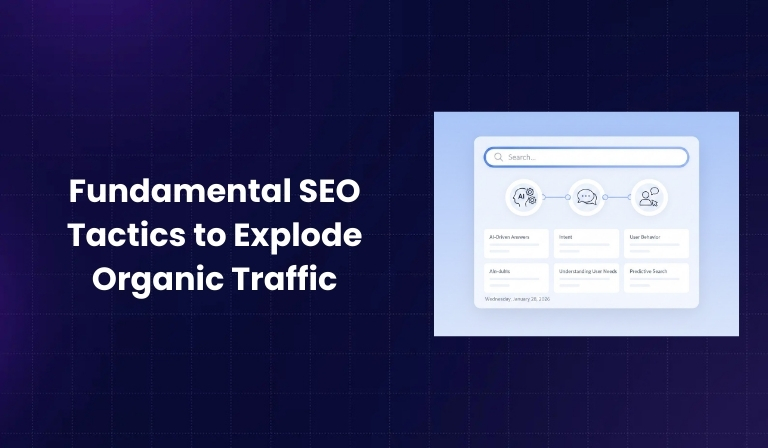

SEO in 2026 is no longer about ranking a single page for a single keyword. Search engines now focus more on user behavior, content usefulness, and overall website quality. Algorithms have become better at understanding what users want, how they interact with content, and whether a website truly solves their problems.
Because of this shift, businesses that still rely on outdated SEO tactics often struggle to grow organic traffic. To succeed in 2026, SEO strategies must focus on intent, authority, experience, and trust, not shortcuts.
This guide explains five fundamental SEO tactics that consistently help websites grow organic traffic in a sustainable way.
5 Fundamental SEO Tactics to Explode Organic Traffic
1. Focus on Search Intent, Not Just Keywords
Search intent is the reason behind a user’s search. In 2026, understanding intent is more important than simply placing keywords in content.
What Is Search Intent in Modern SEO?
Search intent generally falls into four main categories:
- Informational intent – users want to learn or understand something
- Navigational intent – users want to reach a specific website or page
- Commercial intent – users are researching before making a decision
- Transactional intent – users are ready to take action, such as buying or signing up
With AI-driven search, search engines can now better interpret context, wording, and user behavior to determine intent instead of relying only on keywords.
Why Search Intent Matters More in 2026
Search engines analyze how users interact with results to judge relevance.
- They measure how accurately a page answers the user’s question
- They track engagement signals such as time spent, scrolling, and return visits
- They compare user satisfaction across competing results
When content matches intent, it improves rankings, click-through rates, and overall engagement.
How to Optimize Content for Search Intent
Optimizing for intent means aligning content with what users expect to see.
- Match content format with intent (guides for learning, comparisons for research, pages for actions)
- Improve on-page experience so users can quickly find answers
- Regularly update older content to reflect current user needs and expectations
2. Build Topical Authority Instead of Isolated Pages
Websites that consistently cover a topic in depth tend to perform better than those publishing disconnected pages.
What Is Topical Authority?
Topical authority means being recognized as a reliable source for a specific subject area.
- Keyword-focused SEO targets individual keywords
- Topic-based SEO focuses on covering an entire subject comprehensively
Search engines favor websites that demonstrate deep understanding rather than surface-level coverage.
Why Topical Authority Boosts Organic Traffic
Building topical authority helps search engines trust a website more.
- It creates stronger relevance signals across multiple related searches
- It improves rankings for both primary and long-tail keywords
- It provides more stable, long-term traffic growth
Websites with authority are less affected by small algorithm changes.
How to Create a Topical Authority Strategy
A structured content approach helps build authority effectively.
- Use pillar pages to cover core topics in detail
- Support pillar pages with related subtopics and articles
- Strengthen internal linking so search engines understand topic relationships
- Focus on meaningful depth rather than publishing large volumes of thin content
3. Optimize for AI-Powered Search and SERP Features
Search results in 2026 are more dynamic and AI-driven than ever before.
How AI Is Changing Search Results in 2026
AI has changed how results are displayed and consumed.
- AI summaries provide quick answers at the top of results
- Zero-click searches reduce the need to visit multiple pages
- SERPs adjust based on context, location, and user behavior
This means content must be clear, structured, and helpful from the start.
Key SERP Features to Target
Optimizing for SERP features increases visibility beyond traditional rankings.
- Featured snippets that directly answer questions
- People Also Ask sections that expand topic coverage
- Rich results that enhance how listings appear
These features improve visibility even when users do not scroll far.
Practical Ways to Optimize for AI Search
AI prefers content that is easy to understand and extract answers from.
- Use clear headings and logical structure
- Write direct, concise answers within content sections
- Apply schema and semantic SEO practices to clarify meaning
4. Improve User Experience and Core Web Performance
User experience plays a direct role in SEO performance in 2026.
Why UX Is a Ranking Factor in 2026
Search engines prioritize websites that users enjoy using.
- Positive experiences lead to longer visits and better engagement
- Poor usability increases bounce rates and abandonment
- Smooth experiences signal quality and reliability
UX and SEO now work together rather than separately.
Key UX Metrics That Matter
Several performance and usability factors influence rankings.
- Page speed and loading efficiency
- Mobile usability across different devices
- Visual stability and easy navigation
These metrics help determine whether users can access and consume content comfortably.
How to Improve Website Experience
Improving UX requires both technical and content-level optimizations.
- Optimize pages for fast loading and responsiveness
- Use clean layouts with readable fonts and spacing
- Reduce unnecessary steps in user journeys to improve flow
5. Create Content That Builds Trust and Credibility
Trust is a core ranking signal in modern SEO.
What Trust-Based SEO Means Today
Search engines evaluate whether content demonstrates:
- Real experience with the topic
- Subject expertise and accuracy
- Authority within the industry
- Transparency and reliability
Trust-focused SEO goes beyond keywords and formatting.
Why Trust Impacts Organic Rankings
Trust influences how content is evaluated and ranked.
- High-quality content is more likely to be surfaced consistently
- Trusted brands receive stronger engagement signals
- Consistency across content improves credibility
Websites lacking trust signals often struggle to maintain rankings.
How to Build Trust Through Content
Trust is built through clarity and accuracy.
- Show clear authorship and accountability
- Keep information accurate and updated
- Support claims with logical explanations and real-world context
Common SEO Mistakes to Avoid in 2026
Many websites fail to grow because they repeat avoidable mistakes.
- Over-optimizing content with unnecessary keywords
- Ignoring content updates after publishing
- Relying on low-value, unedited AI content
- Weak internal linking that limits topic clarity
Avoiding these mistakes helps protect long-term organic growth.
How to Measure SEO Success in 2026
SEO success should be measured beyond rankings alone.
- Track organic traffic quality instead of volume only
- Monitor engagement metrics such as time on page and interactions
- Measure conversions tied to organic visits
These indicators show whether SEO efforts are delivering real value.
Conclusion
SEO in 2026 requires a shift from shortcuts to strategy. Sustainable organic growth comes from understanding users, building authority, optimizing experiences, and earning trust. The five tactics outlined in this guide focus on long-term performance rather than quick wins.
Websites that adapt early and prioritize quality will continue to grow even as search technology evolves.

Passionate about blogging and focused on elevating brand visibility through strategic SEO and digital marketing. Always tuned in to the latest trends, I’m dedicated to maximizing engagement and delivering measurable ROI in the dynamic world of digital marketing. Let’s connect and unlock new opportunities together!