


Advertising has become increasingly complex as businesses operate across multiple digital channels, formats, and customer touchpoints. Running ads is no longer the challenge. The real challenge is understanding whether those ads are actually contributing to business growth. This is where advertising metrics play a critical role.
Advertising metrics translate ad activity into measurable outcomes. They help businesses understand how audiences respond to ads, how efficiently budgets are being used, and how advertising impacts conversions, revenue, and long-term value. Without clearly defined metrics, advertising decisions are often based on assumptions rather than performance.
This guide breaks down the most important advertising metrics used in online campaigns and explains how each metric supports smarter decision-making, optimization, and sustainable growth.
What Are Advertising Metrics?
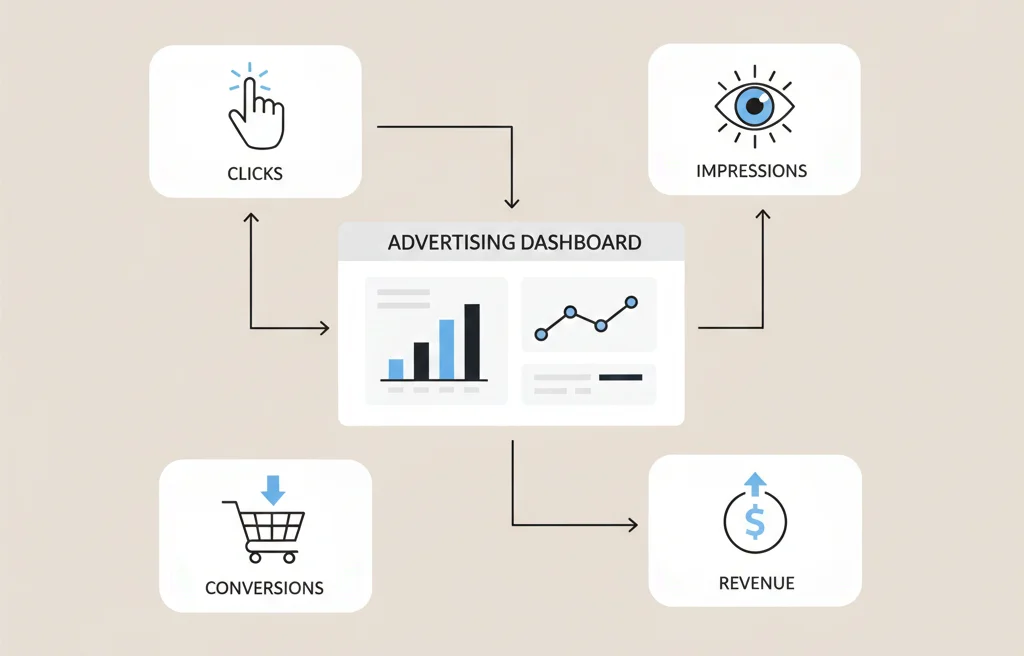
Advertising metrics are measurable values used to evaluate the performance of advertising campaigns across digital platforms. These metrics capture different stages of user interaction, from viewing an ad to clicking, engaging, converting, and generating revenue.
Advertising metrics are not limited to one channel or platform. They apply to search advertising, social media advertising, display advertising, email campaigns, and video advertising. Each metric focuses on a specific performance signal, such as visibility, engagement, cost efficiency, or conversion impact.
Advertising metrics help businesses answer key performance questions such as whether the right audience is being reached, whether ads are compelling enough to drive action, and whether the investment in advertising is producing meaningful results.
Why Are Advertising Metrics Important?
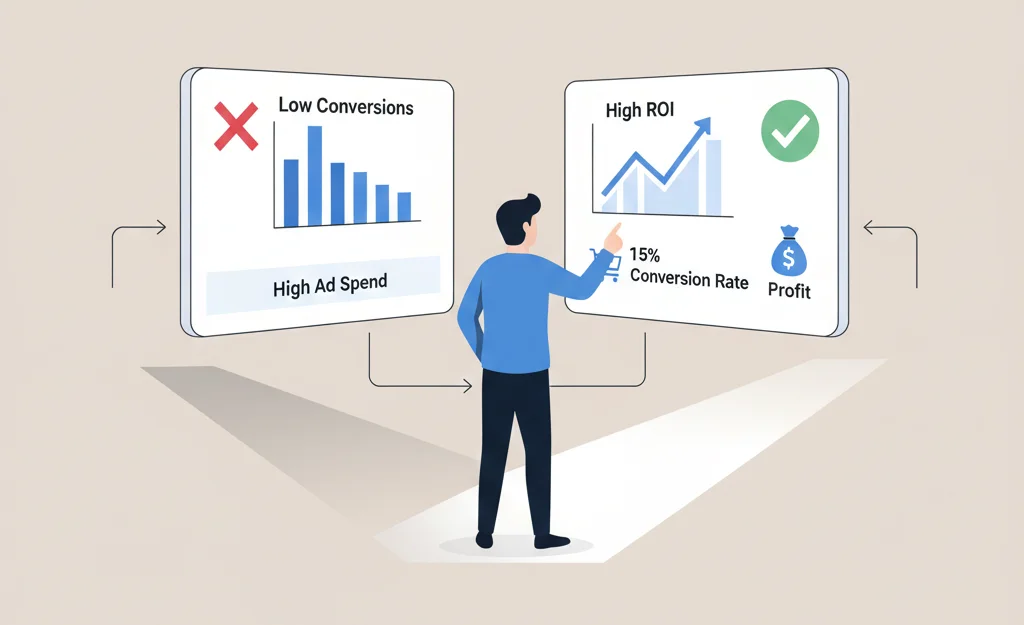
Advertising metrics are essential because they provide clarity in an environment where budgets, platforms, and user behavior constantly change. Without metrics, advertisers cannot accurately evaluate success or failure.
Advertising metrics are important because they:
- Provide measurable proof of campaign performance
- Help identify which ads and audiences deliver results
- Enable advertisers to control costs and reduce waste
- Support consistent optimization over time
- Align advertising activity with business outcomes
When advertising metrics are tracked and analyzed correctly, they allow businesses to move from reactive decision-making to strategic, data-driven planning.
How Advertising Metrics Help Optimize Business Performance
Advertising metrics do more than report performance. They actively guide optimization and improvement across campaigns. By reviewing metric trends, businesses can identify inefficiencies and areas of opportunity.
Advertising metrics help optimize performance by:
- Revealing which creatives, audiences, and placements perform best
- Highlighting friction points in the user journey
- Improving conversion paths and landing page effectiveness
- Supporting better budget allocation decisions
- Enabling continuous testing and improvement
When metrics are monitored consistently, they help businesses improve both short-term campaign results and long-term growth strategies.
22 Online Advertising Metrics to Optimize Your Business
1) Conversion Rate (CR)
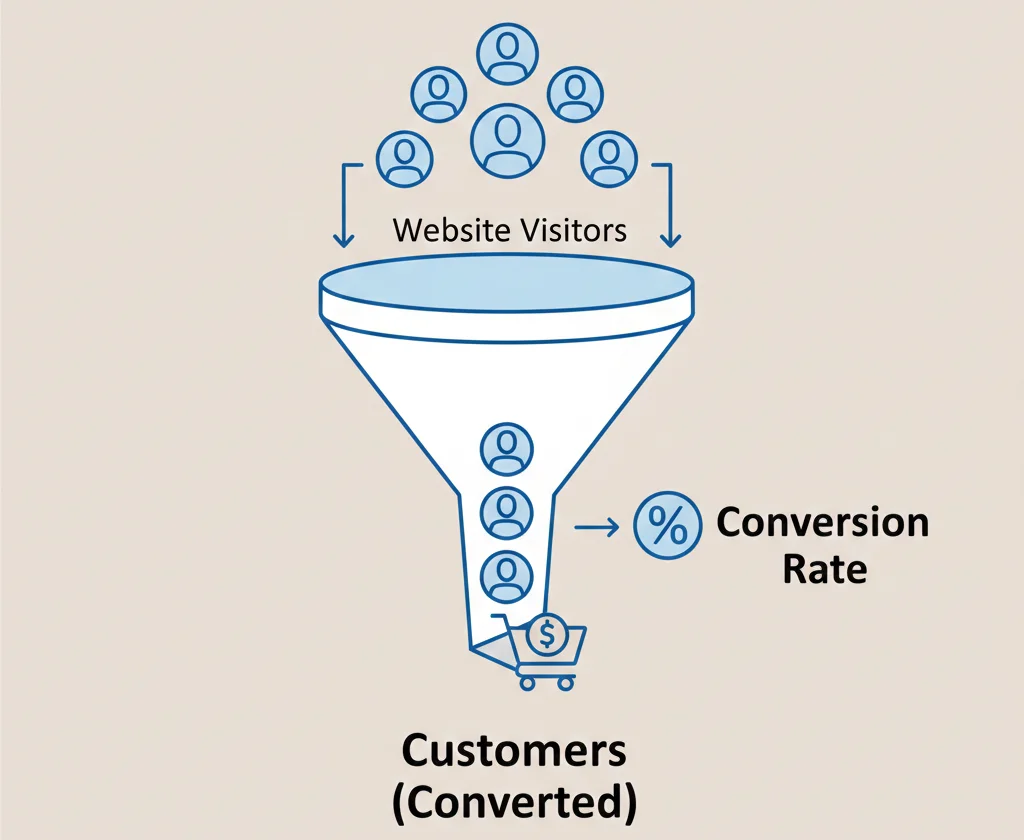
Conversion rate measures how effectively an advertising campaign turns visitors into completed actions. A conversion can represent different outcomes depending on business goals, such as a purchase, lead submission, app install, or newsletter signup.
Conversion rate focuses on the quality of traffic rather than volume. Even high traffic campaigns can underperform if visitors do not take meaningful action.
Why Is Conversion Rate Important?
Conversion rate is important because it directly reflects how well ads, landing pages, and audience targeting work together. A low conversion rate often signals a disconnect between user intent and the experience provided after the click.
Conversion rate helps businesses:
- Evaluate landing page relevance and clarity
- Measure audience targeting accuracy
- Improve messaging and offer alignment
- Increase efficiency without increasing ad spend
How Is Conversion Rate Calculated?
Conversion rate is calculated by dividing the number of conversions by the total number of visitors and multiplying the result by 100. This calculation shows the percentage of users who complete the desired action.
2) Customer Lifetime Value (LTV)
Customer Lifetime Value represents the total revenue a business expects to generate from a customer throughout the entire relationship. LTV shifts the focus from single transactions to long-term value.
LTV is especially important for businesses with repeat purchases, subscriptions, or ongoing customer relationships.
Why Is LTV Important?
LTV helps businesses understand the long-term impact of advertising. It allows advertisers to justify higher acquisition costs when customers generate value over time.
LTV is important because it:
- Supports sustainable growth planning
- Helps balance acquisition and retention strategies
- Improves budgeting and forecasting decisions
- Aligns advertising with long-term profitability
How Do You Calculate LTV?
LTV is calculated by combining average purchase value, purchase frequency, and customer lifespan. This provides an estimate of total revenue generated by an average customer.
3) Return on Investment (ROI)
Return on Investment measures how profitable advertising efforts are relative to the costs incurred. ROI evaluates the overall financial impact of advertising campaigns.
ROI looks beyond individual metrics and focuses on net business benefit.
Why Is ROI Important?
ROI is important because it shows whether advertising contributes positively to business growth. It helps compare different campaigns, platforms, and strategies.
ROI is useful for:
- Evaluating overall profitability
- Supporting strategic investment decisions
- Identifying high-performing channels
- Eliminating unprofitable campaigns
How Do You Calculate ROI?
ROI is calculated by subtracting advertising costs from revenue, dividing the result by advertising costs, and multiplying by 100.
4) Return on Ad Spend (ROAS)
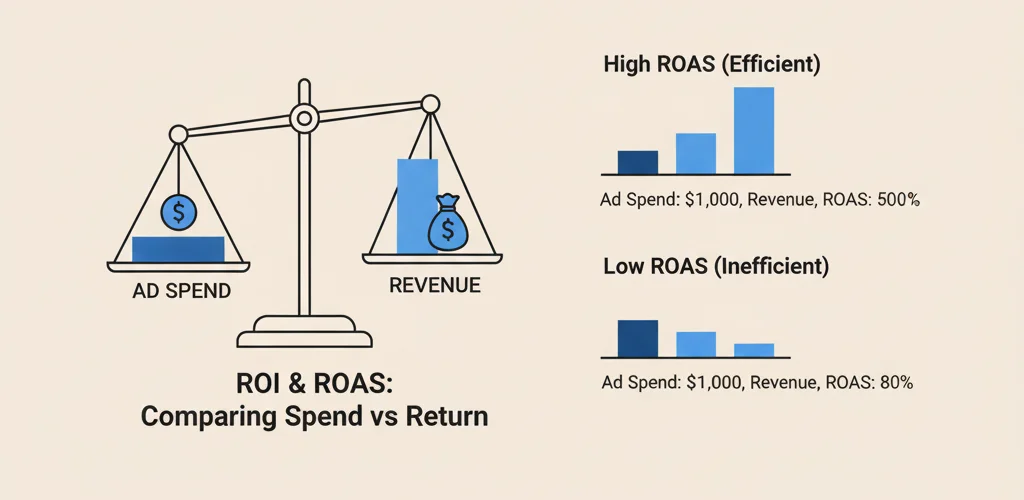
Return on Ad Spend measures how much revenue is generated for every unit of currency spent on advertising. ROAS focuses specifically on revenue efficiency.
ROAS is commonly used in performance-focused campaigns such as eCommerce and paid search.
Why Is ROAS Important?
ROAS helps businesses understand how effectively ad spend generates revenue. It is often used to scale campaigns that demonstrate strong financial performance.
ROAS helps:
- Identify profitable campaigns
- Optimize budget distribution
- Compare creative and audience performance
- Support scaling decisions
How Do You Calculate ROAS?
ROAS is calculated by dividing revenue generated by advertising spend.
5) Bounce Rate (BR)
Bounce rate measures the percentage of visitors who leave a website after viewing only one page. It indicates whether visitors find the landing page relevant and engaging.
Bounce rate does not always indicate failure, but consistently high bounce rates may suggest issues.
Why Is Bounce Rate Important?
Bounce rate is important because it highlights user experience problems and mismatches between ads and landing pages.
Bounce rate helps identify:
- Poor landing page relevance
- Weak messaging alignment
- Slow page performance
- Targeting inaccuracies
How Is Bounce Rate Calculated?
Bounce rate is calculated by dividing single-page sessions by total sessions and multiplying the result by 100.
6) Engagement Rate (ER)

Engagement rate measures how actively users interact with ads. Engagement includes actions such as clicks, likes, comments, shares, or other defined interactions.
Engagement rate provides insight into how compelling ad creatives are.
Why Is Engagement Rate Important?
Engagement rate indicates whether ads resonate with the audience. High engagement often signals strong creative relevance and messaging.
Engagement rate helps:
- Improve ad relevance
- Support platform algorithm performance
- Measure content effectiveness
- Refine creative strategy
How Is Engagement Rate Calculated?
Engagement rate is calculated by dividing total engagements by total impressions or reach and multiplying by 100.
Perfect — continuing at the same depth and structure.
7) Facebook Engagement Rate
Facebook Engagement Rate measures how users interact with ads or content on Facebook. Engagement includes actions such as likes, comments, shares, clicks, and reactions. This metric focuses on how well content resonates with the audience rather than how many people simply see the ad.
Facebook Engagement Rate is especially useful for understanding creative performance and audience relevance on a platform where competition for attention is high.
Why Is Facebook Engagement Rate Important?
Facebook Engagement Rate is important because it indicates whether ads are capturing user interest. Ads with higher engagement are more likely to receive better delivery and lower costs over time.
Facebook Engagement Rate helps advertisers:
- Evaluate creative relevance and messaging
- Improve audience targeting accuracy
- Identify content formats that perform best
- Support better campaign optimization decisions
How Is Facebook Engagement Rate Calculated?
Facebook Engagement Rate is calculated by dividing total engagements by total impressions or reach and multiplying the result by 100. The exact calculation may vary depending on whether impressions or reach is used as the denominator.
8) Instagram Engagement Rate
Instagram Engagement Rate measures how users interact with ads or posts on Instagram. Engagement includes likes, comments, shares, saves, and profile actions. Since Instagram is a highly visual platform, engagement often reflects creative quality and storytelling effectiveness.
This metric is commonly used for brand awareness and discovery-focused campaigns.
Why Is Instagram Engagement Rate Important?
Instagram Engagement Rate helps advertisers understand how visually appealing and relevant their ads are to the target audience. High engagement usually signals strong creative alignment with audience preferences.
Instagram Engagement Rate is important because it:
- Measures content resonance and visual impact
- Helps optimize creative formats and styles
- Supports brand visibility and discovery
- Indicates audience interest beyond clicks
How Do You Calculate Instagram Engagement Rate?
Instagram Engagement Rate is calculated by dividing total engagements by impressions or reach and multiplying the result by 100.
9) Twitter (X) Engagement Rate
Twitter (X) Engagement Rate measures how users interact with ads or promoted posts on the platform. Engagement includes likes, replies, reposts, link clicks, and other interactions.
This metric is particularly useful for campaigns focused on conversation, real-time updates, and audience participation.
Why Is Twitter Engagement Rate Important?
Twitter Engagement Rate shows how well content sparks interest and discussion. It helps advertisers understand whether messaging resonates in a fast-moving, text-driven environment.
Twitter Engagement Rate helps:
- Measure content relevance and clarity
- Optimize messaging tone and timing
- Improve campaign responsiveness
- Evaluate conversation-driven campaigns
How Do You Calculate Twitter Engagement Rate?
Twitter Engagement Rate is calculated by dividing total engagements by total impressions and multiplying the result by 100.
10) LinkedIn Engagement Rate
LinkedIn Engagement Rate measures interactions with ads on LinkedIn, including clicks, reactions, comments, and shares. This metric is especially important for B2B advertising and professional audiences.
LinkedIn engagement often reflects content credibility and relevance rather than entertainment value.
Why Is LinkedIn Engagement Rate Important?
LinkedIn Engagement Rate helps advertisers assess how well content resonates with professionals, decision-makers, and business audiences.
LinkedIn Engagement Rate is important because it:
- Reflects content relevance in a professional context
- Helps optimize B2B targeting and messaging
- Supports lead generation and brand authority
- Indicates audience quality and intent
How Do You Calculate LinkedIn Engagement Rate?
LinkedIn Engagement Rate is calculated by dividing total engagements by total impressions and multiplying the result by 100.
11) Open Rate (OR)
Open Rate measures the percentage of recipients who open an email. While primarily used in email marketing, open rate is relevant to advertising when email campaigns are part of a broader paid strategy.
Open Rate reflects how effective subject lines, sender reputation, and audience targeting are.
Why Is Open Rate Important?
Open Rate helps businesses understand whether emails capture initial interest. A low open rate often indicates issues with subject lines, timing, or audience relevance.
Open Rate is important because it:
- Measures first-level engagement
- Indicates audience interest and trust
- Helps improve email messaging strategies
How Is Open Rate Calculated?
Open Rate is calculated by dividing the number of opened emails by the number of delivered emails and multiplying the result by 100.
12) Cost Per Acquisition (CPA)
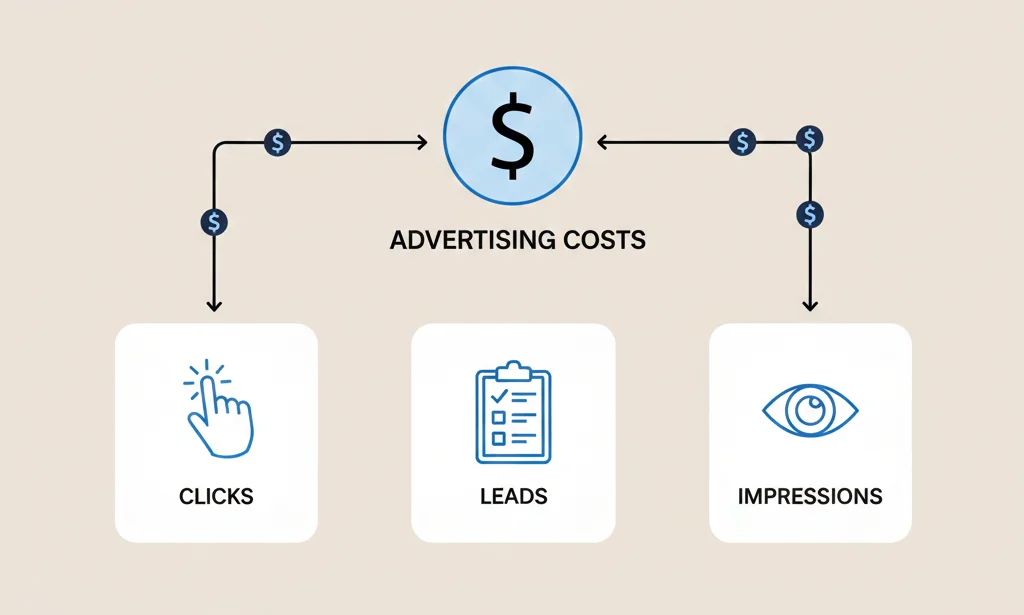
Cost Per Acquisition measures the average cost required to generate one conversion, customer, or desired action. CPA focuses on efficiency rather than volume.
CPA is widely used across performance-driven campaigns.
Why Is CPA Important?
CPA helps businesses control acquisition costs and maintain profitability. It provides a clear view of how much is being spent to achieve tangible results.
CPA is important because it:
- Measures cost efficiency
- Supports profitability tracking
- Helps compare campaign performance
- Guides budget optimization decisions
How Do You Calculate CPA?
CPA is calculated by dividing total advertising spend by the total number of conversions or acquisitions.
13) Facebook Cost Per Result
Facebook Cost Per Result measures how much is spent to achieve a specific campaign outcome, such as clicks, leads, or conversions. The definition of a “result” depends on the campaign objective.
This metric provides outcome-focused performance insight.
Why Is Facebook Cost Per Result Important?
Facebook Cost Per Result helps advertisers understand how efficiently campaigns deliver their intended outcomes.
It is important because it:
- Aligns performance with campaign objectives
- Helps compare different ad sets and creatives
- Supports budget and bidding decisions
- Highlights efficiency at the result level
How Do You Calculate Facebook Cost Per Result?
Facebook Cost Per Result is calculated by dividing total campaign spend by the total number of results achieved.
14) Cost Per Click (CPC)
Cost Per Click measures the average amount paid for each click on an ad. CPC focuses on traffic acquisition efficiency.
This metric is commonly used in search and social advertising.
Why Is CPC Important?
CPC helps advertisers manage budgets and evaluate bidding efficiency. A high CPC may indicate strong competition, low relevance, or inefficient targeting.
CPC is important because it:
- Controls traffic acquisition costs
- Helps optimize bidding strategies
- Reflects ad relevance and competition
- Supports budget planning
How Do You Calculate CPC?
CPC is calculated by dividing total ad spend by the total number of clicks.
15) Cost Per Thousand (CPM)
Cost Per Thousand measures the cost of displaying an ad one thousand times. CPM focuses on visibility rather than interaction.
CPM is commonly used in awareness and reach-focused campaigns.
What Is an Impression in CPM?
An impression occurs each time an ad is displayed to a user, regardless of whether the user interacts with it.
Why Is CPM Important?
CPM helps advertisers understand the cost of reaching audiences at scale.
CPM is important because it:
- Measures awareness campaign efficiency
- Supports reach-based planning
- Helps compare platform costs
- Evaluates visibility performance
How Do You Calculate CPM?
CPM is calculated by dividing total advertising cost by total impressions and multiplying the result by 1,000.
16) Click-Through Rate (CTR)
Click-Through Rate measures the percentage of users who click on an ad after seeing it. CTR focuses on ad relevance and appeal.
CTR connects visibility to action.
Why Is Click-Through Rate Important?
CTR shows how compelling an ad is to its audience. A low CTR often signals poor messaging or targeting.
CTR helps:
- Evaluate ad relevance
- Improve creative performance
- Support quality-based bidding
- Predict conversion potential
How Is CTR Calculated?
CTR is calculated by dividing total clicks by total impressions and multiplying the result by 100.
17) Quality Score (QS)

Quality Score is a metric used in advertising platforms to measure the relevance and quality of ads, keywords, and landing pages. It reflects how well an ad experience matches user expectations.
Quality Score directly influences how ads are delivered and how much advertisers pay for clicks or impressions.
Why Is Quality Score Important in Advertising?
Quality Score is important because it affects both ad visibility and cost efficiency. Ads with higher Quality Scores often receive better placements at lower costs.
Quality Score helps advertisers:
- Improve ad relevance and user experience
- Reduce cost per click and overall spend
- Increase ad visibility without higher bids
- Align messaging with user intent
How Is Quality Score Calculated?
Quality Score is influenced by several factors, including expected click-through rate, ad relevance, and landing page experience. These factors work together to determine how useful the ad is to users.
18) Cost Per View (CPV)
Cost Per View measures the average cost paid when a user views a video ad. A view is counted when a user watches a video for a defined minimum duration or interacts with it, depending on platform rules.
CPV is commonly used for video-focused campaigns.
Why Is CPV Important in Advertising?
CPV helps advertisers understand how efficiently video ads capture attention. It focuses on actual content consumption rather than simple exposure.
CPV is important because it:
- Measures video ad efficiency
- Helps optimize video creative length and quality
- Supports budget control for video campaigns
- Evaluates audience interest in video content
How Is CPV Calculated?
CPV is calculated by dividing total video ad spend by the total number of video views.
19) Cost Per Lead (CPL)
Cost Per Lead measures how much it costs to generate a single lead through advertising. A lead typically represents a user who submits contact information or expresses interest in a product or service.
CPL is widely used in service-based and B2B advertising.
Why Is CPL Important?
CPL helps businesses evaluate lead generation efficiency and budget effectiveness. It provides clarity on whether advertising spend is producing valuable prospects.
CPL is important because it:
- Measures lead generation efficiency
- Supports sales and marketing alignment
- Helps compare lead quality across campaigns
- Guides budget optimization decisions
How Do You Calculate CPL?
CPL is calculated by dividing total advertising spend by the total number of leads generated.
20) Cost Per Engagement (CPE)
Cost Per Engagement measures the average cost of each user interaction with an ad. Engagement includes actions such as likes, comments, shares, clicks, or other defined interactions.
CPE focuses on interaction efficiency rather than conversions.
Why Is CPE Important?
CPE helps advertisers understand how cost-effective engagement-driven campaigns are. It is particularly useful for awareness and content-focused campaigns.
CPE is important because it:
- Measures interaction efficiency
- Helps optimize engagement-based campaigns
- Evaluates creative effectiveness
- Supports audience interest analysis
How Do You Calculate CPE?
CPE is calculated by dividing total ad spend by total engagements.
21) Page RPM
Page RPM measures the revenue earned per one thousand page views. It is commonly used by publishers and content-driven websites that monetize traffic through advertising.
Page RPM focuses on monetization efficiency rather than direct conversions.
Why Is Page RPM Important?
Page RPM helps businesses understand how effectively their website generates ad revenue from traffic.
Page RPM is important because it:
- Measures monetization performance
- Helps optimize ad placements
- Supports revenue forecasting
- Evaluates content value
How Do You Calculate Page RPM?
Page RPM is calculated by dividing total earnings by total page views and multiplying the result by 1,000.
22) Bonus Advertising Metric – Value for Money (VfM)
Value for Money is a holistic metric that evaluates advertising performance by comparing outcomes achieved relative to total investment. VfM focuses on overall effectiveness rather than individual metrics.
VfM is often used for high-level performance assessment.
Why Is the Value for Money Metric Important?
VfM helps businesses assess whether advertising efforts deliver meaningful returns beyond isolated metrics.
VfM is important because it:
- Provides a balanced performance view
- Combines cost, quality, and outcomes
- Supports strategic evaluation
- Helps justify advertising investment
How Do You Calculate VfM?
Value for Money is assessed by comparing achieved outcomes, such as conversions or revenue, against total advertising spend to evaluate overall effectiveness.
How to Choose the Right Advertising Metrics
Choosing the right advertising metrics is essential because not all metrics provide equal value for every campaign. The relevance of a metric depends on business objectives, campaign goals, and the stage of the customer journey being targeted.
For example, awareness-focused campaigns require visibility and engagement metrics, while performance-focused campaigns rely more on conversion and cost efficiency metrics. Selecting metrics without considering objectives can lead to misleading conclusions and poor optimization decisions.
Key factors to consider when choosing advertising metrics include:
- The primary goal of the campaign
- The stage of the marketing funnel being targeted
- The business model and sales cycle
- The platforms and channels being used
- The balance between short-term performance and long-term value
When metrics are aligned with objectives, they provide actionable insights that support consistent improvement and better outcomes.
Conclusion
Advertising metrics are the foundation of effective and sustainable advertising strategies. They provide the clarity needed to understand performance, optimize campaigns, and make informed decisions. By focusing on the right advertising metrics, businesses can improve efficiency, reduce wasted spend, and align advertising efforts with meaningful business outcomes.
When used correctly, advertising metrics transform advertising from an experimental activity into a disciplined, data-driven process that supports long-term growth and profitability.