
Search engine optimization has evolved dramatically over the years, but one thing has remained constant: HTML and meta tags are the foundation of SEO. No matter how advanced algorithms become, search engines still rely on structured HTML signals to understand, categorize, and present content correctly.
If your website lacks proper SEO tags, even the best-written content may struggle to perform. Meta and HTML tags act as a communication layer between your website and search engines, helping them interpret relevance, context, and usability.
In this guide, we’ll explore the 14 most important tags every website owner, marketer, and SEO professional must understand. This detailed SEO meta tags list will help you improve visibility, click-through rates, crawl efficiency, and overall search performance.
Why Meta and HTML Tags Matter for SEO

Meta and HTML tags provide essential information about a webpage. They don’t just help search engines crawl your content; they also influence how your pages appear in search results and how users interact with them.
While not every tag is a direct ranking factor, together they improve:
- Content understanding
- User experience
- Crawl efficiency
- SERP appearance
- Click-through rate
These important tags form the backbone of effective on-page SEO.
1. Title Tag
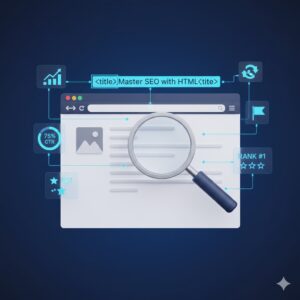
The title tag is one of the most powerful SEO elements on any page. It appears as the clickable headline in search results and also serves as the browser tab title.
A well-written title tag clearly explains what the page is about while enticing users to click.
From an SEO perspective, the title tag:
- Helps search engines understand page topic
- Strongly influences CTR
- Sets relevance expectations for users
Modern search engines no longer require exact-match keywords in titles, but relevance and clarity remain essential. Over-optimized or keyword-stuffed titles are often rewritten automatically.
Best practices
- Keep titles under 60 characters
- Make each title unique
- Place important keywords naturally
- Match intent rather than exact phrasing
- Ensure consistency with the page’s main heading
The title tag remains one of the best meta tags for SEO, regardless of algorithm updates.
2. Meta Description Tag
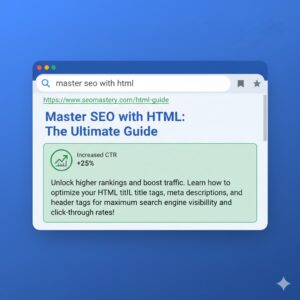
The meta description summarizes a page’s content and often appears beneath the title in search results. While it is not a ranking factor, it plays a critical role in attracting clicks.
A strong description explains the value of the page clearly and aligns with search intent. When keywords from a search query appear in the description, they are highlighted, increasing visibility.
Search engines frequently rewrite descriptions, especially when:
- They are missing
- They don’t match page content
- They are overly promotional or keyword-stuffed
Best practices
- Keep descriptions between 150–160 characters
- Write for users, not algorithms
- Include primary keywords naturally
- Reflect the actual content of the page
- Avoid quotation marks
Well-crafted descriptions are an essential part of any seo meta tags list.
3. Robots Meta Tag

The robots meta tag controls how search engines crawl and index a page. It allows site owners to guide crawlers at a page level rather than site-wide.
Common directives include:
- index / noindex
- follow / nofollow
This tag is especially useful for:
- Preventing low-value pages from indexing
- Blocking internal search pages
- Managing crawl budget
- Excluding draft or temporary pages
Incorrect use can harm visibility, so it must be handled carefully.
Best practices
- Use noindex for thin or duplicate pages
- Avoid blocking important URLs
- Review directives regularly
- Combine rules only when necessary
4. Canonical Link Tag
Duplicate content is a common SEO challenge. The canonical tag tells search engines which version of a URL should be considered the primary one.
This is critical when:
- URLs contain tracking parameters
- Content appears on multiple URLs
- Session IDs create duplicates
Canonical tags help consolidate ranking signals and prevent dilution.
Best practices
- Use absolute URLs
- Ensure canonical points to indexable pages
- Avoid canonical chains
- Maintain consistent internal linking
Canonical tags are one of the most overlooked yet important tags in SEO.
5. Social Media Meta Tags (Open Graph)
Social media meta tags control how your content appears when shared on platforms like Facebook and X. These tags don’t directly affect rankings but significantly impact click-through rates and engagement.
Key elements include:
- Title
- Description
- URL
- Image
Without them, platforms may display random or unappealing previews.
Best practices
- Use high-quality images
- Align social titles with page content
- Test previews before publishing
- Maintain consistency across platforms
Optimized previews improve brand perception and traffic quality.
6. Viewport Meta Tag
Mobile usability is a major ranking consideration. The viewport meta tag ensures your site adapts correctly to different screen sizes.
Without it, pages may render poorly on mobile devices, leading to high bounce rates and usability errors.
Best practices
- Always define viewport width
- Avoid disabling zoom
- Ensure responsive design
- Test across devices
This tag supports both SEO and accessibility.
Also Read: BCG Matrix of SBI
7. Meta Charset Tag
The charset meta tag defines how text is displayed on a webpage. UTF-8 encoding supports nearly all characters and languages.
Without correct encoding:
- Text may appear broken
- Symbols may display incorrectly
- Multilingual SEO may fail
Best practices
- Always use UTF-8
- Place charset tag early in the HTML
- Ensure consistency across pages
8. Meta Refresh Tag
The meta refresh tag is sometimes used for redirects or page reloads. However, it is not recommended for SEO.
Search engines may misinterpret these redirects, leading to indexing issues.
Best practice
- Avoid meta refresh entirely
- Use server-side redirects instead
9. Meta Keywords Tag
Once widely used, the meta keywords tag is now obsolete. Major search engines stopped using it due to abuse and manipulation.
Today, it provides:
- No ranking benefit
- No indexing value
- No SEO advantage
Including it has no impact and can be safely ignored.
10. Schema Markup (Structured Data)
Schema markup helps search engines understand content context rather than just keywords. It enhances how pages appear in search results through rich features.
Benefits include:
- Enhanced snippets
- Better content interpretation
- Improved CTR
- Eligibility for SERP features
Structured data is essential for ecommerce, recipes, reviews, and events.
Best practices
- Use relevant schema types
- Avoid misleading markup
- Test using validation tools
- Keep data updated
Schema represents the future of semantic SEO.
11. Heading Tags (H1–H6)
Heading tags structure content and improve readability for both users and search engines.
A clear hierarchy helps:
- Organize information
- Improve scannability
- Support passage indexing
- Clarify topical relevance
Best practices
- Use one H1 per page
- Align H1 with title intent
- Use H2–H6 logically
- Avoid keyword stuffing
Headings remain a vital part of effective SEO tags.
12. HTML5 Semantic Tags
HTML5 semantic tags replace generic containers with meaningful structure. These tags define content roles clearly.
Examples include:
- article
- header
- footer
- nav
- main
- section
Semantic tags help search engines understand layout and content relationships.
Best practices
- Use semantic tags appropriately
- Avoid mislabeling content
- Improve accessibility and clarity
13. Image Alt Attributes
Search engines cannot interpret images visually. Alt attributes provide text descriptions that explain image content.
Alt text helps with:
- Image search visibility
- Accessibility
- Context relevance
- Page understanding
Best practices
- Describe images accurately
- Use keywords naturally
- Avoid stuffing
- Focus on important images
Alt attributes are essential for image-heavy pages.
14. Nofollow, Sponsored, and UGC Attributes
Link attributes tell search engines how to treat outbound links.
They help manage:
- Trust signals
- Paid link compliance
- User-generated content
- Crawl efficiency
Different attributes serve different purposes and should be applied carefully.
Best practices
- Use sponsored for paid links
- Use UGC for comments
- Maintain balanced link profiles
- Avoid manipulative linking
Conclusion
Meta and HTML tags remain the backbone of SEO. While algorithms change, structured data and clean HTML continue to shape how search engines understand and rank content.
From title tags to schema markup, these important tags improve visibility, usability, and performance. Even techniques discussed as far back as best meta tags for SEO 2016 still influence modern optimization when applied correctly.
Mastering these SEO tags ensures your content is not only readable for users but also fully interpretable by search engines. In an era driven by semantic understanding and AI-assisted search, proper HTML structure is more important than ever.