
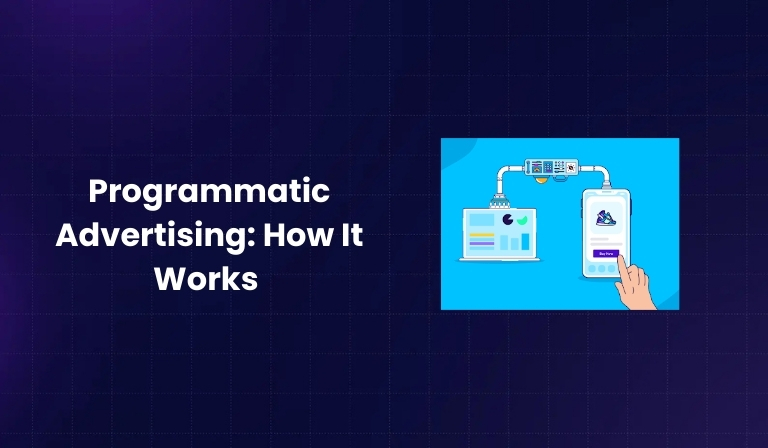

In today’s fast-paced digital landscape, marketers need precision, efficiency, and scale to stay competitive. Enter programmatic advertising – a revolutionary approach that’s transforming how brands connect with their audiences online.
With programmatic digital display advertising spend in the U.S. approaching $100 billion and accounting for close to 90% of all digital display ad spending, it’s clear that automation has become the backbone of modern advertising.
What is Programmatic Advertising?
Programmatic advertising is the automated process of buying and selling digital ad inventory using technology and algorithms instead of traditional manual negotiations. This sophisticated system uses artificial intelligence and real-time data to determine the best ad placements, targeting the right audience at the right time with precision that was previously impossible.
Unlike traditional advertising methods where media buyers negotiate directly with publishers, programmatic advertising operates through three key platforms:
- Demand-Side Platforms (DSPs): Where advertisers buy ad inventory
- Supply-Side Platforms (SSPs): Where publishers sell their ad space
- Ad Exchanges: The virtual marketplace where transactions occur

How Programmatic Advertising Works
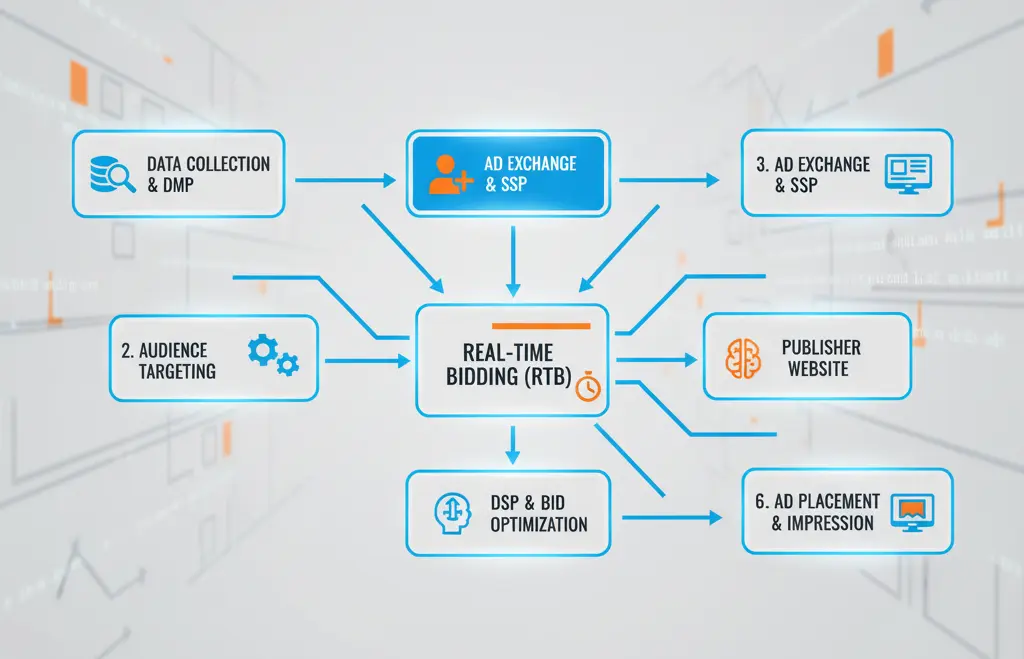
The magic of programmatic advertising happens in milliseconds through a process called Real-Time Bidding (RTB). Here’s how it works in three simple steps :
- Campaign Setup: Brands use programmatic software to define campaign parameters including target audience, budget, and geographical reach
- Platform Connection: The system connects with online publishers who have available ad space and traffic
- AI-Powered Auction: Artificial intelligence analyzes data and conducts automated auctions to secure the best available ad space
This process leverages multiple data signals including demographics, browsing behavior, location, time of day, and device type to ensure ads reach the most relevant audiences.
Why Programmatic Advertising is Essential for Marketing Strategy
Precision Targeting and Efficiency
Programmatic advertising offers several targeting methods that make campaigns highly effective :
- Demographic Targeting: Age, gender, income, occupation, and interests
- Behavioral Targeting: Based on user actions and cookie data
- Contextual Targeting: Keywords that show user intent
- Geotargeting: Location-based filters
- Remarketing: Targeting previous website visitors

Cost-Effectiveness and Budget Control
With programmatic advertising, costs typically range from $0.50 to $2.00 CPM for standard inventory, making it accessible for businesses of all sizes. The real-time bidding system ensures you never overpay for ad placements, as you only bid what the inventory is worth to your campaign.
Real-Time Optimization
One of programmatic advertising’s greatest advantages is the ability to monitor and adjust campaigns in real-time. Marketers can track performance metrics like click-through rates, conversion rates, and cost per acquisition, making immediate optimizations to improve results.
Cross-Device and Multi-Channel Reach
Programmatic technology spans multiple formats and channels including display, video, mobile, social media, Connected TV (CTV), and even digital out-of-home advertising. This comprehensive reach ensures your message follows customers across their entire digital journey.
Types of Programmatic Advertising
Understanding the different buying methods helps optimize your strategy :
- Real-Time Bidding (RTB): Open marketplace available to all advertisers
- Private Marketplaces (PMPs): Invite-only agreements with premium publishers
- Preferred Deals: First access to inventory before it goes to market
- Programmatic Guaranteed: Direct agreements with fixed pricing
Key Components of a Successful Programmatic Strategy
Setting Clear Objectives
Define what you want to achieve – whether it’s brand awareness (measured by CPM), lead generation, or conversions (measured by CPA). Clear objectives guide your entire campaign strategy and help measure success.
Audience Analysis and Segmentation
Before launching campaigns, answer four critical questions :
- What does your product/service do?
- Who benefits from it?
- What industry standards dictate the market?
- What is your end goal with programmatic ads?
Creative Optimization
Use dynamic creative optimization to tailor ads to different audience segments. Successful campaigns like Nike’s dynamic video ads show how personalized creative increases engagement and conversions.
Performance Monitoring
Establish clear KPIs and track metrics like click-through rate (CTR), conversion rate (CVR), cost per click (CPC), and cost per acquisition (CPA). Continuous monitoring allows for real-time adjustments that improve campaign performance.
Common Challenges and Solutions
Platform Complexity
With numerous DSPs available including The Trade Desk, Google DV 360, MediaMath, and StackAdapt, choosing the right platform can be overwhelming. Start with one platform that aligns with your goals and expand as you gain experience.
Budget Management
Programmatic spend is fluid rather than fixed due to real-time bidding. Set conservative budgets initially, then increase spending based on performance and overall marketing budgets.
Data Privacy Compliance
With increasing privacy regulations, focus on first-party data collection and ensure all campaigns comply with GDPR, CCPA, and other relevant privacy laws.
Real-Life Success Stories
Amazon’s Prime Day Campaign
Amazon used programmatic display ads for Prime Day, personalizing content based on previous shopping behaviors. The campaign resulted in high ad revenue and record-breaking participation.
Procter & Gamble’s Hyper-Targeting
P&G delivered hyper-targeted ads to specific segments like young mothers and environmentally conscious consumers, resulting in increased engagement and higher conversion rates while reducing wasted ad spend.
Audi’s Dynamic Video Campaign
Audi used programmatic technology to show different video versions to different audience segments based on their interests, leading to increased engagement rates and higher ad recall.
Future Trends in Programmatic Advertising
The programmatic landscape continues evolving with several key trends:
- Enhanced AI and Machine Learning: More sophisticated algorithms for better targeting and optimization
- First-Party Data Focus: Increased reliance on owned data due to privacy changes
- Connected TV Growth: Expanding opportunities in streaming and CTV advertising
- Audio Programmatic: Growing investment in platforms like Spotify, Pandora, and iHeartRadio
Conclusion
Programmatic advertising has evolved from a nice-to-have technology to an essential component of successful marketing strategies. With its precision targeting, cost-effectiveness, real-time optimization capabilities, and massive scale, programmatic advertising offers unmatched efficiency in reaching and engaging target audiences.
The data speaks for itself – with 90% of digital display advertising now transacted programmatically, businesses that haven’t adopted this technology risk falling behind competitors who leverage its power.
Start by defining clear objectives, understanding your audience, and choosing the right programmatic platform for your needs. As you gain experience and see results, you can expand your programmatic efforts across multiple channels and formats to maximize your marketing impact.
The future of advertising is automated, data-driven, and highly targeted. Programmatic advertising isn’t just transforming how we buy and sell ads – it’s revolutionizing how brands connect with customers in meaningful, measurable ways.

Passionate about blogging and focused on elevating brand visibility through strategic SEO and digital marketing. Always tuned in to the latest trends, I’m dedicated to maximizing engagement and delivering measurable ROI in the dynamic world of digital marketing. Let’s connect and unlock new opportunities together!