
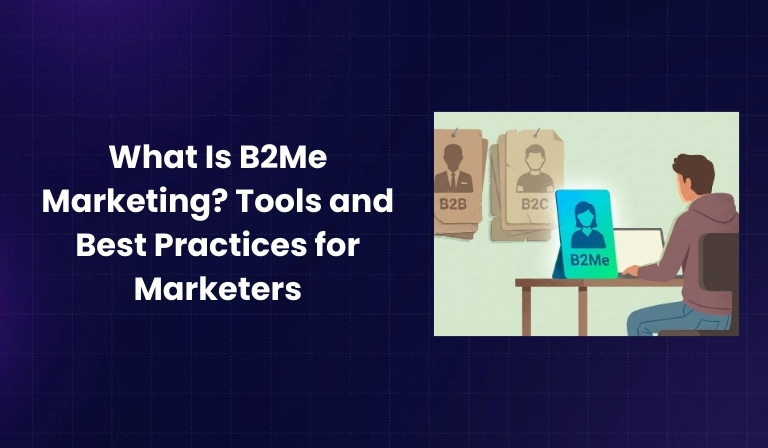

For years, marketers have relied on static buyer personas and demographic segments to guide campaigns, even as digital platforms quietly shifted toward highly individualized experiences. AI-driven feeds, recommendation engines, and real-time decisioning have made it normal for people to discover content, products, and communities they never explicitly searched for, yet still feel strangely “seen” by.
B2Me captures this shift from broad B2B/B2C labels to marketing that treats each person as a dynamic, evolving profile grounded in behavior and context rather than assumptions. This blog walks through what B2Me marketing is, why demographic-heavy strategies underperform, the tools that enable B2Me, and actionable steps and best practices for implementing it responsibly.
What Is B2Me Marketing?
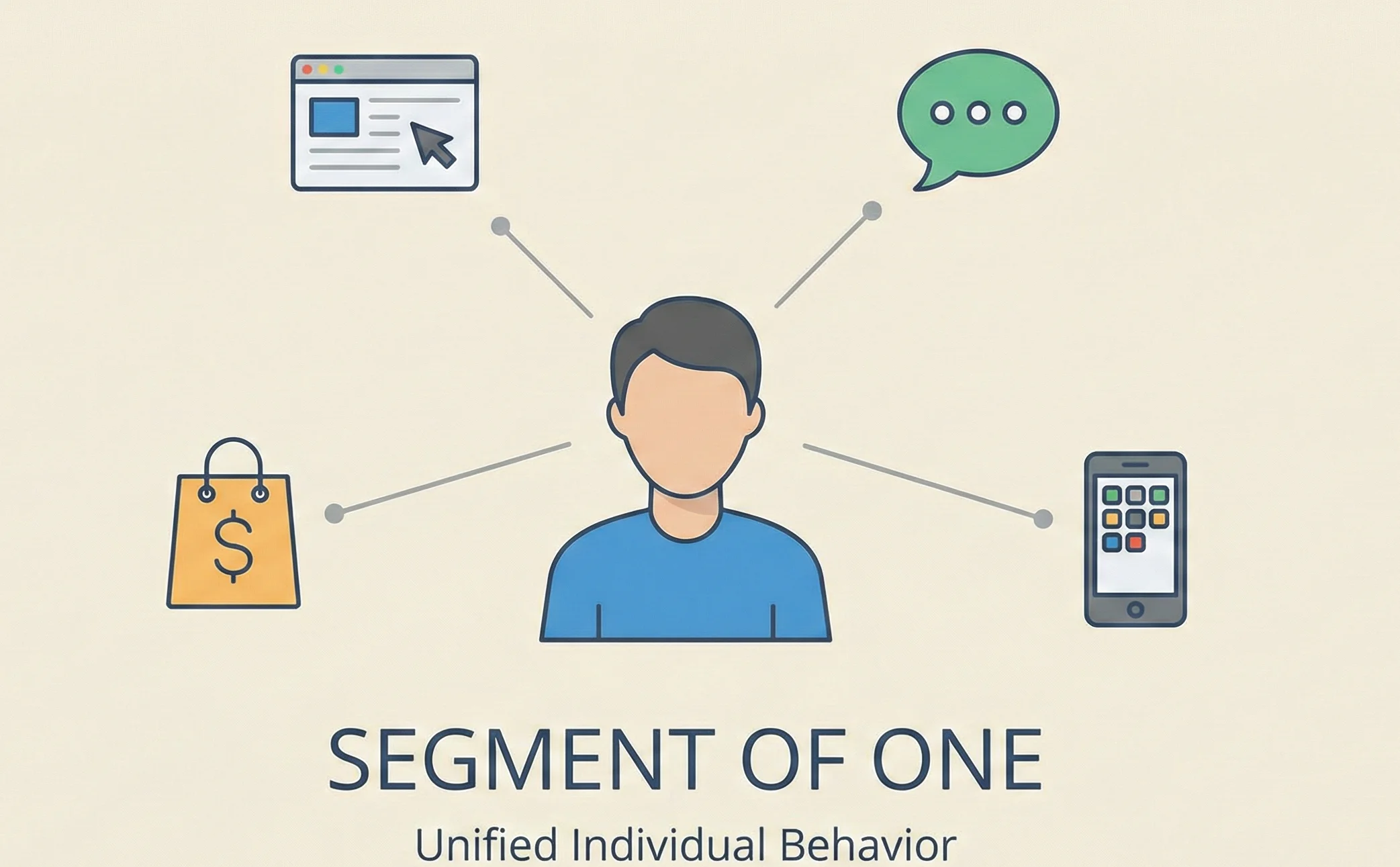
B2Me marketing is an individual-centric approach where every customer is treated as a “segment of one,” guided by real-time behavior, intent signals, and contextual data rather than static demographics or generic personas. Instead of focusing primarily on who someone is on paper (job title, age, industry), B2Me focuses on what they actually do across channels, what problems they appear to be solving, and how their patterns evolve over time.
Traditional personalization often stops at surface-level tweaks, such as name insertion, industry-based content blocks, or basic role-based messaging, which can miss real buying intent. B2Me, by contrast, uses AI, integrated customer data, and continuously updated identity graphs to form a living, adaptive understanding of each person’s behaviors and likely needs, enabling more precise and relevant messaging at scale.
Why Demographics Alone No Longer Work
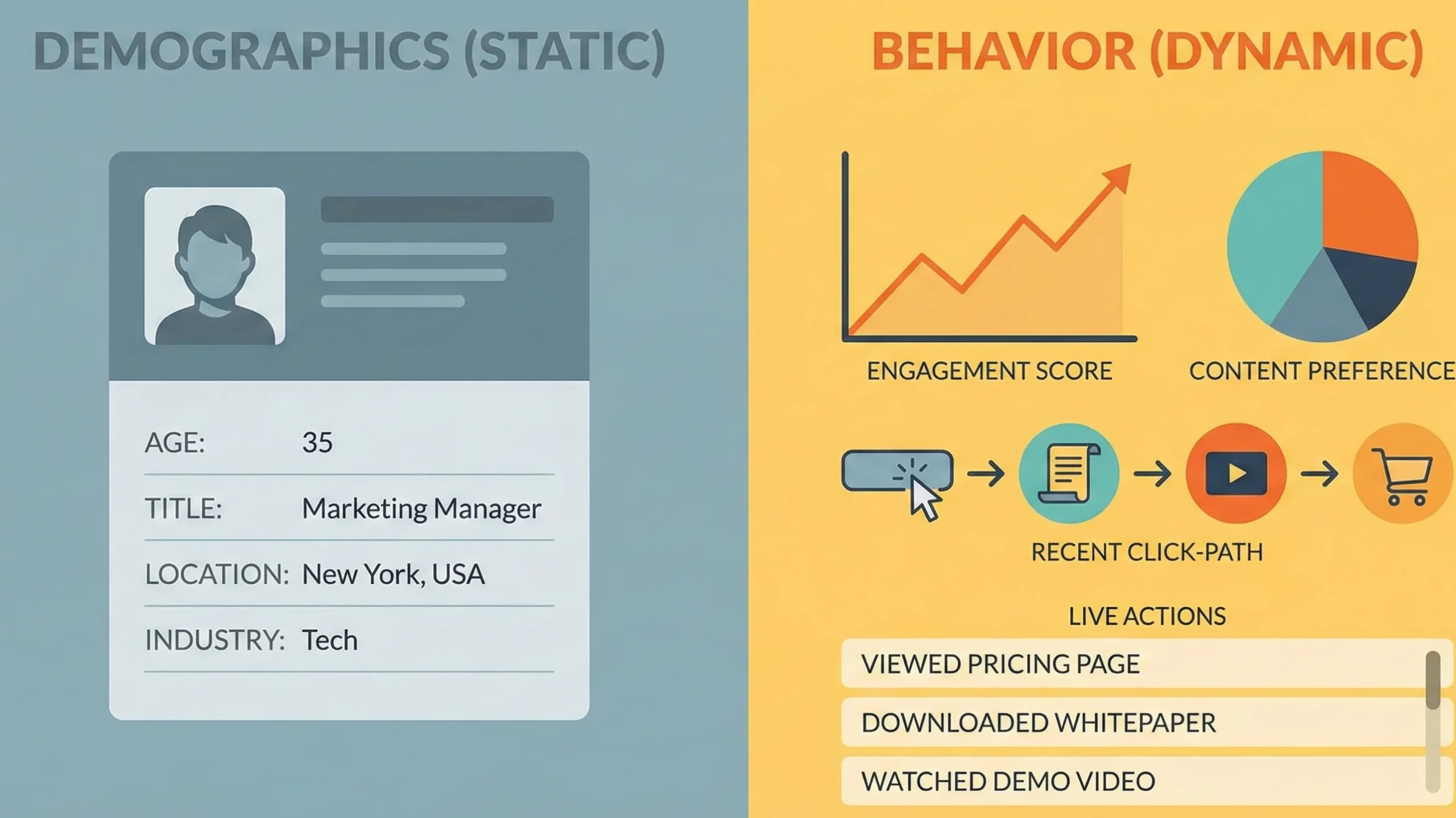
Demographic targeting—using fields such as age, location, company size, or job title—was attractive because it was easy to collect and simple to segment, but it rarely reflects actual decision drivers. People frequently change interests, roles, and responsibilities, and titles often fail to capture who is truly researching solutions, influencing decisions, or dealing with the day-to-day pain that leads to purchase.
AI-driven behavior analysis and modern analytics tools reveal that high-intent users often behave differently from the “ideal customer profile” defined on demographic slides. This exposes a recurring gap: many campaigns still chase people who look like customers instead of those acting like customers, which can waste spend and suppress conversion performance.
In a B2Me strategy, demographic data does not disappear, but it becomes context rather than the primary driver. Demographics can help with broader positioning and compliance, while behavioral and intent signals drive the actual decisions about who to reach, when to reach them, and with what message.
Core Pillars Of B2Me Marketing
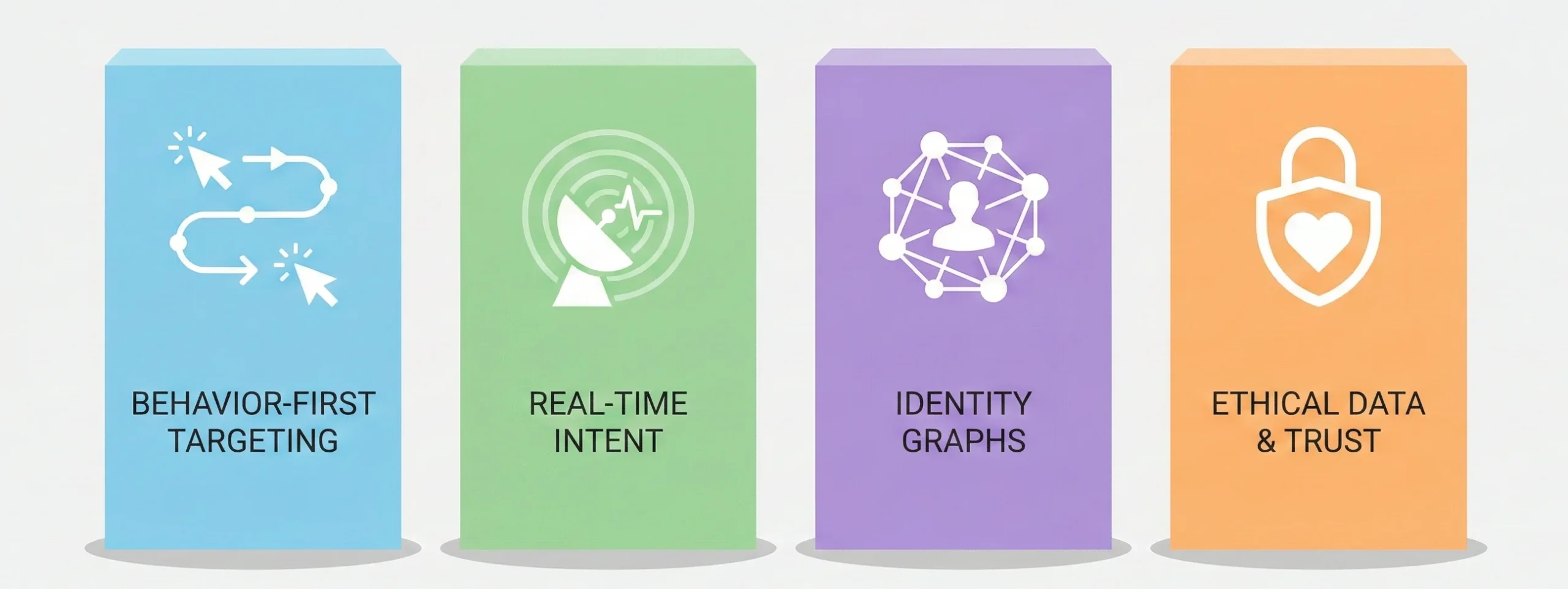
This section explains the foundational elements that make B2Me workable and scalable in real-world marketing operations. These pillars shift the focus from static profiles toward dynamic, behavior-led engagement that still respects customer trust and ethical boundaries.
- Behavior-first targeting
Behavior-first targeting prioritizes observed actions such as content consumption patterns, product feature usage, navigation paths, and response to previous campaigns over purely static attributes. For example, someone repeatedly exploring implementation guides or comparison content is often a better indicator of buying intent than a generic “decision maker” title in a database. - Real-time intent detection
Real-time intent detection involves using signals like session frequency, page sequences, scrolling depth, bounce patterns, and return visits to infer states such as curiosity, frustration, or readiness to buy. AI models can classify these patterns into intent scores or states and trigger timely actions such as sending tailored content, routing leads, or prompting sales outreach at the most relevant moments. - Continuous identity graphs
Continuous identity graphs connect data from multiple systems—web analytics, CRM, marketing automation, product analytics, support tools, and sometimes external intent data—into a constantly updated profile of each person or account. This graph evolves as individuals consume content, attend events, use features, interact with sales, or change roles, allowing marketing and sales teams to see a more complete and current picture rather than a snapshot. - Ethical data use and trust
Because B2Me relies heavily on behavioral and sometimes inferred emotional data, ethical use and transparency are vital to avoid crossing into “surveillance marketing.” Customers are more likely to accept personalization when they understand how data is used, perceive clear value in return, and do not feel manipulated or unfairly treated by opaque algorithms or pricing.
Essential Tool Categories For B2Me Marketing
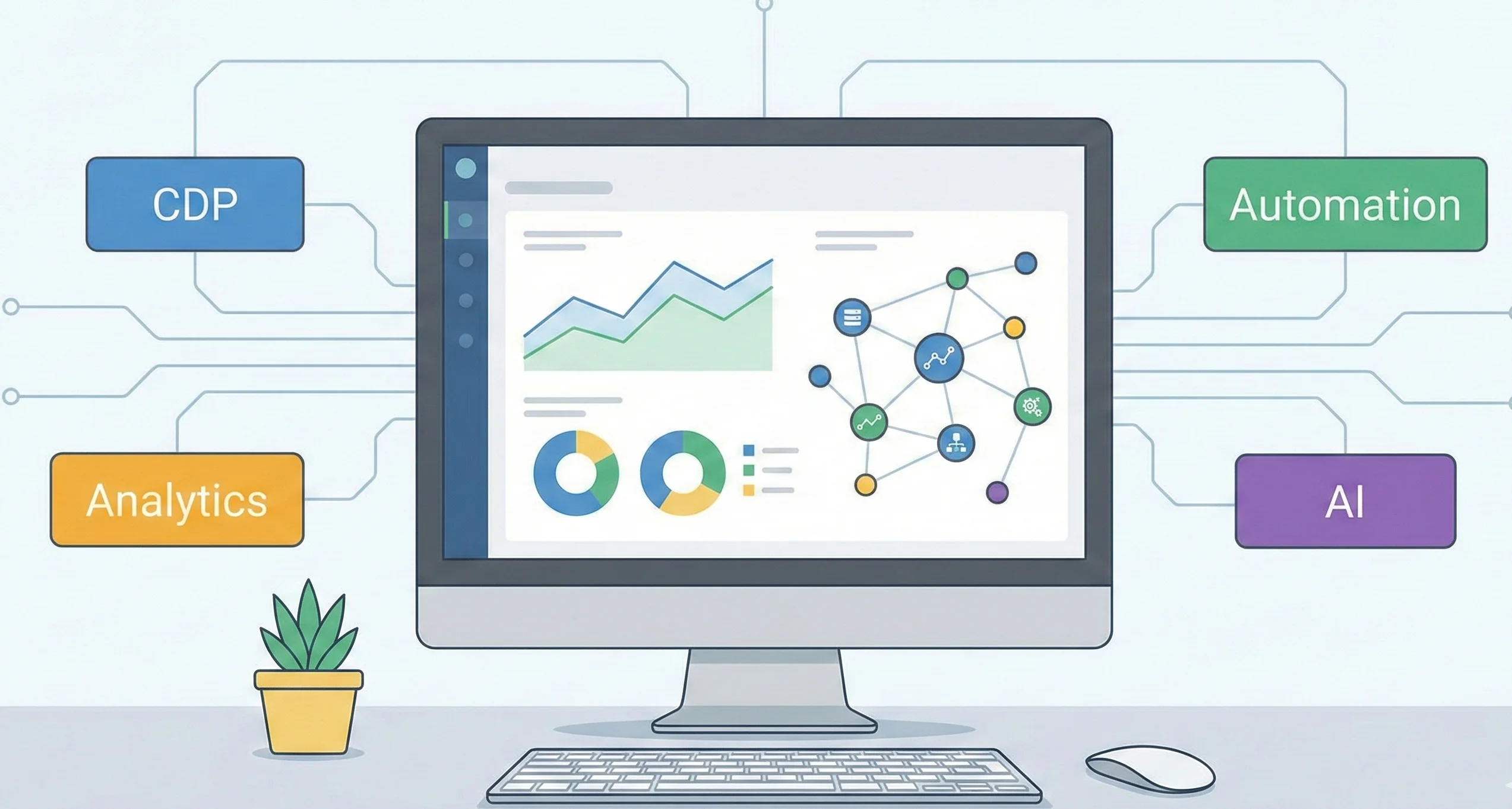
Implementing B2Me does not depend on a single platform but on an ecosystem of tools that work together to collect, unify, interpret, and act on behavioral and contextual data. The categories below reflect common capabilities seen in modern martech stacks that support individual-centric marketing.
- Customer data and identity platforms
Customer data platforms (CDPs) and identity solutions unify data from CRM, marketing automation, web analytics, product analytics, ad platforms, and support tools to build a consistent profile for each person or account. These platforms resolve identities across devices and channels, enabling marketers to see which actions belong to the same individual and orchestrate consistent, behavior-aware campaigns. - Behavioral and product analytics
Behavioral analytics tools track interactions such as feature usage, click paths, funnel progression, retention cohorts, and user journeys within websites and products. This data helps teams identify which behaviors correlate with higher conversion, expansion, or churn, informing the triggers and segments used in B2Me programs. - Marketing automation and orchestration
Marketing automation platforms and journey orchestration tools allow campaigns to be triggered on behavioral conditions like “viewed pricing page,” “returned three times in seven days,” or “used key feature but not invited teammates.” Instead of sending batch emails or generic nurture flows, teams can design pathways that adapt to each person’s actions and lifecycle stage. - AI and predictive engines
AI engines and predictive models score leads or accounts based on observed behavior, cluster users into dynamic micro-segments, and recommend next best content or offers. These tools can also forecast churn risk, upsell potential, and timing for outreach, enabling more efficient and relevant engagement when combined with human oversight.
How To Get Started With B2Me (Step-By-Step)
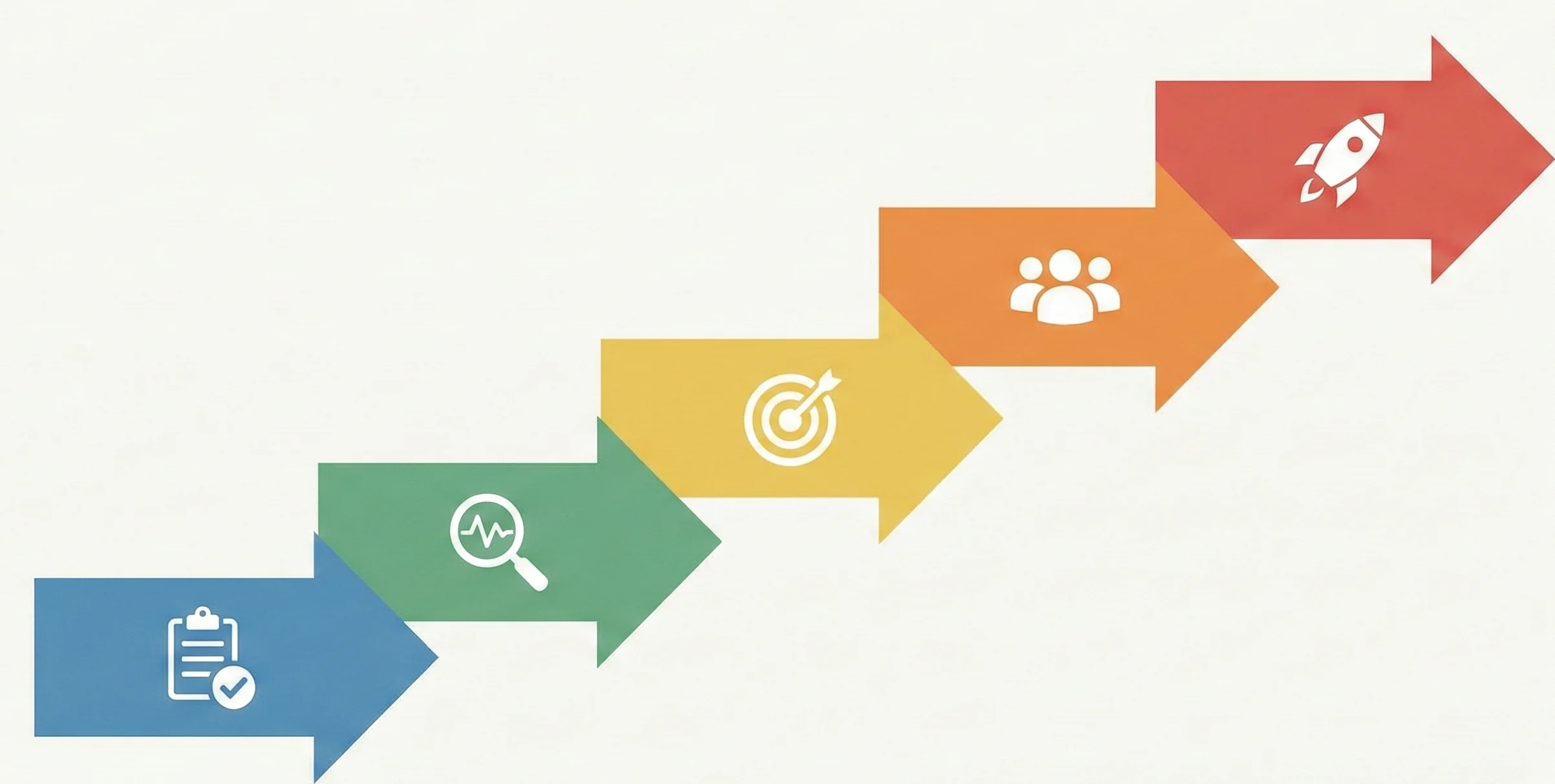
Transitioning from demographic-heavy campaigns to B2Me does not require rebuilding everything at once; it is more effective to adopt B2Me in stages. The steps below help teams move from awareness to implementation in a structured, testable way.
- Audit your current mix
Begin by assessing how much of your current targeting logic hinges on demographic fields versus behavioral signals across channels. Many organizations operate with a rough ratio of 80% demographic and 20% behavior-led decisions, which becomes visible when you review audience definitions, automation rules, and ad platform settings. - Map pre-purchase behavior
Analyze your highest-value customers and document the content, events, funnels, and conversations that consistently appear before they purchase or expand. Look for recurring patterns such as specific topic clusters, comparison content, implementation concerns, or particular product features that correlate with closed-won opportunities. - Define high-intent behaviors
From that mapping, define a set of clear high-intent behaviors—such as multiple visits to pricing pages, repeated return visits within a short time frame, or sustained engagement with problem-focused content—that strongly correlate with pipeline or revenue. These behaviors become the triggers and conditions that drive your first B2Me experiments. - Build behavioral audiences
Use capabilities already available in ad platforms, marketing automation tools, and analytics solutions to create audiences and segments based on those behaviors. Examples include audiences of users who viewed specific feature pages, watched a certain percentage of a video, or returned to a key page multiple times within a defined period. - Launch small tests
Run controlled experiments where one cohort is targeted or nurtured primarily using demographic criteria and another using defined behavioral and intent signals. Measure differences in open rates, click-through rates, opportunity creation, win rate, and deal velocity to quantify the impact of B2Me-style targeting before scaling.
Best Practices For Implementing B2Me Responsibly
B2Me’s power comes with responsibility, particularly around transparency, consent, and avoiding experiences that feel invasive or manipulative. Best practices help ensure that personalization remains a value-add for customers, not a source of distrust.
- Start with clear value exchange
Make it clear, through privacy notices and user experience design, how data is collected and used, and ensure that personalization results in tangible benefits such as better recommendations, time saved, or more relevant offers. When people understand what they gain, they are more likely to accept data-driven experiences and remain engaged. - Avoid “creepy” overreach
Even if systems can infer very specific details about users, it is not always wise to surface those in explicit messaging. Staying at an appropriate level of abstraction—responding to needs without revealing sensitive inferences—helps prevent experiences that feel like surveillance or manipulation. - Set guardrails for AI
Define policies governing how AI systems can make decisions about frequency, channels, content types, and offer logic, and ensure human oversight for strategy and edge cases. This includes monitoring for bias, unfair treatment, and outcomes that may harm user trust or conflict with brand values. - Continuously refine
Treat B2Me systems as evolving programs that require ongoing review of performance metrics, customer feedback, and regulatory changes. Use these insights to update models, rules, creative, and data practices, ensuring that experiences remain effective, compliant, and aligned with customer expectations.
Integrating B2Me With Brand And Trust
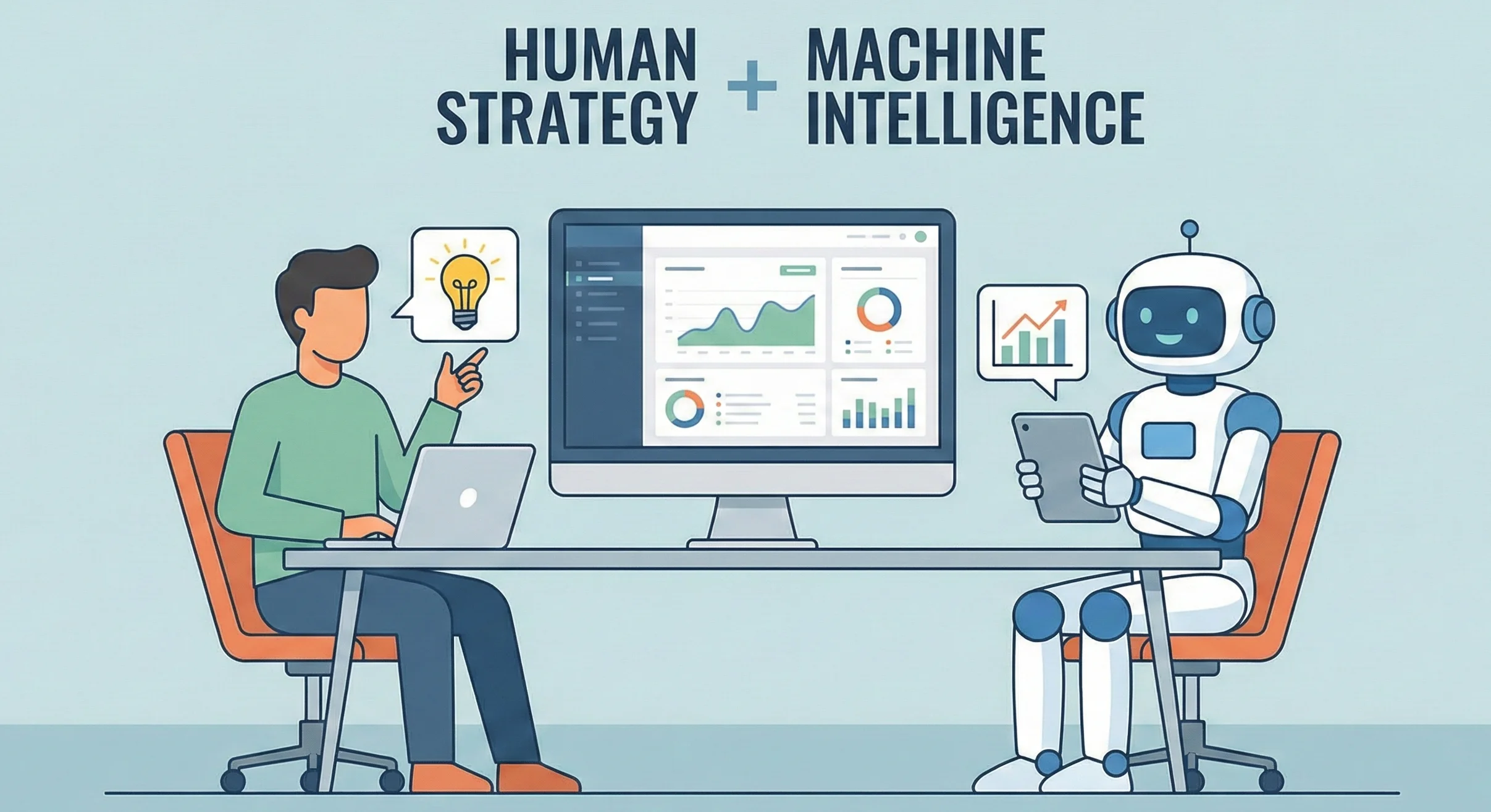
B2Me raises the precision of targeting and timing, but brand remains the foundation that shapes how people interpret those interactions and whether they feel comfortable engaging. AI can optimize for clicks and conversions, but it does not define a company’s purpose, narrative, or ethical stance, which are critical for long-term loyalty and advocacy.
As AI systems and recommendation engines aggregate signals from thousands of touchpoints, they form a kind of “memory” of brands based on consistency, reliability, and sentiment. This means that strong, trusted brands are more likely to be surfaced as recommended options when users ask assistants or platforms for solutions, making brand a competitive advantage within AI-mediated decisions.
When behavioral precision is combined with a clear, trustworthy brand promise, every tailored interaction reinforces a narrative of competence and reliability instead of manipulation. Over time, this combination can create compounding advantages in share of mind, share of recommendations, and customer lifetime value.
KPIs And Metrics To Track B2Me Success
Measuring B2Me requires going beyond basic vanity metrics and focusing on how behavior-led strategies influence engagement quality, revenue outcomes, and relationship strength. The metrics below help teams evaluate whether their shift toward B2Me is delivering real business value.
- Leading indicators
Leading indicators include engagement depth (pages per session, scroll depth, session frequency), time to value for products or trials, and adoption of key features or content. Response rates to behavior-triggered campaigns, such as higher open and click-through rates for intent-based emails or ads, also signal progress. - Revenue metrics
On the revenue side, important metrics include opportunity-to-win rate, conversion rates from behavior-defined cohorts, pipeline influenced by B2Me campaigns, and deal velocity. Expansion revenue, renewal rates, and higher average contract values among users who receive more relevant, timely experiences can further validate the impact of B2Me strategies. - Relationship metrics
Relationship metrics such as customer satisfaction scores, NPS, and qualitative feedback about relevance and helpfulness provide insight into how B2Me affects perceived value and trust. Repeated positive feedback about how “on point” content and offers feel can be an early sign that behavior-led personalization is resonating rather than alienating.
Conclusion
B2Me marketing signals a fundamental shift from static, persona-driven campaigns to dynamic, behavior-led experiences that treat every customer as a segment of one. As AI, integrated data, and real-time intent signals become standard across marketing stacks, the real advantage will belong to brands that pair this precision with clear values, empathy, and ethical guardrails. By focusing on observable behavior, building living identity graphs, and using AI responsibly, marketers can show up with the right message at the right moment—earning not just clicks, but long-term trust and loyalty in an AI-first world.

Passionate about blogging and focused on elevating brand visibility through strategic SEO and digital marketing. Always tuned in to the latest trends, I’m dedicated to maximizing engagement and delivering measurable ROI in the dynamic world of digital marketing. Let’s connect and unlock new opportunities together!