

Search engines are becoming more focused on user experience and satisfaction than ever before. Ranking a page is no longer only about keywords and backlinks. It is also about how users behave after clicking a search result. One important concept that comes up in this context is dwell time.
Dwell time is often discussed in SEO, but it is also commonly misunderstood. Many marketers are unsure whether it is a ranking factor, how it is measured, or how much it really matters. In 2026, with AI-driven search results and stronger emphasis on helpful content, understanding dwell time is more important than ever.
In this guide, you will learn what dwell time is, how it works, how it differs from other engagement metrics, and why it still matters for SEO in 2026.
What Is Dwell Time?
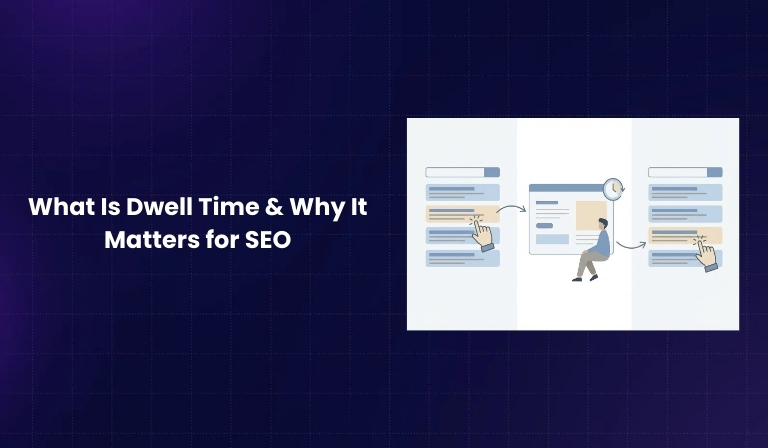
Dwell time refers to the amount of time a user spends on a webpage after clicking a search result and before returning to the search results page.
In simple terms, it measures how long a visitor stays on your page after coming from a search engine.
A longer dwell time usually suggests that:
- The content was relevant to the user’s search
- The page met the user’s expectations
- The user found value in the content
A shorter dwell time may suggest that:
- The content did not match search intent
- The page was hard to use or slow
- The answer was not what the user was looking for
A common misconception is that dwell time is always the same as time on page. In reality, dwell time is specifically tied to search behavior, not just website analytics.
How Dwell Time Works in Search Engines
When a user searches for something, search engines show a list of results. The way users interact with those results provides valuable feedback.
Here is how dwell time fits into that process:
- A user enters a search query
- The user clicks a result
- The user spends time on the page
- The user either returns to search results or ends the session
If a user quickly returns to the search results and clicks another page, it may signal dissatisfaction. If the user stays longer or does not return immediately, it may signal satisfaction.
Search engines like :contentReference[oaicite:0]{index=0} use many engagement signals to understand whether results are helpful. While Google has never confirmed dwell time as a direct ranking factor, it does use user behavior data to improve result quality.
Dwell Time vs. Other User Engagement Metrics
Understanding dwell time becomes easier when you compare it with other common engagement metrics.
Dwell Time vs. Bounce Rate
Bounce rate measures whether a user leaves a website after viewing only one page. It does not consider why the user left.
Key differences:
- Dwell time focuses on time spent after a search click
- Bounce rate focuses on single-page sessions
- A page can have a high bounce rate but still satisfy the user
For example, a user may find the exact answer quickly and leave. This can result in a bounce but still be a positive experience.
Dwell Time vs. Time on Page
Time on page measures how long a user stays on a page, regardless of traffic source.
Key differences:
- Time on page includes users from all sources
- Dwell time is specific to search traffic
- Time on page does not track return to search results
Dwell time gives more context about search intent satisfaction.
Dwell Time vs. Click-Through Rate (CTR)

CTR measures how often users click on a result after seeing it.
Key differences:
- CTR measures pre-click behavior
- Dwell time measures post-click behavior
- High CTR with low dwell time may indicate misleading titles
Both metrics work together. CTR brings users in, and dwell time shows whether content delivers value.
Is Dwell Time a Google Ranking Factor in 2026?
Google has consistently stated that dwell time is not a direct ranking factor. There is no official metric in Google Analytics called dwell time, and Google does not provide dwell time data to site owners.
However, this does not mean dwell time is irrelevant.
Important points to understand:
- Google uses many indirect user satisfaction signals
- Dwell time reflects content usefulness and relevance
- Pages that satisfy users tend to perform better over time
In 2026, dwell time matters not because it is a confirmed ranking factor, but because it reflects whether your content truly helps users.
Why Dwell Time Matters for SEO in 2026

Search has changed significantly with AI-powered results, summaries, and intent-based ranking.
Dwell time matters more because:
- Users expect accurate and complete answers
- Search engines prioritize helpful content
- Poor engagement often leads to ranking decline
Longer dwell time usually indicates:
- Better alignment with search intent
- Clear and structured content
- Higher content quality
It also helps reduce pogo-sticking, where users repeatedly jump back to search results. This behavior often signals dissatisfaction.
What Is a Good Dwell Time?

There is no single “good” dwell time that applies to all websites.
Dwell time varies based on several factors:
- Content type (blog, product page, guide)
- Search intent (informational vs transactional)
- Industry and topic complexity
- Device type (mobile users often spend less time)
A short dwell time is not always bad. For example, quick answers can still fully satisfy user intent.
The best approach is to compare:
- Similar pages on your own site
- Performance before and after content improvements
- Engagement trends over time
Factors That Affect Dwell Time
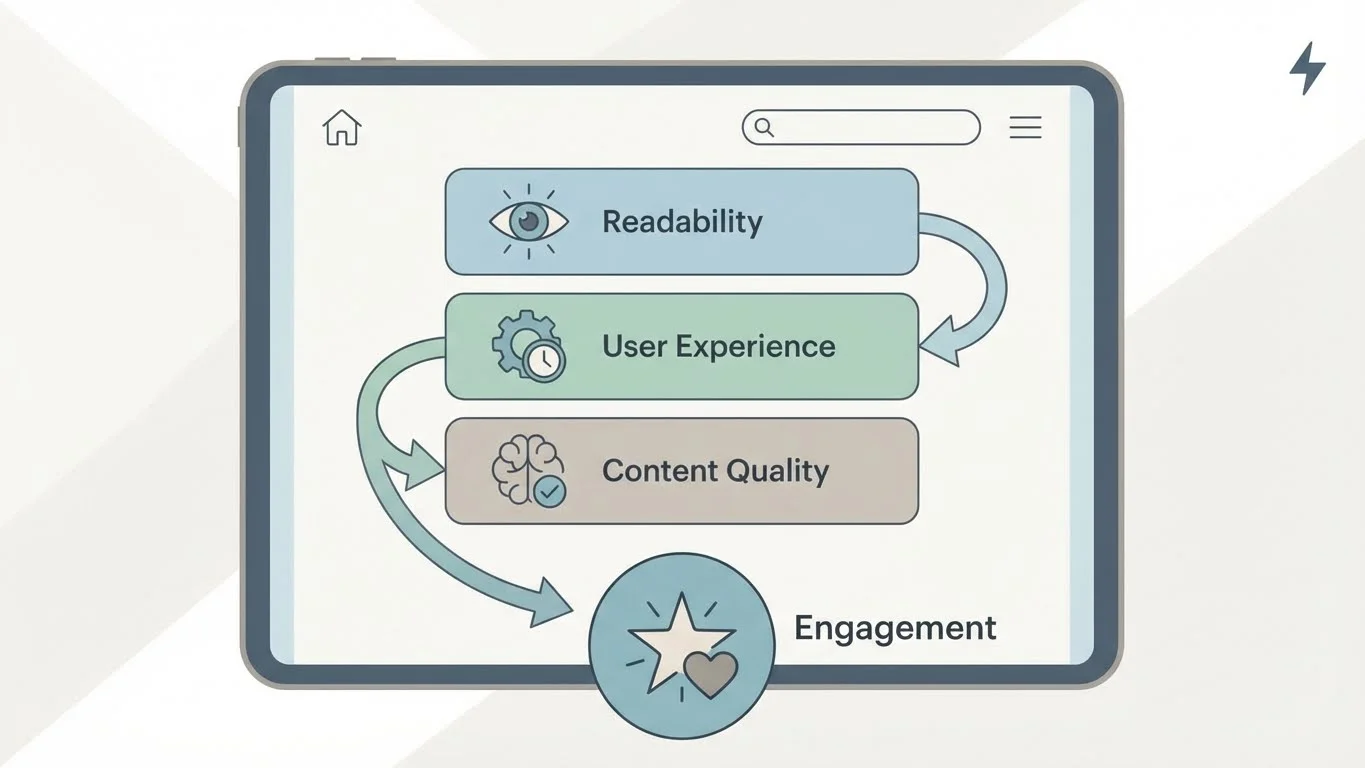
Several elements influence how long users stay on a page.
Search Intent Match
Matching search intent is critical.
- Informational intent requires clear explanations
- Transactional intent requires strong product details
- Misleading titles reduce trust and engagement
When intent is mismatched, users leave quickly.
Content Quality and Depth
High-quality content keeps users engaged.
- Clear explanations
- Logical flow
- Useful examples
Thin or shallow content often leads to shorter dwell time.
Page Experience and UX
User experience strongly impacts dwell time.
- Slow loading pages frustrate users
- Poor mobile design causes early exits
- Intrusive popups reduce engagement
A smooth experience encourages users to stay longer.
Readability and Formatting
Readable content improves engagement.
- Simple language
- Clear headings
- Short paragraphs
- Visual breaks
Good formatting makes content easier to consume.
How to Improve Dwell Time (Actionable Strategies for 2026)

Improving dwell time means improving user experience and content quality.
Optimize Content for Search Intent
- Match headlines with user expectations
- Answer the main question early
- Avoid clickbait titles
Clear intent alignment reduces early exits.
Improve Content Structure
- Use logical headings
- Break content into sections
- Maintain a clear reading flow
Structure helps users find what they need quickly.
Enhance User Experience
- Improve page speed
- Optimize for mobile devices
- Reduce distractions
A clean experience encourages longer sessions.
Use Internal Linking Strategically
- Link to related content naturally
- Guide users to next steps
- Avoid excessive links
Internal links can extend engagement across your site.
Add Visual and Interactive Elements
- Use diagrams or charts where helpful
- Support explanations visually
- Avoid clutter
Visuals should enhance understanding, not distract.
How to Measure and Analyze Dwell Time
Dwell time is not directly available in analytics tools, but you can use proxy metrics.
Common proxies include:
- Average engagement time
- Bounce rate combined with session duration
- Scroll depth
- Exit behavior from organic traffic
Tools like analytics platforms and heatmaps help identify engagement patterns. Interpretation should focus on trends, not isolated numbers.
Common Myths About Dwell Time
There are many misunderstandings about dwell time.
- High dwell time does not guarantee higher rankings
- Short dwell time is not always negative
- Dwell time cannot be reliably manipulated
- Engagement metrics should not be isolated from context
SEO success comes from overall user satisfaction, not one metric.
Conclusion
Dwell time is best understood as a reflection of user satisfaction, not a metric to chase directly. While it is not a confirmed ranking factor, it plays an important role in understanding how users interact with search results.
In 2026, SEO success depends on creating content that truly helps users, matches intent, and provides a smooth experience. When you focus on these fundamentals, improved dwell time becomes a natural outcome, not a forced goal.

Passionate about blogging and focused on elevating brand visibility through strategic SEO and digital marketing. Always tuned in to the latest trends, I’m dedicated to maximizing engagement and delivering measurable ROI in the dynamic world of digital marketing. Let’s connect and unlock new opportunities together!