

Search Engine Optimization (SEO) plays a major role in how websites appear on search engines. When someone searches for a product, service, or information online, search engines decide which websites to show first. SEO helps websites improve their visibility in those search results.
However, not all SEO methods are the same. Some follow search engine rules strictly, some break them completely, and some stay somewhere in between. These approaches are commonly known as White Hat SEO, Black Hat SEO, and Gray Hat SEO.
Understanding these differences is important for businesses, marketers, and website owners. The type of SEO strategy you choose can directly impact your website’s rankings, reputation, traffic, and long-term success. In this guide, you will learn what each type means, how they work, their advantages and disadvantages, and which approach is best for sustainable growth.
What Is SEO? (Search Engine Optimization)
Search Engine Optimization is the process of improving a website so that it ranks higher in search engine results for relevant keywords. The goal of SEO is to increase organic traffic, which means visitors who find your website through unpaid search results.
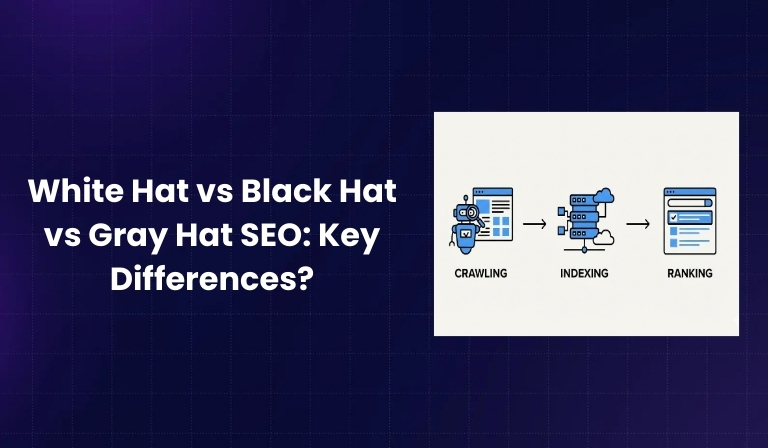
Search engines use automated systems to discover and rank content. These systems generally work in three main steps:
- Crawling: Search engines scan websites using bots to discover new and updated pages.
- Indexing: The discovered pages are stored and organized in a large database.
- Ranking: When a user searches for something, the search engine analyzes many factors to decide which pages are most relevant and useful.
SEO focuses on improving factors that influence ranking. These include content quality, website structure, page speed, mobile usability, backlinks, and overall user experience.
Search engines publish guidelines to help website owners understand what practices are acceptable. These guidelines aim to protect users from spam, misleading information, and low-quality content. The different SEO “hat” categories are based on how closely a strategy follows these guidelines.
What Is White Hat SEO?
White Hat SEO refers to strategies and techniques that follow search engine guidelines and focus on providing value to users. It is considered ethical and sustainable.
1. Definition of White Hat SEO
White Hat SEO includes all optimization methods that comply with search engine rules. The main goal is to improve rankings by creating helpful content, improving user experience, and building authority naturally.
Instead of trying to manipulate algorithms, White Hat SEO focuses on meeting user intent and improving website quality.
2. Key Characteristics of White Hat SEO
White Hat SEO has several clear characteristics:
- It follows official search engine guidelines.
- It prioritizes user experience over search engine manipulation.
- It focuses on long-term growth.
- It builds trust and credibility over time.
- It avoids deceptive or manipulative tactics.
The core idea is simple: if a method improves the website for users, it is likely aligned with White Hat principles.
3. Common White Hat SEO Techniques
White Hat SEO involves several well-established techniques:
- High-quality content creation: Writing original, useful, and informative content that answers user questions clearly.
- Keyword research and natural keyword placement: Using relevant keywords thoughtfully without overusing them.
- On-page SEO optimization: Optimizing title tags, meta descriptions, headings, images, and internal links properly.
- Mobile-friendly website design: Ensuring the website works smoothly on smartphones and tablets.
- Fast page speed: Improving loading time for better user experience.
- Proper internal linking: Connecting related pages to help users and search engines navigate the site.
- Earning backlinks naturally: Getting links from other websites because of valuable content.
- Structured data implementation: Adding structured markup to help search engines understand content better.
These techniques aim to improve the overall quality and usability of the website.
4. Advantages of White Hat SEO
White Hat SEO offers several long-term benefits:
- Sustainable rankings that are less likely to drop suddenly.
- Strong brand credibility and trust.
- Low risk of penalties from search engines.
- Long-term return on investment through consistent organic traffic.
Because it aligns with search engine goals, it supports stable growth.
5. Disadvantages of White Hat SEO
Although effective, White Hat SEO also has challenges:
- It takes time to see results.
- It requires consistent effort and content updates.
- It may not produce instant ranking improvements.
However, the long-term stability often outweighs these disadvantages.
What Is Black Hat SEO?
Black Hat SEO refers to techniques that violate search engine guidelines. These methods attempt to manipulate rankings using shortcuts.
1. Definition of Black Hat SEO
Black Hat SEO involves deceptive tactics designed to trick search engines into ranking a website higher. The main focus is fast results rather than long-term sustainability.
These techniques intentionally ignore search engine rules.
2. Key Characteristics of Black Hat SEO
Black Hat SEO typically includes:
- Manipulative tactics that aim to exploit algorithm weaknesses.
- Focus on search engines rather than users.
- Short-term ranking improvements.
- High risk of penalties or de-indexing.
- Lack of concern for user experience.
These methods prioritize quick gains over long-term trust.
3. Common Black Hat SEO Techniques
Some commonly known Black Hat practices include:
- Keyword stuffing: Overloading content with keywords unnaturally.
- Cloaking: Showing different content to search engines and users.
- Hidden text and links: Adding invisible text or links to manipulate rankings.
- Doorway pages: Creating pages designed only to rank for specific keywords and redirect users.
- Link farming: Participating in networks that artificially generate backlinks.
- Buying backlinks: Paying for links solely to influence rankings.
- Content scraping: Copying content from other websites.
- Private blog networks (PBNs): Using controlled websites to build artificial links.
These techniques attempt to manipulate ranking signals rather than improve website quality.
4. Advantages of Black Hat SEO
Despite the risks, some businesses are tempted by:
- Quick short-term ranking improvements.
- Fast traffic spikes in some cases.
However, these gains are usually unstable.
5. Disadvantages of Black Hat SEO
Black Hat SEO carries serious risks:
- High risk of algorithmic penalties.
- Manual actions from search engines.
- Website de-indexing, meaning removal from search results.
- Severe damage to brand reputation.
- Loss of trust from users and partners.
Once penalized, recovery can be difficult and time-consuming.
What Is Gray Hat SEO?
Gray Hat SEO falls between White Hat and Black Hat. It uses techniques that are not clearly defined as violations but may push the boundaries of guidelines.
1. Definition of Gray Hat SEO
Gray Hat SEO includes tactics that exploit loopholes or unclear areas in search engine policies. These methods are not always explicitly forbidden but may still carry risk.
The line between acceptable and unacceptable practices can change over time.
2. Key Characteristics of Gray Hat SEO
Gray Hat SEO usually involves:
- Exploiting technical or policy gaps.
- Moderate risk compared to Black Hat.
- Faster results than strictly White Hat methods.
- Uncertain long-term sustainability.
- Dependence on algorithm stability.
These strategies may work temporarily but can become risky if rules change.
3. Common Gray Hat SEO Techniques
Examples of Gray Hat practices include:
- Purchasing expired domains to leverage their past authority.
- Aggressive link exchanges.
- Slightly manipulated or over-optimized content.
- Automated content combined with manual editing.
- Clickbait headlines designed mainly for traffic.
- Excessive guest posting primarily for link building.
While not always clearly prohibited, these methods may still raise concerns.
4. Advantages of Gray Hat SEO
Some perceived benefits include:
- Faster ranking improvements compared to White Hat.
- Lower risk than extreme Black Hat techniques.
However, the risk is not eliminated.
5. Disadvantages of Gray Hat SEO
Gray Hat SEO also has drawbacks:
- Potential penalties if search engines update their guidelines.
- Unstable rankings over time.
- Risk of reputational damage.
Long-term sustainability is uncertain.
White Hat vs Black Hat vs Gray Hat SEO: Key Differences
This section explains the major differences between the three approaches.
Comparison Table
| Factor | White Hat SEO | Gray Hat SEO | Black Hat SEO |
| Risk Level | Low | Medium | High |
| Focus | Users | Search engines & users | Search engines only |
| Results Speed | Slow & steady | Medium | Fast |
| Sustainability | Long-term | Uncertain | Short-term |
| Compliance | Fully compliant | Partially compliant | Violates guidelines |
| Penalty Risk | Minimal | Possible | Very High |
White Hat SEO focuses on users and compliance. Gray Hat operates in uncertain areas. Black Hat intentionally breaks rules for quick gains.
Which SEO Approach Is Best for Your Business?
Choosing the right SEO approach depends on your goals. Businesses that want long-term growth, brand trust, and stable traffic benefit most from White Hat SEO.
White Hat strategies reduce the risk of penalties and support consistent ranking improvements. Although results take time, they are more stable.
Shortcuts may seem attractive, especially in competitive industries. However, the risks of penalties, loss of traffic, and reputational harm often outweigh short-term benefits.
For businesses focused on sustainability and credibility, ethical SEO practices provide the safest and most reliable path.
Can Gray Hat SEO Turn into Black Hat?
The boundary between Gray Hat and Black Hat SEO can shift over time. Search engine algorithms are regularly updated to improve result quality.
Some techniques that were once considered acceptable later became risky or discouraged. As search engines refine their guidelines, practices that exploit loopholes may be classified as violations.
This means that relying on Gray Hat strategies carries uncertainty. A tactic that appears safe today may become penalized in the future. Staying updated with guidelines and focusing on long-term value reduces this risk.
How to Protect Your Website from Black Hat SEO
Protecting your website requires proactive monitoring and responsible SEO management.
- Conduct regular SEO audits to identify suspicious practices.
- Monitor backlinks to detect spammy or unnatural links.
- Use tools like Google Search Console to track performance and manual actions.
- Avoid extremely cheap SEO services that promise instant rankings.
- Stay updated with search engine algorithm changes and guidelines.
Taking preventive steps helps maintain website integrity and long-term visibility.
Frequently Asked Questions (FAQs)
Is Black Hat SEO illegal?
Black Hat SEO is not necessarily illegal in most regions, but it violates search engine guidelines. This can lead to penalties, de-indexing, and loss of traffic.
Can you recover from a Google penalty?
Recovery is possible if the issues are identified and corrected. However, the process can take time and may not fully restore previous rankings.
Is Gray Hat SEO safe?
Gray Hat SEO carries moderate risk. While not always explicitly forbidden, it can become risky if guidelines change.
How long does White Hat SEO take?
White Hat SEO usually takes several months to show noticeable results because it focuses on gradual improvement and sustainable growth.
Does Google permanently ban websites?
In severe cases involving repeated or serious violations, websites can be removed from search results. Recovery may be difficult or not possible in extreme situations.
Conclusion
White Hat, Gray Hat, and Black Hat SEO represent three different approaches to improving search rankings. White Hat SEO focuses on compliance, quality, and long-term growth. Black Hat SEO uses manipulative tactics for quick gains but carries high risk. Gray Hat SEO operates in uncertain areas and may offer faster results but lacks stability.
For businesses that value credibility, trust, and sustainable performance, White Hat SEO remains the safest and most reliable strategy. Ethical practices not only protect your website from penalties but also build a strong foundation for long-term digital success.