
![BCG Matrix of Coca-Cola [Detailed]](https://admindia.org/wp-content/uploads/2025/09/BCG-Matrix-of-Coca-Cola-Detailed.jpg)

Coca-Cola is one of the biggest and most popular beverage companies in the world. From soft drinks to bottled water, Coca-Cola has built a wide range of products that are loved by millions of people. But how does the company manage such a huge product portfolio?
One of the most useful tools to understand this is the BCG Matrix. It helps us see which Coca-Cola products bring in steady profits, which ones have growth potential, and which might not be performing well.
In this blog, we will look at Coca-Cola’s position in the BCG Matrix in detail.
What Is the BCG Matrix?
The BCG Matrix (Boston Consulting Group Matrix) is a business tool used to analyze a company’s product portfolio. It was created by Bruce Henderson of the Boston Consulting Group in 1970.
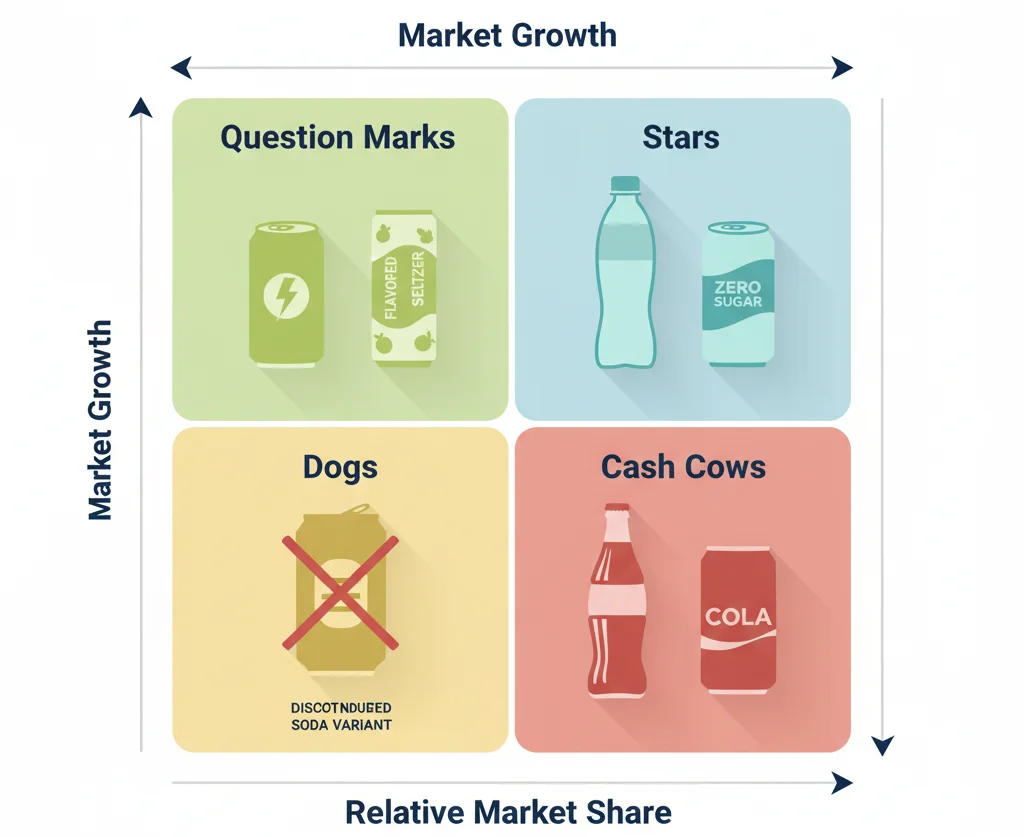
The matrix divides products into four categories based on two factors:
- Market Growth Rate (how fast the market is growing)
- Market Share (how much of the market the product controls)
The four quadrants are:
- Stars: High market share in high-growth markets.
- Cash Cows: High market share in low-growth markets.
- Question Marks: Low market share in high-growth markets.
- Dogs: Low market share in low-growth markets.
Companies use this framework to decide where to invest, where to maintain, and where to divest.
Coca-Cola Company Overview
Coca-Cola was founded in 1886 in Atlanta, USA, and today, it operates in more than 200 countries. The company’s business model revolves around producing beverage concentrates and syrups, which are then sold to bottling partners around the world.
Coca-Cola’s portfolio includes:
- Carbonated soft drinks (Coca-Cola, Sprite, Fanta)
- Bottled water (Dasani, Smartwater)
- Juices (Minute Maid)
- Energy drinks (Monster, Coca-Cola Energy)
- Plant-based beverages and teas
With strong brand recognition and global reach, Coca-Cola is a leader in the beverage industry.
BCG Matrix of Coca-Cola
Coca-Cola in the Stars Quadrant
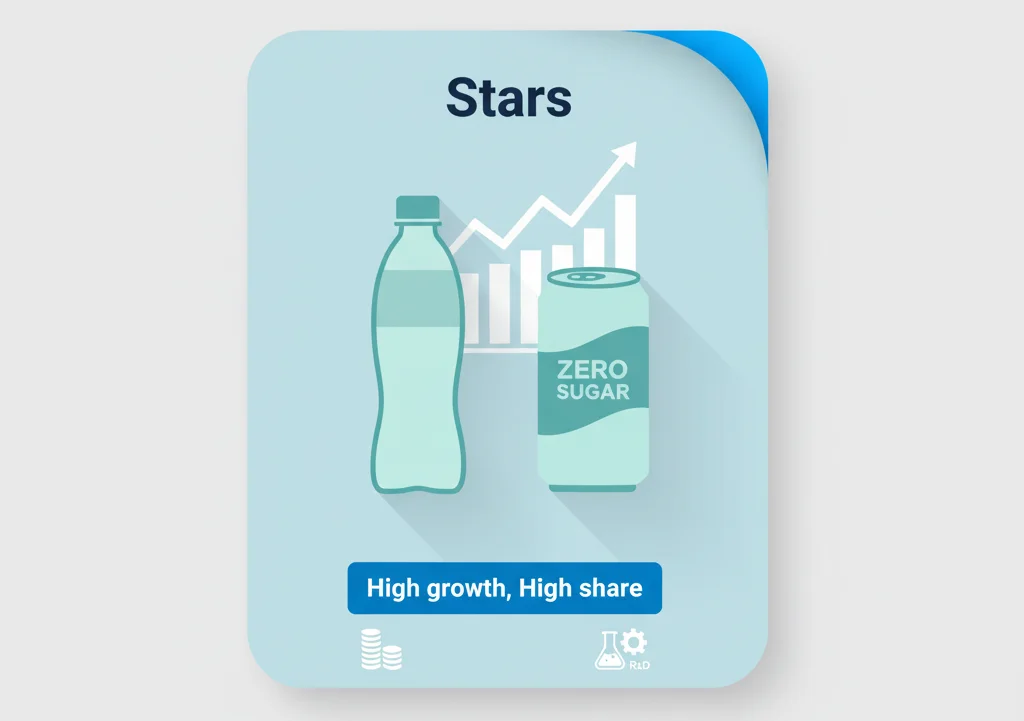
Stars are products with high growth and high market share.
For Coca-Cola, examples include:
- Coca-Cola Zero Sugar – growing demand for healthier alternatives.
- Smartwater – bottled water market is growing fast.
- Energy Drinks – Coca-Cola Energy and Monster are tapping into a fast-expanding market.
These products require heavy marketing and investment but have the potential to become future cash cows.
Coca-Cola in the Cash Cows Quadrant
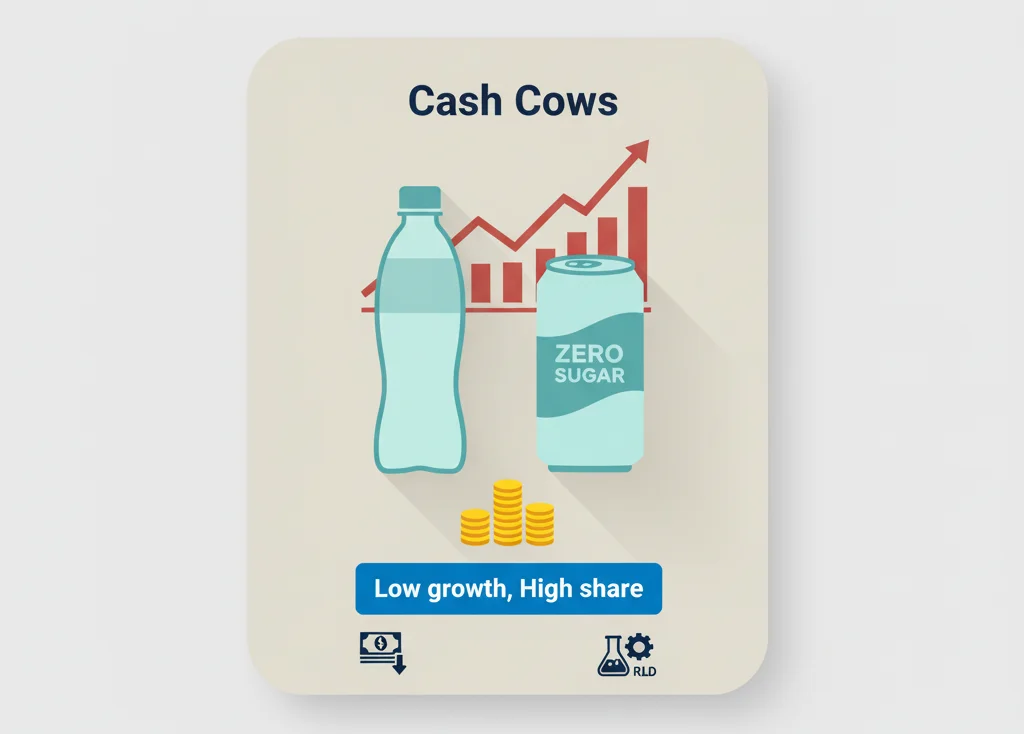
Cash Cows are products with high market share but in a slow-growing market. They generate stable cash flow.
For Coca-Cola, examples include:
- Classic Coca-Cola – still the company’s flagship drink with high brand loyalty.
- Diet Coke – a strong performer in the diet soda market.
- Sprite & Fanta – globally popular carbonated drinks with steady demand.
These products may not be in a high-growth market anymore, but they continue to bring in huge profits. Coca-Cola often uses this revenue to support other categories like Stars and Question Marks.
Coca-Cola in the Question Marks Quadrant
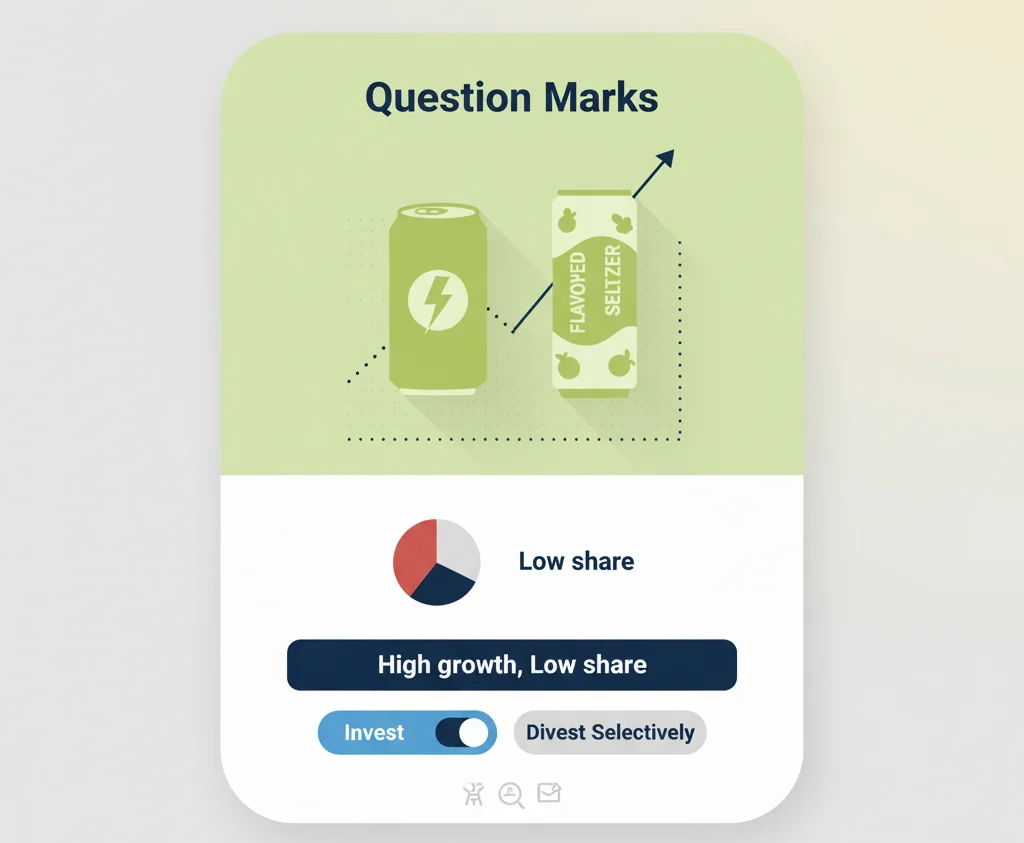
Question Marks are products in high-growth markets but with low market share.
For Coca-Cola, examples include:
- Plant-based drinks – like AdeZ (plant-based milk) in some markets.
- Dairy products – fairlife milk in the U.S.
- Health-focused drinks – like Honest Tea (before it was discontinued) and niche beverages.
These products have growth potential, but Coca-Cola needs to decide whether to invest more to gain market share or exit the category.
Related Articles:
Coca-Cola in the Dogs Quadrant
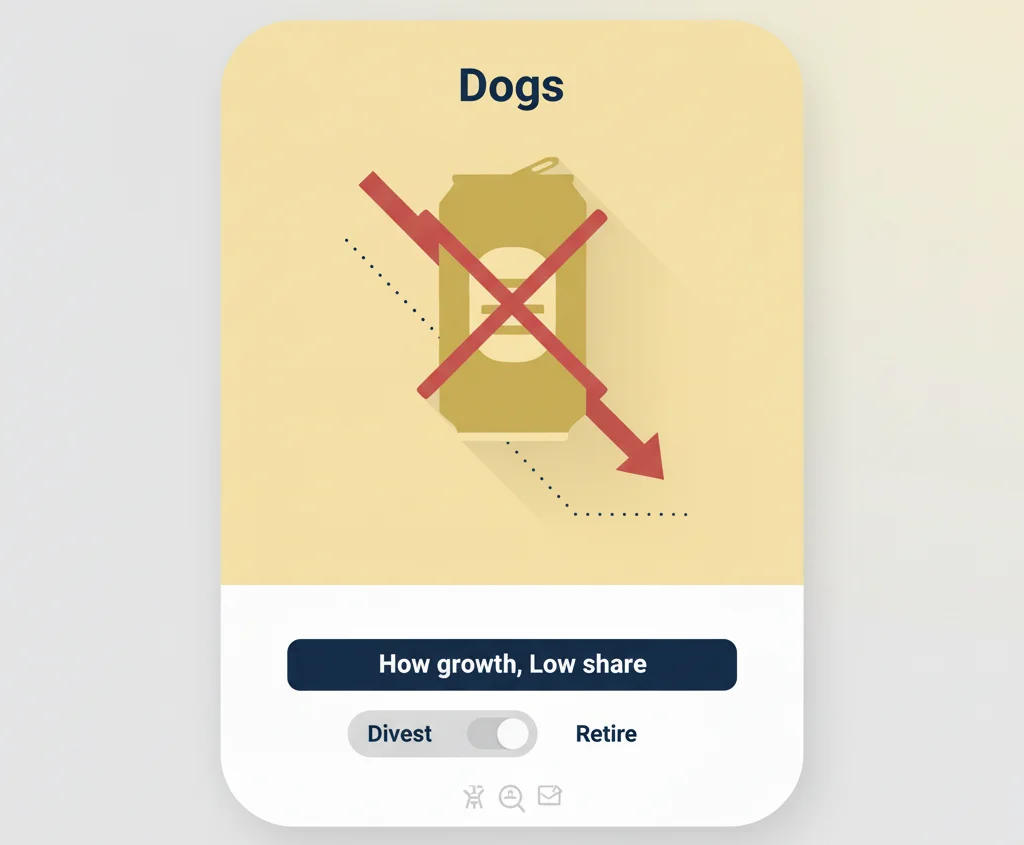
Dogs are products with low market share and low growth.
For Coca-Cola, examples include:
- Tab – one of the first diet sodas, discontinued in 2020.
- Some regional drinks that failed to gain global popularity.
- Niche products that never gained wide acceptance.
Coca-Cola often chooses to discontinue or sell these products to focus on stronger ones.
Strategic Implications of Coca-Cola’s BCG Matrix
The BCG Matrix gives Coca-Cola a clear view of how to manage its portfolio:
- Cash Cows fund the marketing and development of Stars and Question Marks.
- Stars represent future growth opportunities.
- Question Marks need strategic investment decisions.
- Dogs are often phased out to avoid wasting resources.
This balance helps Coca-Cola stay profitable and competitive in the global beverage industry.
Advantages of Using BCG Matrix for Coca-Cola
- Simple and easy to understand framework.
- Shows which products are profitable and which need attention.
- Helps Coca-Cola make investment and divestment decisions.
- Useful for long-term strategic planning.
Limitations of BCG Matrix in Coca-Cola’s Context
While helpful, the BCG Matrix also has some limitations:
- It oversimplifies business realities.
- It only considers market growth and market share, ignoring other factors like competition, innovation, and consumer trends.
- Coca-Cola’s strong brand loyalty and global distribution system give it advantages that the matrix does not capture.
- Some products may not fit neatly into one quadrant.
Conclusion
Coca-Cola’s BCG Matrix shows how the company manages its huge portfolio:
- Stars like Coca-Cola Zero Sugar and Smartwater represent growth.
- Cash Cows like Classic Coca-Cola and Sprite bring in steady profits.
- Question Marks like plant-based drinks show potential but need more investment.
- Dogs like Tab have been phased out.
The BCG Matrix helps Coca-Cola balance profits and investments to stay strong in the global beverage industry.
FAQs
1. What does the BCG Matrix tell us about Coca-Cola?
It shows how Coca-Cola manages its products by dividing them into Stars, Cash Cows, Question Marks, and Dogs.
2. Which Coca-Cola products are Cash Cows?
Classic Coca-Cola, Diet Coke, Sprite, and Fanta are strong Cash Cows.
3. Why is Classic Coca-Cola not a Star product?
Because the soft drink market is not growing fast anymore, even though Coca-Cola has a high market share.
4. How does Coca-Cola manage products in the Question Mark category?
The company invests in some (like Smartwater and plant-based drinks) and discontinues others if they do not show potential.
5. Are there limitations to applying the BCG Matrix to Coca-Cola?
Yes. The matrix is simple and ignores factors like competition, consumer preferences, and innovation.

Passionate about blogging and focused on elevating brand visibility through strategic SEO and digital marketing. Always tuned in to the latest trends, I’m dedicated to maximizing engagement and delivering measurable ROI in the dynamic world of digital marketing. Let’s connect and unlock new opportunities together!