


Summary
The BCG Matrix of Nokia provides a strategic understanding of how one of the world’s most iconic technology companies manages its business divisions across various markets. Once the global leader in mobile phones, Nokia’s journey from dominance to decline and eventual resurgence is one of the most fascinating business case studies in corporate history. The Nokia BCG analysis helps assess how the company’s various divisions—ranging from mobile handsets and network infrastructure to software and technology licensing—perform in terms of market growth rate and relative market share.
This detailed, descriptive, and informative analysis explores how Nokia positions its business units within the Boston Consulting Group (BCG) Matrix, categorizing them into Stars, Cash Cows, Question Marks, and Dogs. The blog explains each quadrant in depth and describes how Nokia’s strategic evolution has transformed its operations in the telecommunications and technology sectors by 2025.
Nokia Corporation, founded in 1865 in Finland, began as a pulp mill company and later evolved into one of the most influential names in telecommunications. During the early 2000s, Nokia was the undisputed leader in the global mobile phone market, with its durable phones and iconic models like the Nokia 3310 and N95. However, with the advent of smartphones led by Apple’s iPhone and Android devices, Nokia lost its dominance due to slow adaptation to market changes.
Despite these setbacks, Nokia reinvented itself. Today, Nokia focuses primarily on telecommunication infrastructure, 5G technology, software solutions, and licensing, establishing itself once again as a major player in the technology ecosystem.
The BCG Matrix of Nokia helps us analyze its diverse product and service portfolio. By examining which businesses are growing rapidly, which remain stable, and which have declined, we can understand Nokia’s strategic decisions and its path to long-term sustainability.
About Nokia Corporation
Nokia is a Finnish multinational corporation headquartered in Espoo, Finland. It operates globally, providing telecommunication equipment, software, and technology services. Nokia’s business is divided into several divisions:
- Nokia Networks (Telecom Equipment and Infrastructure)
- Nokia Technologies (Licensing and Intellectual Property Rights)
- Nokia Bell Labs (Research and Development)
- Nokia Mobile (Handsets, via brand licensing to HMD Global)
As of 2025, Nokia employs over 86,000 people and operates in more than 130 countries, serving telecom operators, enterprises, and government organizations.
Nokia’s vision is to create technology that helps the world act together, focusing on connectivity, digitalization, and sustainable innovation.
What is the BCG Matrix
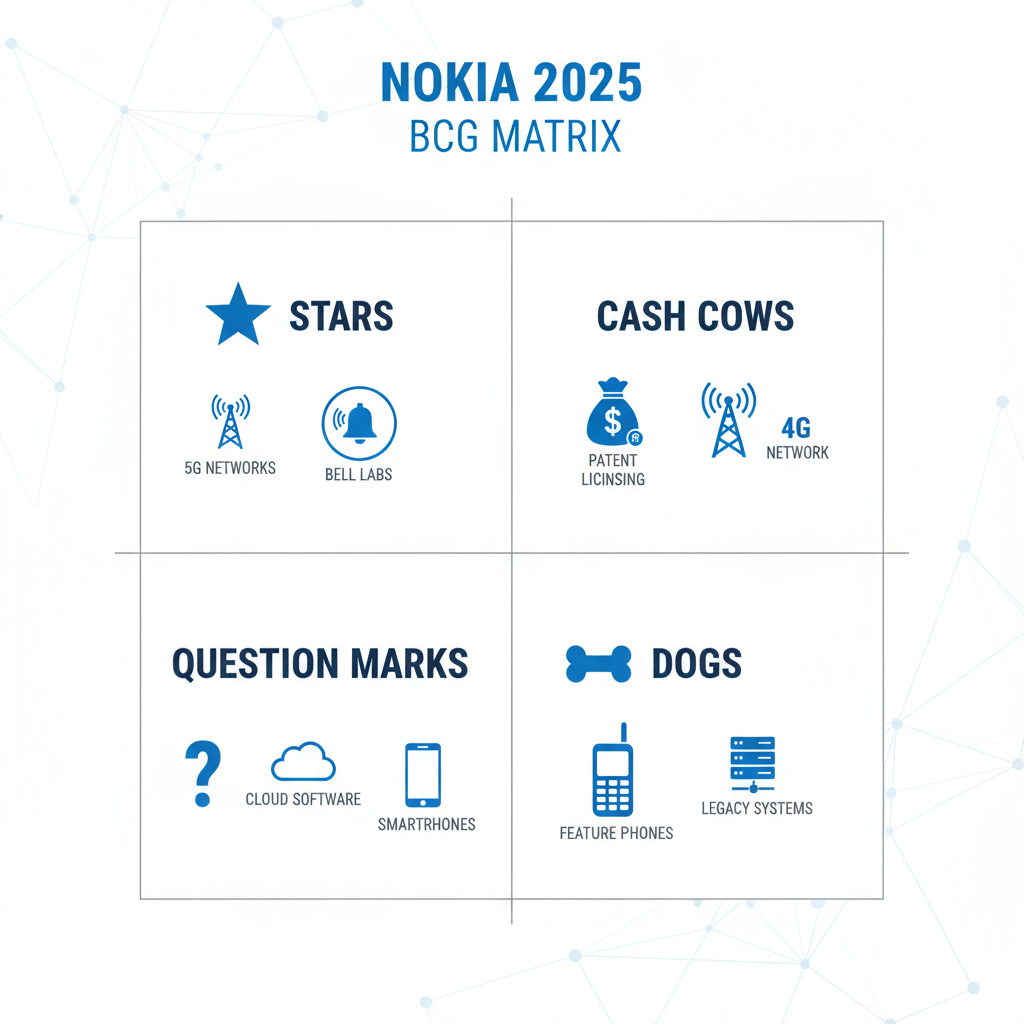
The Boston Consulting Group (BCG) Matrix is a portfolio analysis tool used to evaluate a company’s business units or products based on two dimensions:
- Market Growth Rate – Indicates how fast the market is expanding.
- Relative Market Share – Shows a company’s competitive strength in that market.
The matrix classifies business units into four categories:
Stars: High market share in high-growth markets. These divisions are growth engines and require continued investment.
Cash Cows: High market share in low-growth markets. These generate stable profits and sustain other divisions.
Question Marks: Low market share in high-growth markets. These need strategic focus and investment to become Stars.
Dogs: Low market share in low-growth markets. These are unprofitable or declining divisions that may require divestment.
The Nokia BCG analysis allows us to identify how Nokia’s different businesses contribute to its overall profitability and growth.
Importance of the BCG Matrix for Nokia
Nokia operates in a fast-evolving technology industry where innovation and adaptability are key to survival. The BCG Matrix of Nokia helps management:
- Identify which divisions need further investment and innovation.
- Optimize resources and focus on high-return business areas.
- Analyze legacy divisions that no longer align with strategic goals.
- Understand the balance between mature, profitable segments and emerging growth markets.
- Support long-term strategy in a highly competitive technological landscape.
Through this framework, Nokia can continue its transformation journey effectively while maintaining profitability.
Detailed BCG Matrix Analysis of Nokia
Stars (High Market Share, High Market Growth)
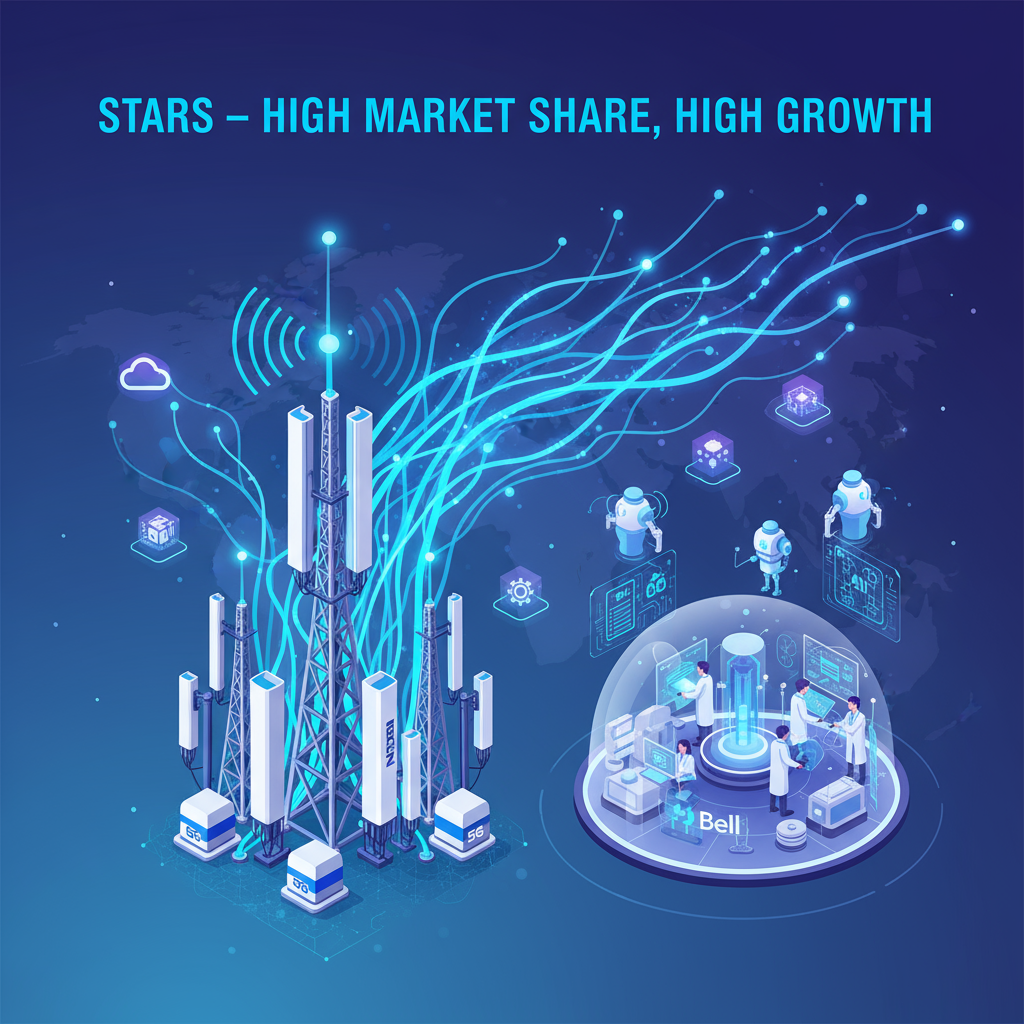
Stars represent the business units that dominate high-growth markets. These are the core engines of Nokia’s future.
5G Networks and Telecommunications Infrastructure
Nokia’s largest and most successful division is its Networks business, which includes mobile networks, fixed access, and cloud solutions. The 5G revolution has provided immense opportunities for Nokia to regain prominence.
Nokia is one of the leading providers of 5G equipment, competing with Ericsson, Huawei, and Samsung. With governments and telecom operators around the world investing in 5G rollout, Nokia’s technologies are in high demand.
Its partnerships with global carriers like AT&T, Verizon, BT, and Vodafone have reinforced its position in the telecom infrastructure market.
The growth in 5G deployment, enterprise private networks, and IoT (Internet of Things) integration has made this division a Star in Nokia’s portfolio.
However, the company must continue investing in research, network security, and software innovation to maintain leadership in this rapidly evolving sector.
Nokia Bell Labs (R&D and Innovation)
Bell Labs, Nokia’s research arm, is another strategic Star. It has pioneered numerous innovations, including developments in 5G and early exploration of 6G technology.
Its focus on optical networking, cloud computing, and AI-driven networks ensures that Nokia remains competitive.
Bell Labs drives innovation not just for Nokia but for the entire telecommunications industry. The division’s emphasis on long-term technological leadership positions it firmly as a Star in the BCG Matrix of Nokia.
Cash Cows (High Market Share, Low Market Growth)
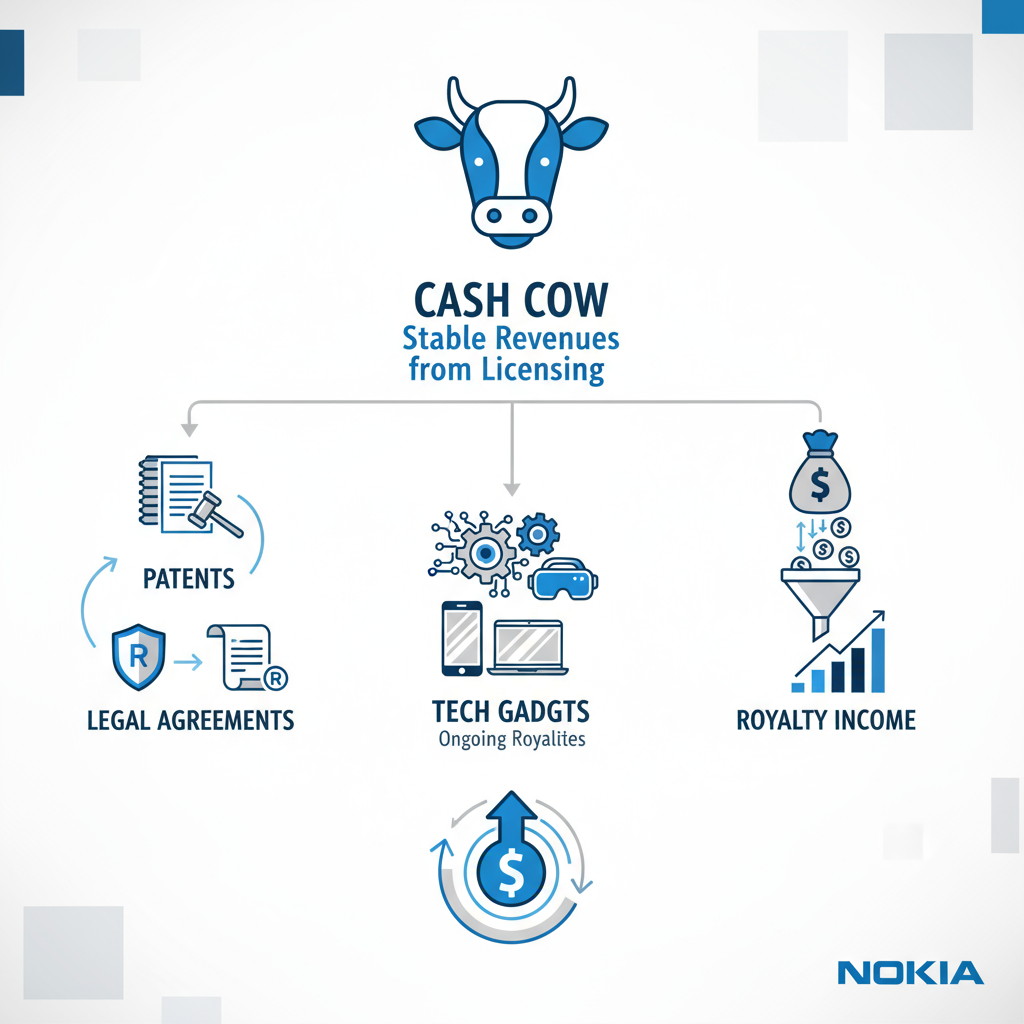
Cash Cows represent stable and mature divisions that generate steady revenue without significant market expansion.
Nokia Technologies (Patent Licensing and Royalties)
This division manages Nokia’s extensive intellectual property portfolio, consisting of over 20,000 patents related to telecommunications, connectivity, and multimedia technologies.
The company licenses its patents to other tech giants, including Apple, Samsung, and Qualcomm, generating significant recurring revenue.
As smartphones and connected devices continue to grow globally, Nokia’s licensing business remains profitable, although its market itself is mature.
This segment requires relatively low investment compared to network infrastructure but contributes substantial profits to Nokia’s overall income.
Thus, it serves as a financial stabilizer and is rightly placed in the Cash Cow quadrant.
Legacy 4G Networks and Services
While the world is moving toward 5G, many regions still depend on 4G LTE infrastructure. Nokia continues to serve these markets, especially in developing countries.
Though growth is limited, 4G operations still generate consistent income due to existing long-term contracts and maintenance services.
This division provides cash flow stability, allowing Nokia to finance its 5G and enterprise innovations.
Also Read: BCG Matrix of Titan
Question Marks (Low Market Share, High Market Growth)
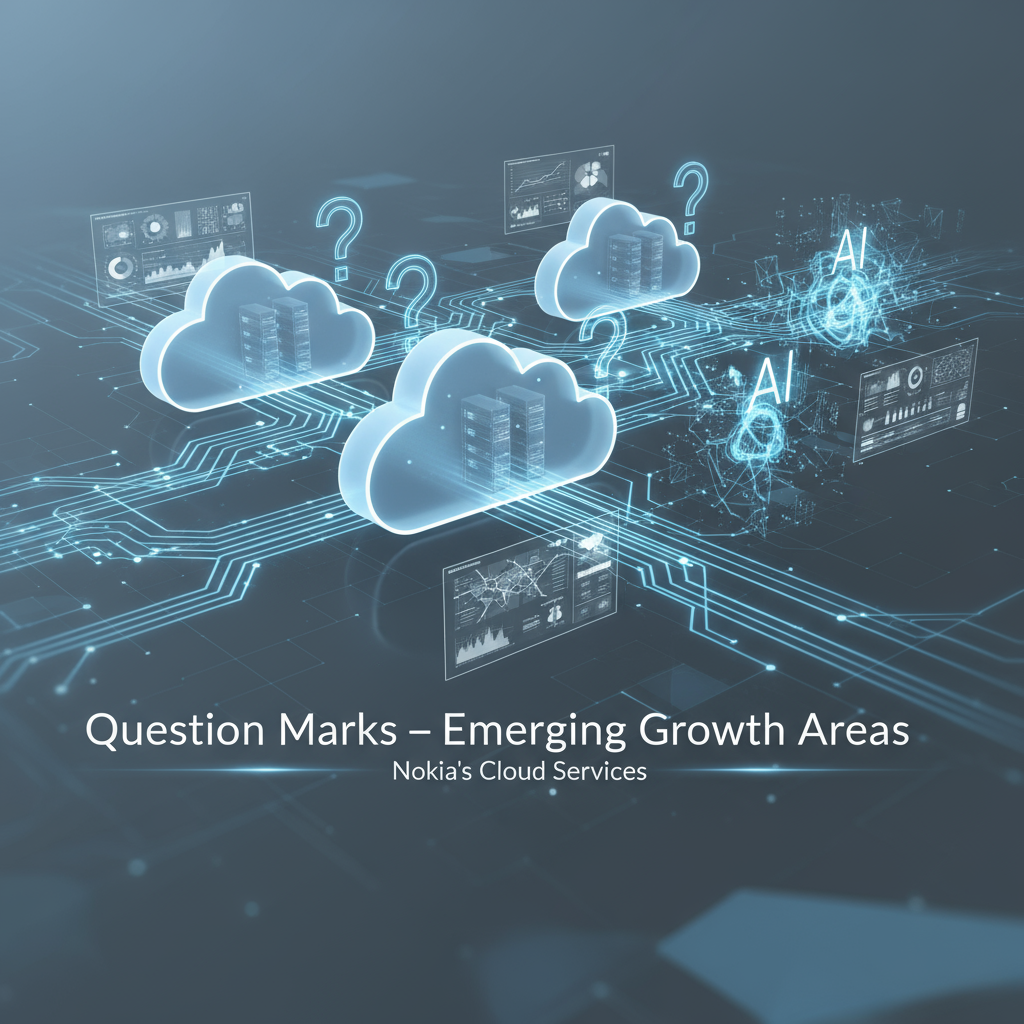
Question Marks are potential future growth drivers but currently hold limited market share. They require strategic investments and innovation.
Cloud and Digital Software Services
The telecom industry’s shift toward software-driven networks and cloud-based management presents a lucrative opportunity. Nokia’s Cloud and Network Services division provides digital solutions like network orchestration, AI-driven analytics, and cybersecurity platforms.
However, competition is fierce, with players like Cisco, Oracle, and Ericsson leading in software-defined networking (SDN) and network function virtualization (NFV).
While the demand for these services is rapidly growing, Nokia’s current market share is relatively smaller.
With strategic investment in automation and partnerships with cloud providers like Google Cloud and Microsoft Azure, this segment could transition into a Star over time.
Consumer Electronics (Smartphones via HMD Global Partnership)
After selling its mobile phone business to Microsoft in 2014, Nokia re-entered the handset market in collaboration with HMD Global, which licenses the Nokia brand for Android smartphones.
Though Nokia phones have regained moderate popularity, especially in emerging markets, they hold a small market share compared to giants like Samsung, Xiaomi, and Apple.
The global smartphone market remains competitive but continues to grow due to demand for 5G-enabled devices.
With the right mix of affordability, nostalgia, and durability, Nokia could regain some market presence, but it remains in the Question Mark quadrant for now
Dogs (Low Market Share, Low Market Growth)
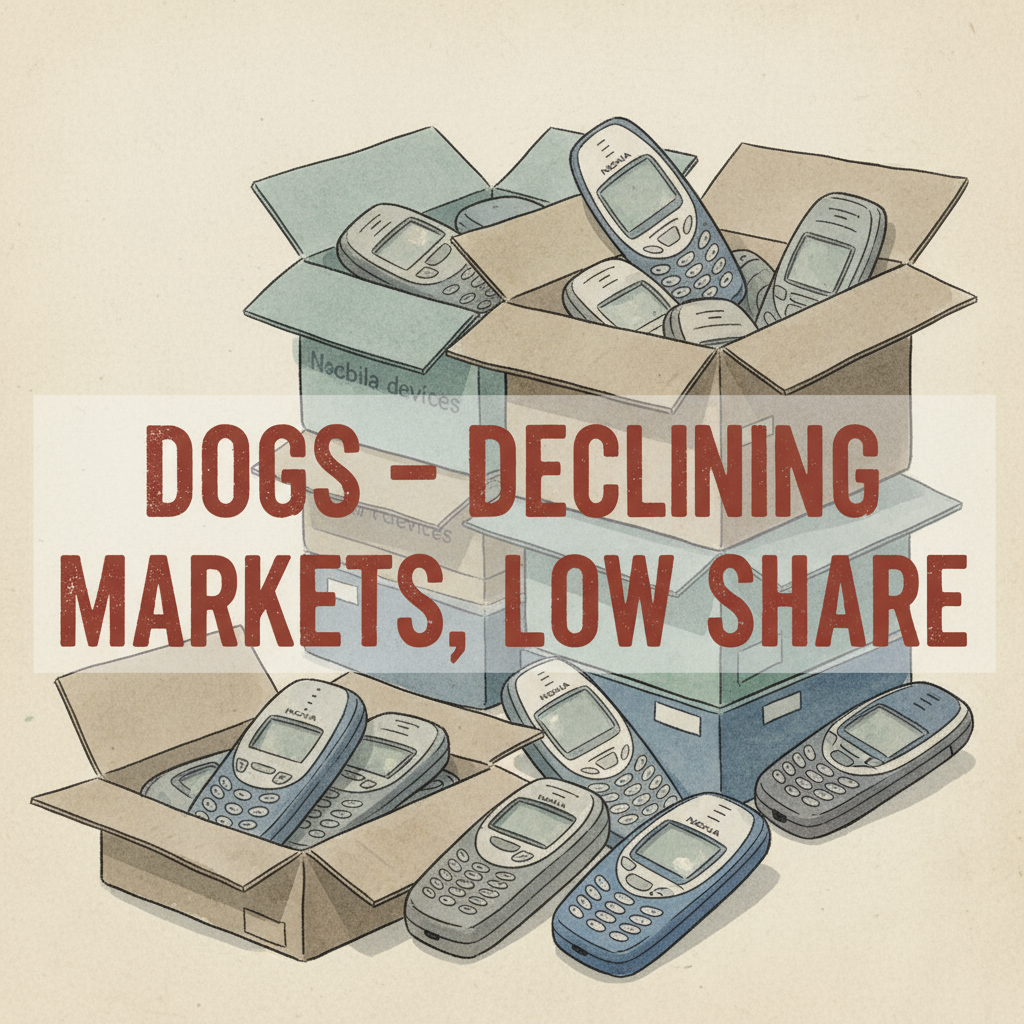
Dogs represent divisions or products that have limited profitability or are in decline. These often require restructuring or divestment.
Feature Phones and Legacy Devices
Nokia’s feature phone division, once its strongest segment, has become obsolete in most regions due to the dominance of smartphones.
Although some feature phones still sell in developing markets, they no longer contribute significantly to overall profits.
Their limited growth potential and low margins place them in the Dog category of the BCG Matrix of Nokia.
Old Software and Network Legacy Systems
Some of Nokia’s older network technologies, such as outdated radio and switching systems, are being phased out.
They generate minimal revenue and are costly to maintain.
Nokia is gradually retiring these legacy systems to focus on more advanced digital platforms and next-generation infrastructure.
Strategic Insights from Nokia’s BCG Matrix
The BCG Matrix of Nokia reveals how the company has transitioned from a declining mobile handset leader to a diversified global technology powerhouse.
The Star divisions—5G infrastructure and Bell Labs—represent Nokia’s innovation-driven growth areas, ensuring leadership in the telecom revolution.
The Cash Cow divisions, including patent licensing and 4G services, provide financial stability, allowing sustained investment in high-growth areas.
The Question Mark categories—cloud software and smartphones—highlight Nokia’s ongoing pursuit of technological relevance and market diversification.
Finally, the Dog divisions reflect the company’s historical baggage, which it has learned from and strategically phased out.
This balanced portfolio enables Nokia to remain resilient in a highly competitive and rapidly evolving technology industry.
Challenges and Limitations of the BCG Matrix for Nokia
While the Nokia BCG analysis provides strategic clarity, certain limitations exist:
- The technology market evolves rapidly, making it difficult to maintain consistent growth predictions.
- The BCG Matrix focuses primarily on quantitative factors, neglecting qualitative aspects like brand reputation, innovation capacity, and market adaptability.
- Divisions such as network infrastructure and software are interdependent, complicating isolated analysis.
- Nokia’s performance depends heavily on global macroeconomic factors, regulatory shifts, and partnerships, which the matrix does not fully capture.
Despite these limitations, the BCG Matrix remains a valuable tool for understanding Nokia’s strategic positioning.
Conclusion
The BCG Matrix of Nokia (2025) illustrates a company that has transformed itself from a fallen mobile giant into a leading player in telecommunication technology and network innovation.
Its Stars, such as the 5G infrastructure and Bell Labs, are driving technological progress and future growth.
The Cash Cows, including its patent licensing and 4G services, continue to generate reliable revenue.
The Question Marks, such as cloud solutions and smartphones, represent areas with significant potential that require sustained investment.
The Dogs, like feature phones and legacy systems, are gradually being phased out to streamline operations.
Nokia’s journey reflects resilience, adaptability, and a commitment to innovation. The Nokia BCG analysis highlights a well-balanced portfolio that combines stability with forward-looking technological ambition, ensuring Nokia’s continued relevance in the global digital economy.
FAQs
What is the BCG Matrix of Nokia?
The BCG Matrix of Nokia categorizes its business units based on market growth and market share to assess which divisions are performing well and which need strategic focus.
Which are the Star divisions of Nokia?
The Star divisions include Nokia’s 5G Network Infrastructure and Bell Labs, both leading high-growth areas with strong market positions.
What are the Cash Cow segments in Nokia?
Patent licensing under Nokia Technologies and 4G networks are Cash Cows, providing steady profits in mature markets.
Which divisions are considered Question Marks for Nokia?
Nokia’s Cloud and Software Services and its smartphone partnership with HMD Global are Question Marks with growth potential but lower market share.
Why are feature phones categorized as Dogs in Nokia’s BCG Matrix?
Feature phones have low market share and declining demand globally, making them less profitable and strategically unimportant for Nokia’s future growth.