


Summary
The BCG Matrix of Patanjali explains how the Indian FMCG giant manages its wide product portfolio across different market categories. It classifies Patanjali’s products into Stars, Cash Cows, Question Marks, and Dogs based on their market share and market growth rate.
Brands like Patanjali Dant Kanti and Patanjali Ghee serve as Cash Cows, generating consistent revenue. The company’s fast-growing products such as Aloe Vera Juice, Patanjali Honey, and Patanjali Cow Ghee fall under Stars. On the other hand, new ventures like Patanjali SIM cards, Apparel (Paridhan), and Frozen Foods are considered Question Marks, while underperforming or discontinued products like Patanjali Noodles and Patanjali Rice Bran Oil can be categorized as Dogs.
This detailed analysis highlights how the Patanjali BCG Matrix reflects the brand’s success, challenges, and future growth opportunities in India’s competitive FMCG sector.
Patanjali Ayurved Limited is one of India’s fastest-growing FMCG companies, founded in 2006 by Baba Ramdev and Acharya Balkrishna. The company’s goal is to promote Ayurvedic and natural products as healthier alternatives to chemical-based brands.
Patanjali disrupted the Indian FMCG market by offering affordable, natural, and India-made products. Its extensive product portfolio includes toothpaste, ghee, honey, shampoo, soap, juices, atta, oil, and dairy products.
However, as the product range expanded rapidly, it became important to analyze which product lines are profitable, which need more investment, and which should be reconsidered. The BCG Matrix of Patanjali provides clear insights into how different products perform in terms of market growth and market share.
What is the BCG Matrix Framework
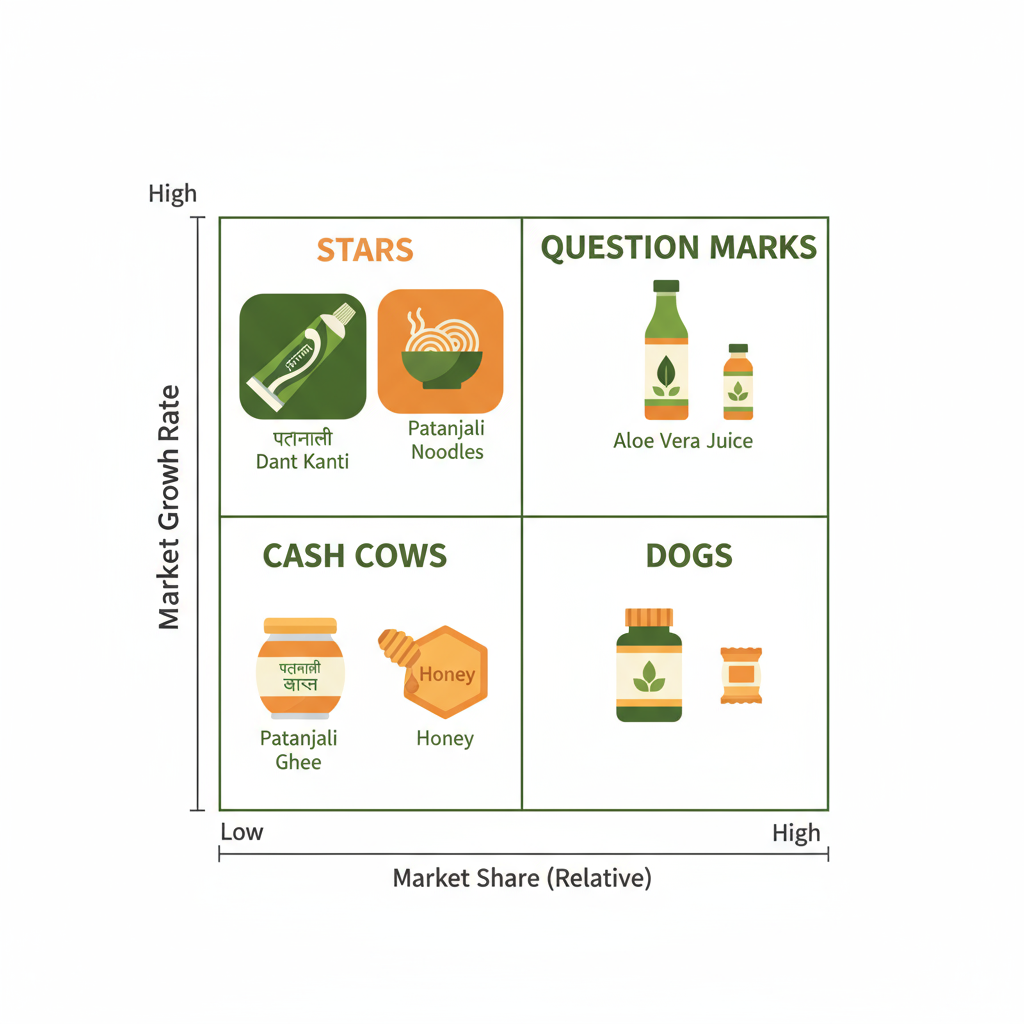
The Boston Consulting Group (BCG) Matrix is a tool used by companies to assess their business units or product lines based on:
- Market Growth Rate – How fast the product category is growing.
- Relative Market Share – How strong the product is compared to its competitors.
The BCG Matrix is divided into four categories:
| Quadrant | Market Share | Market Growth | Description |
| Stars | High | High | Fast-growing products with strong market position. |
| Cash Cows | High | Low | Stable, mature products that generate steady income. |
| Question Marks | Low | High | Products with growth potential but low market share. |
| Dogs | Low | Low | Weak products with poor performance. |
The BCG Matrix of Patanjali helps identify where the brand should invest, maintain, or divest.
Cash Cows
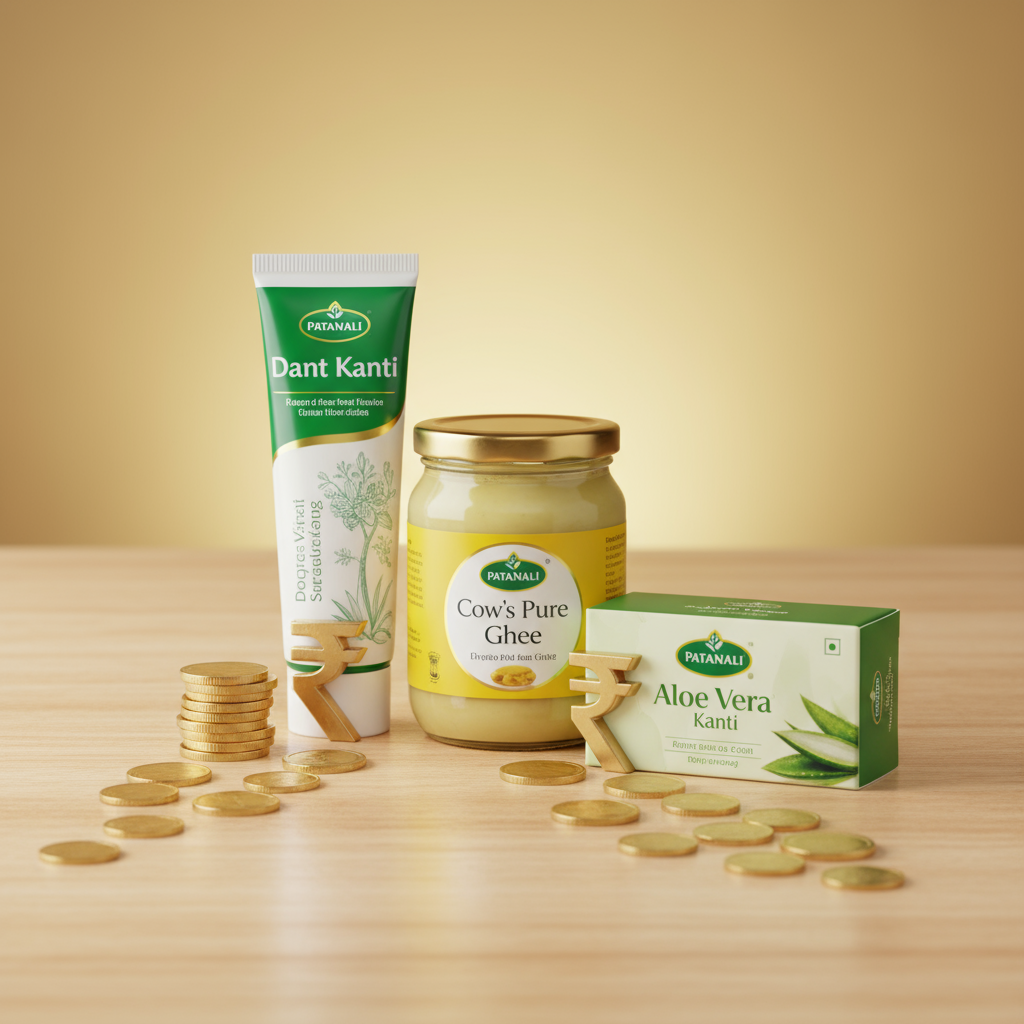
Cash Cows are products with high market share in low-growth industries. They generate steady revenue and require minimal investment.
Patanjali’s Cash Cow Products: Dant Kanti, Ghee, and Soaps
Patanjali Dant Kanti
Patanjali Dant Kanti is one of the company’s most successful products. It dominates the herbal toothpaste market in India with a significant market share. Its success is based on affordability, Ayurvedic formulation, and strong brand trust.
Consumers prefer Dant Kanti for its herbal ingredients like neem, clove, and babool, which promote oral health naturally. It directly competes with Colgate Vedshakti and Dabur Red Toothpaste, maintaining strong market stability.
Patanjali Ghee
Patanjali Cow Ghee is another major revenue contributor. The product gained popularity because it is pure, traditional, and associated with Indian households’ trust in ghee consumption. Despite limited market growth in the ghee category, Patanjali continues to dominate due to its wide distribution and customer loyalty.
Patanjali Soaps
The Patanjali soap range, including Aloe Vera Kanti and Neem Kanti, also performs consistently well. Consumers appreciate its Ayurvedic ingredients and affordability. These soaps maintain a steady market share with repeat purchases.
Why They Are Cash Cows
- High brand recognition and repeat buyers.
- Strong distribution network across India.
- Stable demand with low marketing investment.
- Revenue funds new product development in other categories.
Cash Cow products are the foundation of Patanjali’s financial strength.
Stars
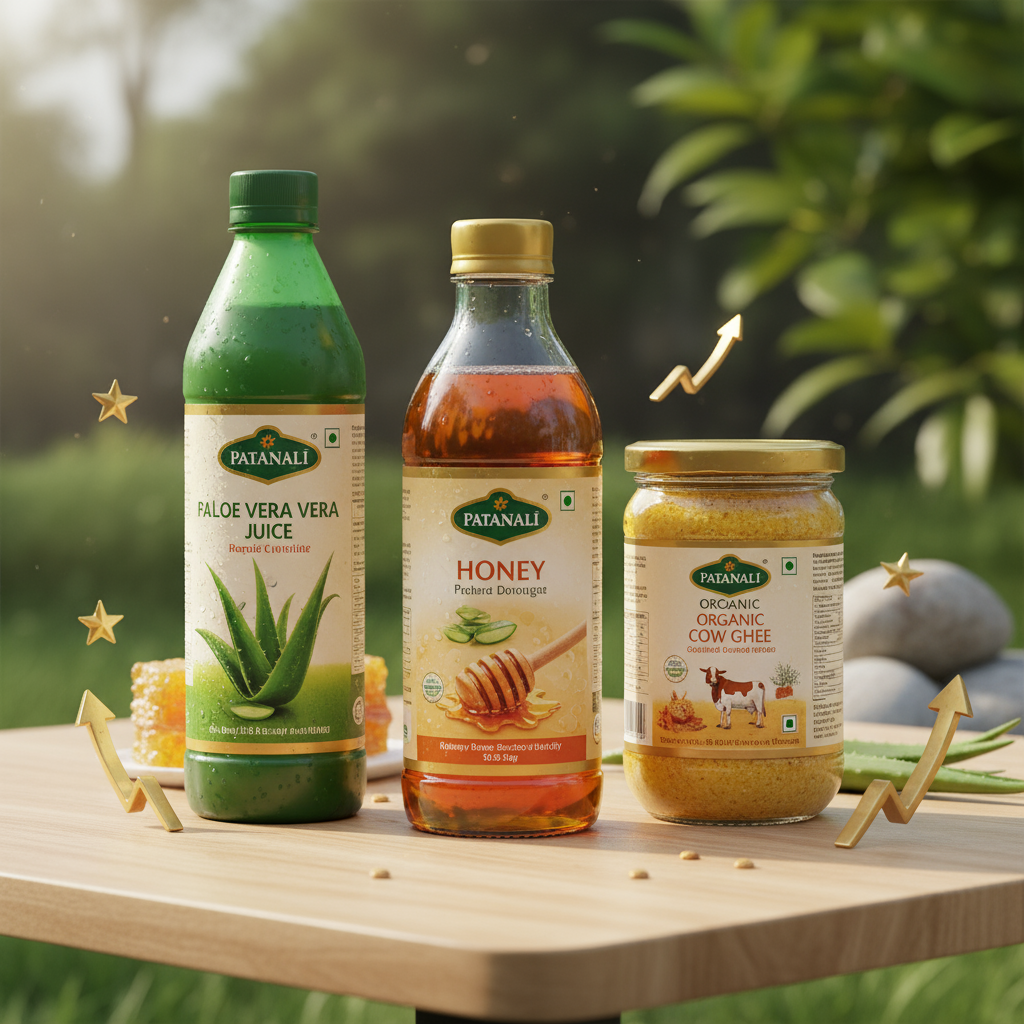
Stars are products with high market share in high-growth industries. They need continuous investment to maintain their dominance but can become future Cash Cows as markets mature.
Patanjali’s Star Products: Honey, Aloe Vera Juice, and Cow Ghee (Expansion)
Patanjali Honey
Patanjali Honey is one of the most popular products in the health and nutrition category. It gained quick success due to its purity, affordable price, and Ayurvedic benefits.
It competes directly with Dabur Honey and has captured a significant share of the growing natural sweetener market. With increasing health consciousness, this category continues to grow rapidly.
Patanjali Aloe Vera Juice
Another strong performer is Aloe Vera Juice, known for its health and detoxification benefits. It appeals to fitness-conscious consumers who prefer natural drinks over carbonated beverages. The product’s demand has increased, especially in urban areas and health stores.
Patanjali Cow Ghee (Extended Range)
Though already a Cash Cow, the expanding variants of Patanjali Cow Ghee—including organic and premium versions—fall under Stars. The increasing interest in organic products has pushed sales higher.
Why They Are Stars
- Operate in fast-growing health and wellness markets.
- Align with consumer trends favoring natural and Ayurvedic products.
- Benefit from Patanjali’s credibility in purity and value pricing.
- Require investment in quality control and marketing to maintain leadership.
Stars reflect Patanjali’s ability to combine traditional wellness with modern consumer demand.
Question Marks
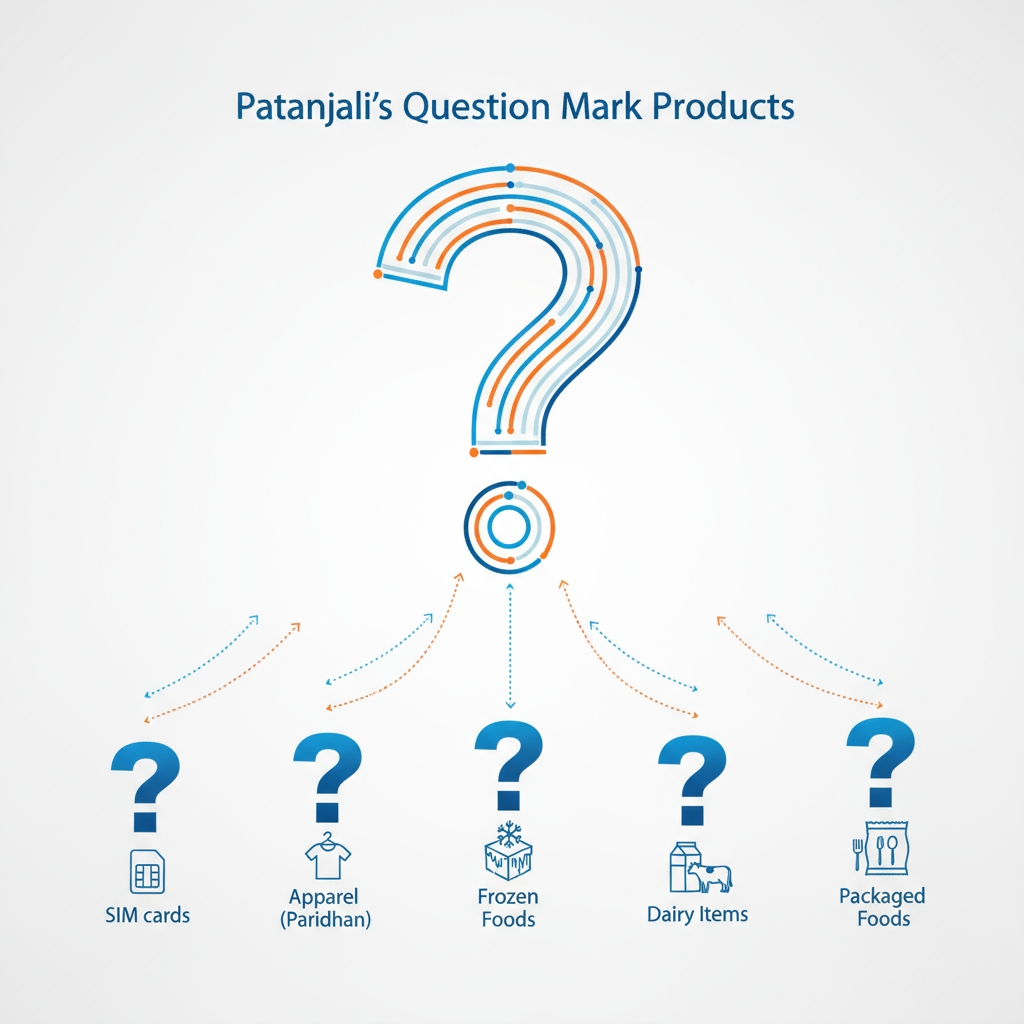
Question Marks represent products in high-growth markets with low market share. These products need heavy investment to grow or may fail if not managed strategically.
Patanjali’s Question Mark Products: Packaged Foods, Dairy, and Apparel (Paridhan)
Patanjali Dairy Products
Patanjali expanded into dairy by launching milk, curd, butter, and paneer. However, competition from Amul and Mother Dairy makes it difficult for Patanjali to gain significant market share. The dairy industry is growing fast, but Patanjali’s presence is still limited to specific regions.
Patanjali Packaged Foods
The company introduced atta noodles, biscuits, and instant mixes to compete with established FMCG brands like Nestlé and ITC. Although initial sales were strong due to brand popularity, sustaining growth has been challenging. Products like Patanjali Atta Noodles have struggled to retain consistent demand.
Also Read: BCG Matrix of Coca-Cola
Patanjali Paridhan (Clothing Line)
Patanjali launched its apparel brand Paridhan to promote Indian-made clothing. However, this segment has not performed as expected. The fashion retail industry is highly competitive, and Patanjali’s brand association with FMCG products has limited its appeal in fashion.
Why They Are Question Marks
- Operate in growing industries but lack brand dominance.
- Require strong marketing, innovation, and distribution.
- Risk of low profitability due to intense competition.
- Could become Stars or Dogs depending on future strategy.
These categories show Patanjali’s ambition to diversify beyond FMCG, but they still need refinement.
Dogs
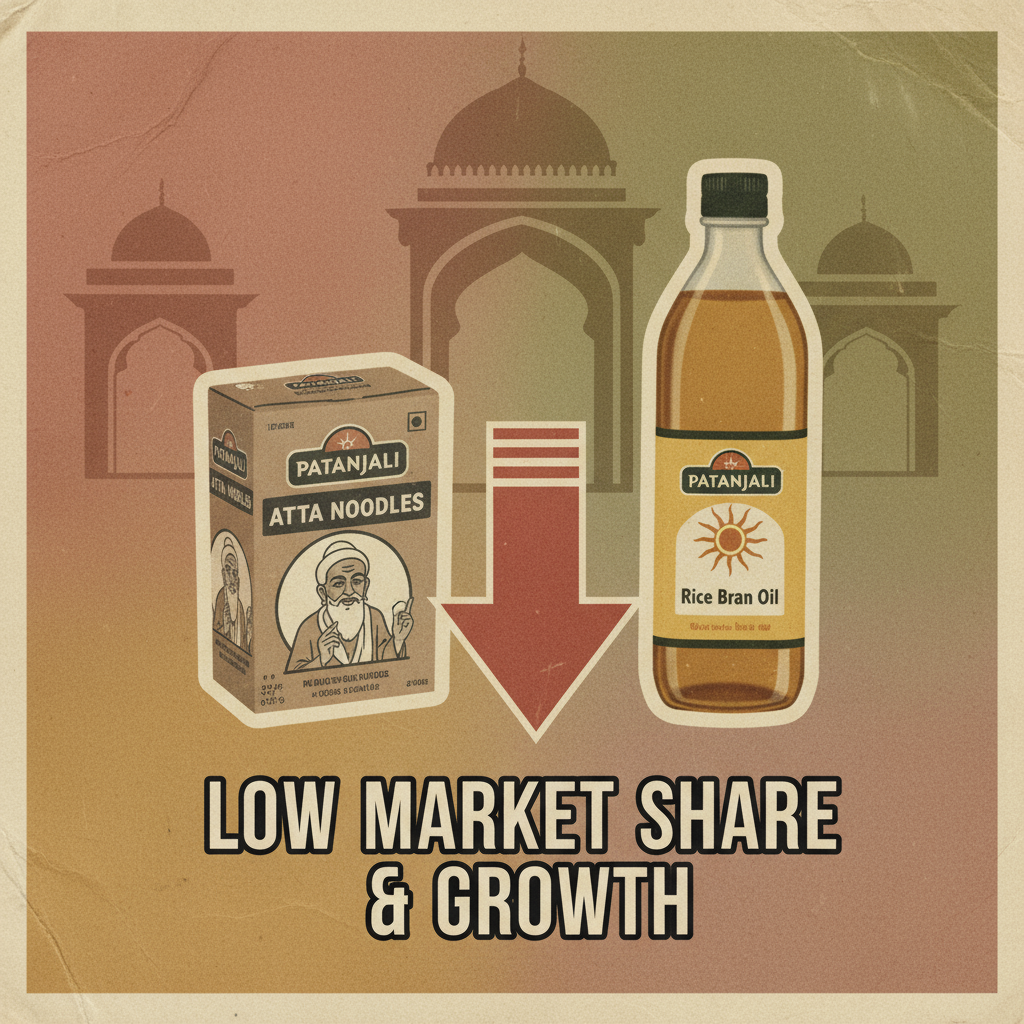
Dogs are products with low market share and low growth rate. They have limited profitability and may be discontinued or repositioned.
Patanjali’s Dog Products: Noodles and Edible Oils
Patanjali Noodles
Patanjali introduced Atta Noodles as a healthier alternative to Maggi after Nestlé faced a ban in 2015. While the initial response was strong, consumer interest declined over time. The product could not compete with Maggi’s marketing power and brand loyalty.
Consumers viewed Patanjali Noodles as less flavorful compared to traditional options, leading to reduced sales.
Patanjali Rice Bran Oil
This product was introduced to promote healthy cooking alternatives. However, the edible oil segment is highly saturated, and strong brands like Fortune and Saffola dominate. Patanjali’s oil range could not capture enough market share to remain profitable.
Why They Are Dogs
- Low sales and poor repeat purchase rates.
- Weak differentiation from competitors.
- Low market growth and high competition.
- Limited brand recall in these categories.
These products add little value to Patanjali’s overall profitability and may need rebranding or discontinuation.
Key Insights from the Patanjali BCG Matrix
- Ayurvedic strength drives growth – Herbal and natural product lines ensure consistent success.
- Diversification brings challenges – Expansion into dairy and apparel faces stiff competition.
- Cash Cows fund innovation – Dant Kanti and Ghee provide financial stability.
- Product quality is central – Purity and affordability sustain customer trust.
- Focus required on scaling high-growth products – Honey and Aloe Vera Juice can lead Patanjali’s next growth phase.
Strategic Recommendations
- Strengthen Cash Cows
Continue promoting Dant Kanti and Ghee with improved packaging and digital campaigns to retain dominance. - Invest in Stars
Expand production and export of Honey and Aloe Vera Juice. Focus on international health markets. - Rebuild Question Marks
Improve quality and branding of dairy and packaged food items. Build regional partnerships for better distribution. - Phase Out Dogs
Limit investment in Noodles and Rice Bran Oil. Consider repositioning them with better flavors or formulations. - Enhance Digital Presence
Expand e-commerce and online retail for premium products to capture health-conscious consumers.
Key Takeaways
- The BCG Matrix of Patanjali highlights its mix of strong, growing, and struggling product lines.
- Cash Cows like Dant Kanti and Ghee ensure profitability.
- Stars like Honey and Aloe Vera Juice drive brand visibility.
- Question Marks like dairy and packaged foods need innovation.
- Dogs like noodles and oils require evaluation.
- Patanjali’s balance between traditional Ayurveda and modern FMCG remains its strongest advantage.
FAQs
What is the BCG Matrix of Patanjali?
The BCG Matrix of Patanjali analyzes the company’s products based on market share and market growth rate to identify profitable, growing, and weak segments.
Which products are Cash Cows for Patanjali?
Patanjali Dant Kanti, Ghee, and soaps are Cash Cows that generate consistent revenue.
Which products are Stars in Patanjali’s BCG Matrix?
Patanjali Honey, Aloe Vera Juice, and premium Cow Ghee are Star products with high growth and strong market share.
Which products are Question Marks for Patanjali?
Patanjali’s dairy items, packaged foods, and apparel line fall under Question Marks due to low market share but high potential.
Which products are categorized as Dogs?
Patanjali Noodles and Rice Bran Oil are considered Dogs due to low demand and high competition.
How does the BCG Matrix help Patanjali?
It helps Patanjali allocate resources efficiently, focusing investment on growth segments and optimizing underperforming products.
Conclusion
The Patanjali BCG Matrix shows how the brand has balanced its Ayurvedic heritage with modern product innovation. The company’s Cash Cows, such as Dant Kanti and Ghee, provide financial strength, while Star products like Honey and Aloe Vera Juice ensure long-term growth.
However, diversification into dairy, apparel, and noodles remains uncertain and requires focused improvement. With a clear strategy and continued consumer trust, Patanjali can maintain its leadership in India’s FMCG sector while expanding its global presence.

A digital marketer with a strong focus on SEO, content creation, and AI tools. Creates helpful, easy-to-understand content that connects with readers and ranks well on search engines. Loves using smart tools to save time, improve content quality, and grow online reach.