


Summary
Amazon, one of the world’s leading e-commerce giants, continues to evolve with rapid advancements in digital services, cloud computing, and AI. From its humble beginnings as an online bookstore to becoming a $1.662 trillion market-cap company, Amazon has transformed industries and reshaped global commerce. This SWOT analysis of Amazon explores its current position, strengths, weaknesses, opportunities, and threats as it enters 2025. The analysis will help you understand Amazon’s business model, competitive edge, and future prospects.
Amazon, founded in 1994 by Jeff Bezos, is now one of the most recognizable brands in the world. With its reach across e-commerce, cloud computing (via AWS), streaming services, and AI, Amazon is a dominant force in the global market. As of 2024, it continues to grow and diversify, but it faces significant competition and challenges that could impact its future trajectory. In this SWOT analysis of Amazon, we’ll explore the key factors that define Amazon’s business today, focusing on its strengths, weaknesses, opportunities, and threats in 2025.
Overview of Amazon
- Industry: Conglomerate (e-commerce, cloud computing, digital media, and AI)
- Founded: July 5, 1994, by Jeff Bezos
- Key People: Jeff Bezos (Executive Chairman), Andy Jassy (President & CEO)
- Headquarters: Seattle, Washington, USA
- Revenue (2023): $143.1 billion (Q3 2023)
- Market Cap (2023): $1.662 Trillion
- Employees (2023): 1.68 million globally
- Website: www.amazon.com
Amazon has evolved from a simple online bookstore to the largest e-commerce and cloud computing platform in the world. It has diversified into various segments, including video streaming (Amazon Prime), grocery services (Whole Foods), and artificial intelligence (Alexa). Despite facing intense competition, Amazon’s constant innovation and vast customer base keep it at the forefront of global commerce.
SWOT Analysis of Amazon (Updated 2025)
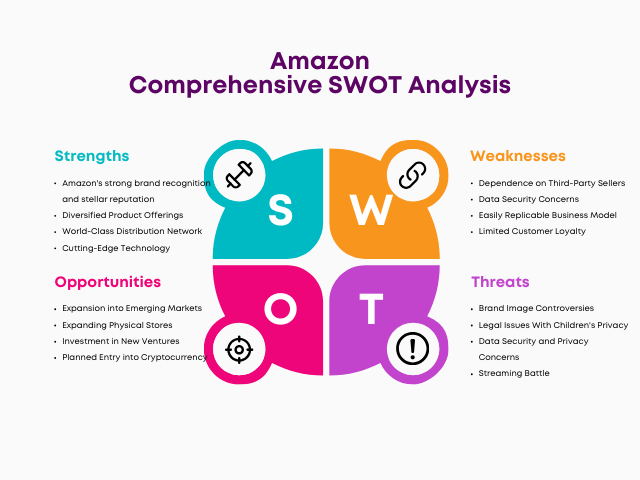
Strengths of Amazon
Amazon’s rise to global prominence is attributed to its diverse strengths that position it as an undisputed leader in e-commerce and technology.
Market Leader
Amazon is an undisputed leader in the global e-commerce space, with a market capitalization of over $1.8 trillion as of 2023. This dominance is further demonstrated by its staggering revenue of $574.8 billion in 2023, a 12% increase from the previous year. The company has successfully established itself as a global retail giant with an unparalleled online shopping platform. Amazon is often the first choice for consumers across the globe due to its vast product range, competitive pricing, and reliable service.
Consistent Financial Performance
One of the key strengths of Amazon is its consistent financial growth. Amazon’s financials reflect strong sales growth and profitability, which provides the company with the necessary funds to invest in new ventures, technology, and acquisitions. For example, Amazon’s operating income surged to $36.9 billion in 2023, driven by the success of its core business units like e-commerce and AWS. Its low debt-to-equity ratio also ensures that the company can weather economic downturns with ease.
Large Customer Base
Amazon boasts an extensive and diverse customer base, reaching millions of customers across more than 100 countries. The platform’s easy navigation, wide product selection, and fast delivery services have attracted a vast audience, making Amazon one of the most visited websites globally. Its brand is synonymous with convenience, reliability, and customer satisfaction, which has fostered strong consumer loyalty.
Wide Range of Services
Amazon’s diversification strategy has paid off. Beyond its e-commerce platform, Amazon has expanded into Amazon Web Services (AWS), its cloud computing arm, which significantly contributes to its bottom line. AWS provides cloud infrastructure, machine learning, and data storage solutions to businesses, generating billions in revenue. Amazon Prime, the subscription-based service, is another revenue driver, offering customers exclusive access to streaming, free shipping, and other perks. This wide array of services helps Amazon reduce its dependency on any single revenue stream and further solidifies its market position.
Global Presence
Amazon has established operations in over 200 countries and territories. This vast global presence allows Amazon to tap into international markets, increasing its market share in various regions. The company’s international footprint provides it with the ability to serve diverse customer needs and adjust to different market conditions, further bolstering its position in the global market.
Brand Valuation
Amazon’s brand is one of the most valuable in the world. Valued at approximately $469 billion in 2023, Amazon’s brand recognition is unmatched. Its logo is instantly recognizable, and the trust it has built with its customers is a testament to its long-standing reputation for quality service and customer-centric approach.
Strong Brand Recognition
Amazon’s brand recognition is one of its greatest assets. Over the years, Amazon has become a household name, synonymous with fast delivery, convenience, and quality service. Its marketing strategies, combined with high customer satisfaction, have solidified its place in the minds of consumers worldwide.
Diversified Product Offerings
From books and electronics to groceries, clothing, and even home appliances, Amazon’s extensive product catalog sets it apart from competitors. The company continuously adapts to market demands, expanding its inventory to meet evolving consumer preferences. Its partnerships with third-party sellers further enhance the variety of products available on the platform.
World-Class Distribution Network
Amazon’s massive distribution and fulfillment network is one of its key advantages. With global fulfillment centers, sorting facilities, and the use of advanced technology like robotics, Amazon ensures fast and efficient delivery. This logistical expertise enables Amazon to deliver millions of packages to customers worldwide, often within one or two days, enhancing customer satisfaction.
Cutting-Edge Technology
Amazon has consistently invested in cutting-edge technology, including data analytics, machine learning, and AI. These innovations power key aspects of its business, from personalized product recommendations to inventory management and customer service. Amazon also leads in the development of smart home devices such as Alexa and Ring.
Largest Merchandise Selection & Third-Party Sellers
Amazon’s Marketplace has revolutionized online shopping by allowing third-party sellers to list their products alongside Amazon’s own inventory. This strategy has resulted in a wide variety of products available to consumers, driving traffic and boosting sales. More than 75 million items are listed on Amazon’s Marketplace, making it one of the most competitive e-commerce platforms globally.
Weaknesses of Amazon
While Amazon’s strengths are numerous, it also faces some significant challenges that could impact its future growth.
Dependence on Third-Party Sellers
Amazon’s marketplace model, which allows third-party sellers to list products, is highly profitable but also exposes Amazon to significant risks. Issues such as fraudulent products, counterfeit goods, and low-quality listings can tarnish the customer experience and harm Amazon’s reputation. Managing third-party sellers effectively and maintaining product quality is a continual challenge for the company.
Data Security Concerns
Given the vast amount of customer data Amazon collects, data security remains a top concern. Cyberattacks and data breaches could have severe consequences, both financially and reputationally. Amazon must continuously invest in securing its data infrastructure to protect customer information and maintain trust.
Easily Replicable Business Model
While Amazon has a strong market position, its business model is relatively easy to replicate. Competitors like eBay, Walmart, and even local online retailers in various markets have the potential to copy Amazon’s successful formula. To stay ahead, Amazon must innovate constantly to differentiate itself from new entrants and established competitors.
Limited Customer Loyalty
Although Amazon has a large customer base, some consumers remain loyal to specific brands or retailers. This lack of brand loyalty can make it difficult for Amazon to retain customers, especially in new markets or when competitors offer superior products or customer service.
Losing Margins in Certain Markets
Amazon has faced challenges in markets like India, where free shipping practices and low margins have led to losses. The company’s pricing strategy in certain regions has resulted in shrinking margins, which could affect its overall profitability.
Declining Consumer Safety
As Amazon’s product range expands, maintaining strict safety and quality control has become more challenging. The company has faced legal scrutiny over the sale of hazardous goods and substandard products, which can harm its brand reputation and customer trust.
Unfair Use of Third-Party Data
Amazon has been accused of using third-party data from its sellers to launch competing products. Such practices have raised concerns about fairness and transparency, leading to investigations by regulatory bodies in various countries.
Lack of Physical Stores
Despite dominating online retail, Amazon’s lack of physical stores limits its ability to showcase products in-person and engage with customers face-to-face. Many consumers still prefer the in-store shopping experience, and Amazon’s minimal presence in this segment may hinder its growth in certain markets.
Opportunities for Amazon
Despite its weaknesses, Amazon is well-positioned to capitalize on several growth opportunities in the coming years.
Backward Integration
Amazon can further expand its in-house brand production, such as Amazon Basics, to enhance its product differentiation and improve profit margins. By producing more products internally, Amazon can maintain better control over quality and pricing.
Amazon Luna – Gaming Anywhere
Amazon’s entry into the cloud gaming market with Amazon Luna presents an exciting opportunity. The service allows users to play games without consoles or high-end PCs, making gaming more accessible to a broader audience. Expanding this offering could attract millions of new users.
Amazon Clinic – Virtual Healthcare Service
Amazon’s new venture into healthcare with Amazon Clinic, a telehealth service, provides an affordable and convenient option for customers to receive care. This marks Amazon’s entry into the healthcare industry, which could become a significant growth area in the future.
Increasing Demand for Cloud Services
Amazon Web Services (AWS) remains one of the largest cloud computing providers globally. As the demand for cloud services continues to grow, AWS is expected to see even higher revenue, further diversifying Amazon’s income stream.
Expansion into Emerging Markets
Amazon has the opportunity to expand further into emerging markets such as Asia and South America. By tailoring its offerings to the needs of these regions, Amazon can tap into new customer segments and diversify its revenue streams.
Expanding Physical Stores
While Amazon has primarily focused on e-commerce, it has started to expand its physical presence with stores like Amazon Go. This strategy allows Amazon to reach more customers and compete with traditional retailers who still have a significant presence in physical stores.
Investment in New Ventures
Amazon has made significant investments in various sectors, including healthcare, cloud computing, and AI. These new ventures provide Amazon with opportunities to grow its offerings and stay ahead of competitors.
Threats to Amazon
Amazon faces several external challenges that could affect its market dominance.
Brand Image Controversies
Amazon has faced brand-damaging controversies, such as the 2010 incident involving controversial products being sold on its platform. While Amazon took quick action to resolve the situation, such incidents can damage its reputation and customer trust.
Legal Issues with Children’s Privacy
Amazon has faced legal scrutiny over privacy violations involving its Alexa voice assistant, especially with regards to children’s data. A potential lawsuit from the FTC could result in significant financial penalties and damage Amazon’s brand.
Data Security and Privacy Concerns
Ongoing concerns over data security, especially regarding Amazon’s Ring cameras and home security products, could lead to consumer distrust and legal action if sensitive data is exposed.
Streaming Battle
The competition in the streaming industry is fierce. Amazon Prime Video faces intense rivalry from Netflix, Disney+, and other platforms, which could pressure pricing and reduce margins.
Supply Chain and Labor Practices
Amazon has faced allegations of labor exploitation and unsafe working conditions in its warehouses. Such controversies can hurt Amazon’s brand and lead to increased regulatory scrutiny.
Fake Reviews
The proliferation of fake reviews on Amazon’s platform has harmed consumer trust. Amazon must find ways to combat this issue to maintain the authenticity of its marketplace.
Conclusion
Amazon’s SWOT analysis reveals a company with enormous strengths, such as market leadership, diverse services, and cutting-edge technology. However, it also faces significant challenges, including data security issues, the reliance on third-party sellers, and intensifying competition across various sectors.
To maintain its leadership position, Amazon must continue innovating in new markets, expand its physical presence, and address concerns around data privacy and employee conditions. With its strong financial foundation, diversified services, and commitment to customer satisfaction, Amazon is well-positioned for long-term growth in 2025 and beyond.
FAQs
Q1. What are Amazon’s main strengths in 2025?
Amazon’s market leadership, global presence, financial strength, diverse services (AWS, Prime, Luna), and strong brand recognition are its key strengths.
Q2. How does Amazon handle competition in e-commerce?
Amazon continues to dominate by leveraging its massive product selection, customer-centric services, and innovative technologies, including AI and data analytics.
Q3. What are Amazon’s biggest weaknesses?
Amazon faces challenges like reliance on third-party sellers, data security concerns, limited customer loyalty, and low margins in some markets.
Q4. What opportunities does Amazon have in 2025?
Amazon can capitalize on emerging markets, expand its physical store footprint, and leverage growing cloud service demand. Additionally, its ventures into healthcare and gaming show potential.
Q5. How does Amazon plan to compete with other streaming services?
Amazon Prime Video competes by offering exclusive content and bundling with Amazon Prime memberships, which provides multiple services for one subscription fee.

A digital marketer with a strong focus on SEO, content creation, and AI tools. Creates helpful, easy-to-understand content that connects with readers and ranks well on search engines. Loves using smart tools to save time, improve content quality, and grow online reach.