

Mercedes-Benz is one of the world’s most iconic luxury car manufacturers. Known for its heritage, innovation, and timeless designs, the brand has been shaping the automotive industry for more than a century. From inventing the first car in the late 1800s to leading the charge in electric vehicles and autonomous driving, Mercedes-Benz continues to set global benchmarks for performance, safety, and technology.
In this article, we’ll explore the Mercedes-Benz SWOT analysis, breaking down its strengths, weaknesses, opportunities, and threats. This will give you a clear picture of how the company stands in 2025 and what lies ahead for one of the most prestigious automotive brands in the world.
Overview of Mercedes-Benz
- Industry: Automotive
- Predecessor: Mercedes-Benz division of Daimler AG
- Founded: November 2019 (as Mercedes-Benz Group AG)
- Headquarters: Stuttgart, Germany
- Area served: Worldwide
- Key people: Ola Källenius (Chairman of the Board of Management & CEO)
- Products: Automobiles, light commercial vehicles
- Brands: Mercedes-Benz, Mercedes-EQ, Mercedes-Maybach
- Services: Financial services, automobile repair
- Parent company: Mercedes-Benz Group
- Website: mercedes-benz.com
With a global presence, a rich heritage, and a commitment to sustainable innovation, Mercedes-Benz remains at the forefront of luxury mobility. But to fully understand its position, we must dive into the SWOT analysis of Mercedes-Benz.
Mercedes-Benz SWOT Analysis
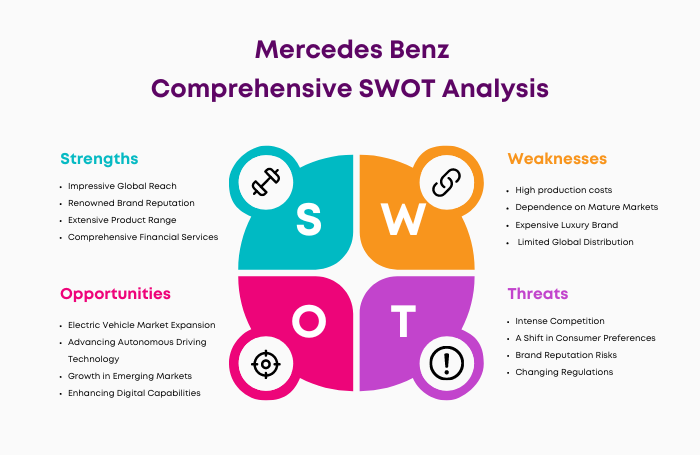
The Mercedes WOT analysis highlights where the brand excels, where it struggles, and what opportunities and threats it faces in 2025.
Strengths of Mercedes-Benz
- Impressive Global Reach
Mercedes-Benz operates in 34 countries across 5 continents with an extensive dealer and service network. This global presence ensures its vehicles are available to a wide customer base and strengthens after-sales support. Unlike regional competitors, Mercedes can mitigate local risks by relying on diversified markets. - Renowned Brand Reputation
Mercedes is synonymous with luxury, innovation, and reliability. With a brand value of $61.4 billion in 2023 (ranked 7th globally), it enjoys unmatched prestige. This reputation allows it to command premium pricing and build deep customer loyalty. Few automotive brands can match the heritage and recognition of the three-pointed star. - Extensive Product Range
Mercedes-Benz caters to diverse audiences with a portfolio that includes sedans, SUVs, coupes, convertibles, and utility vehicles. From entry-level luxury cars like the A-Class to ultra-premium Maybachs, the brand appeals to a wide spectrum of buyers. This product variety is a major strength that enhances market flexibility. - Comprehensive Financial Services
Beyond vehicles, Mercedes-Benz offers financing, leasing, and insurance through Mercedes-Benz Financial Services. This integrated ecosystem simplifies purchases for customers and fosters long-term brand loyalty. A customer who finances through Mercedes is more likely to return to the brand. - Innovation-Driven Approach
Mercedes-Benz has always been a pioneer in automotive technology. From inventing the first gasoline-powered car to modern safety innovations like PRE-SAFE, the company invests heavily in R&D. This focus reinforces its image as a technology leader. - Widespread Manufacturing Facilities
With plants in 21 countries across six continents, Mercedes ensures production resilience and cost efficiency. This global manufacturing base reduces dependency on any one market and allows the company to adapt quickly to regional demands. - Pool of Talented Professionals
Mercedes employs some of the best engineers, designers, and innovators in the world. Their expertise ensures that each car lives up to the brand’s high standards of luxury and performance. A strong workforce is one of Mercedes’ hidden strengths. - Unwavering Commitment to Sustainability
Mercedes-Benz has made sustainability central to its strategy. Through the EQ sub-brand, it has committed billions toward electric vehicles, greener materials, and reducing its carbon footprint. This aligns with customer expectations and regulatory demands for eco-friendly cars.
Weaknesses of Mercedes-Benz
Even though Mercedes-Benz leads in many areas, there are Mercedes-Benz weaknesses that pose challenges.
- High Production Costs
Luxury materials, cutting-edge tech, and engineering precision make Mercedes cars expensive to build. While this maintains quality, it reduces profit margins and makes the brand less competitive in price-sensitive markets. - Dependence on Mature Markets
Most of Mercedes’ revenue still comes from Europe and North America. This reliance exposes it to risks when these markets face slowdowns or recessions. For example, during the 2008 financial crisis, luxury car sales fell sharply. - Expensive Luxury Brand Positioning
Mercedes-Benz vehicles are priced at the top of the automotive market. While this strengthens exclusivity, it narrows the customer base. Competitors offering affordable luxury alternatives are attracting aspirational buyers Mercedes misses out on. - Limited Global Distribution
Despite its global reach, Mercedes’ distribution network is less extensive than competitors like Toyota or Volkswagen. This limits penetration in emerging economies where demand is growing. - Complex Product Lineup
Although variety is a strength, the sheer number of models and variants can overwhelm customers. Too many choices risk confusing buyers and complicating the purchase journey. - Late Entry into the EV Market
Mercedes was slower than rivals like Tesla and BMW in launching electric vehicles. Its EQ lineup is expanding, but the late start has cost valuable market share. This remains one of the critical Mercedes-Benz weaknesses in 2025. - Recalls and Quality Issues
Quality issues have led to multiple recalls over the years. For example, in 2023 nearly 500,000 vehicles were recalled due to a transmission software fault. Such incidents damage Mercedes’ reputation for reliability and must be addressed quickly.
Opportunities for Mercedes-Benz
- Electric Vehicle Expansion
The global EV market is booming. Mercedes has pledged €60 billion (2022–2026) toward electrification. By aggressively expanding its EQ lineup, the brand can strengthen its leadership in sustainable luxury mobility. - Advancing Autonomous Driving
Mercedes is investing in self-driving technologies to provide safer and more convenient luxury travel. By excelling here, it can attract tech-savvy consumers and compete strongly with Tesla. - Growth in Emerging Markets
Countries like China, India, and Brazil have rising middle classes eager for luxury cars. Expanding in these markets offers Mercedes significant growth potential and revenue diversification. - Enhancing Digital Capabilities
The future of car buying is digital. Virtual showrooms, online customization, and seamless e-commerce experiences can attract younger consumers. Mercedes has the brand power to lead in this area. - Forging Strategic Partnerships
Collaboration with technology companies and startups can accelerate progress in EVs, AI, and autonomous driving. Partnerships can also reduce R&D costs. - Shared Mobility & Subscriptions
Consumers are shifting from ownership to access. By offering luxury car-sharing or subscription services, Mercedes can reach younger demographics while creating new revenue streams. - Sustainability as a Differentiator
Eco-conscious buyers are growing rapidly. Mercedes can strengthen its reputation by investing in green manufacturing, renewable energy, and circular economy practices. - Customization & Personalization
Luxury customers increasingly want unique vehicles. Mercedes’ ability to offer bespoke design and performance packages enhances loyalty and brand differentiation.
Threats to Mercedes-Benz
- Intense Competition
Mercedes faces stiff rivalry from BMW, Audi, Lexus, and Tesla. The battle for innovation and customer loyalty in the luxury market is fierce, pushing up R&D and marketing costs. - Shifts in Consumer Preferences
Ride-sharing, public transport, and eco-conscious behavior are changing how people view car ownership. If Mercedes doesn’t adapt, it risks losing relevance. - Brand Reputation Risks
Recalls or leadership missteps can instantly damage Mercedes’ image. In the luxury market, reputation is everything, making this a critical threat. - Changing Regulations
Strict emission laws and fuel efficiency standards require heavy investment in green technologies. Mercedes must adapt quickly or risk fines and market restrictions. - Economic Fluctuations
Luxury cars are discretionary purchases. Global recessions or financial crises can drastically reduce sales and profitability. - Technological Disruption
New players with advanced EV and autonomous tech threaten traditional brands. Mercedes must innovate continuously to stay competitive. - Supply-Chain Disruptions
Geopolitical issues, trade wars, or natural disasters can disrupt Mercedes’ global supply chain. Diversification and resilience are essential. - Cybersecurity Threats
Modern cars are connected devices. Any breach can endanger customer safety and data security. Mercedes must invest heavily in cybersecurity to maintain trust.
Conclusion
The SWOT analysis of Mercedes-Benz reveals a brand with deep strengths in global presence, luxury positioning, and innovation. Yet, Mercedes-Benz weaknesses like high costs, reliance on mature markets, and a late start in EVs cannot be ignored.
Opportunities lie in electrification, autonomous driving, emerging markets, and sustainability. However, threats from competitors, regulation, and changing consumer preferences make the road ahead challenging.
The Mercedes SWOT analysis shows that success in 2025 will depend on how well the brand balances tradition with transformation. If Mercedes leverages its strengths and tackles its weaknesses strategically, it will continue to redefine luxury mobility for the 21st century.
FAQs
What is the main strength of Mercedes-Benz?
The biggest strength is its brand reputation as a luxury, innovative, and global leader in the automotive sector.
What are the weaknesses of Mercedes-Benz?
The major Mercedes-Benz weaknesses include high production costs, reliance on mature markets, recalls, and a late entry into the EV market.
What opportunities does Mercedes-Benz have in 2025?
Mercedes can expand in emerging markets, accelerate its EV lineup, grow in autonomous driving, and invest in digital and shared mobility solutions.
What are the threats to Mercedes-Benz?
The top threats include fierce competition from BMW, Audi, and Tesla, regulatory pressures, changing consumer preferences, and supply chain disruptions.
Why is Mercedes SWOT analysis important?
The Mercedes-Benz SWOT analysis helps understand the company’s current position, challenges, and future opportunities. It’s essential for strategists, investors, and consumers interested in the luxury automotive market.

A digital marketer with a strong focus on SEO, content creation, and AI tools. Creates helpful, easy-to-understand content that connects with readers and ranks well on search engines. Loves using smart tools to save time, improve content quality, and grow online reach.