

ChatGPT has rapidly become one of the most widely used AI tools for writing, research, marketing, education, and everyday problem-solving. Its ability to generate fluent, well-structured, and seemingly accurate content has made it appealing to students, professionals, and businesses alike. However, despite its strengths, there are important limitations that often go unnoticed.
Understanding the disadvantages of ChatGPT is essential for anyone relying on AI-generated content. While the output may look polished, researchers, educators, artists, and industry professionals have identified several weaknesses that can reduce content quality, accuracy, and authenticity.
In this detailed guide, we’ll explore 11 major ChatGPT disadvantages, explain why they matter, and help you understand where human judgment is still irreplaceable.
Why ChatGPT Content Often Appears Reliable at First Glance
Before diving into the drawbacks, it’s important to understand why ChatGPT content passes human review so easily. The system is designed to generate grammatically correct, logically structured, and contextually relevant responses. This creates an illusion of expertise and authority, even when the underlying information may be shallow or flawed.
Because of this, many of the disadvantages of chat gpt only become obvious after close reading, expert review, or real-world application.
1. Phrase Usage Makes ChatGPT Content Detectable as Non-Human
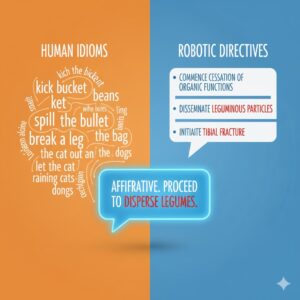
One of the most researched chatgpt disadvantages is the way AI uses language. While ChatGPT writes fluently, it often lacks the natural phrasing patterns found in human writing.
A key issue is the limited and unnatural use of idioms. Idioms are phrases with figurative meanings, such as “break the ice” or “once in a blue moon.” Human writers use these instinctively, often adapting them creatively based on context. ChatGPT, on the other hand, either avoids idioms or uses them in predictable, textbook ways.
This results in writing that feels “correct” but subtly unnatural. Researchers studying AI detection have found that this lack of complex phrasal variation makes AI-generated text easier to identify as non-human.
2. ChatGPT Lacks Genuine Emotional Expression
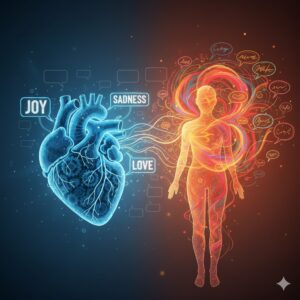
Another major disadvantage of ChatGPT content is its inability to express real emotions. While it can describe emotions in words, it does not experience feelings, memories, or vulnerability.
Human expression comes from lived experience—joy, loss, fear, hope, regret. ChatGPT can imitate emotional language, but it cannot genuinely convey emotional depth. This is particularly noticeable in creative writing, storytelling, poetry, and music lyrics.
The result is content that may sound dramatic or poetic but fails to emotionally resonate. It often feels hollow, as if it is describing emotions rather than expressing them. This limitation makes ChatGPT unsuitable for content where emotional authenticity is essential.
3. ChatGPT Does Not Produce Original Insights
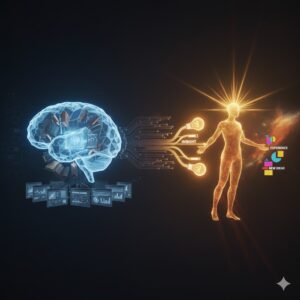
One of the most critical disadvantages of ChatGPT is its lack of true insight. ChatGPT excels at summarizing existing information, rephrasing ideas, and presenting commonly accepted viewpoints. However, it does not generate original perspectives.
Insight comes from:
- Personal experience
- Critical thinking
- Subjective interpretation
- Deep understanding of context
ChatGPT does none of these independently. As a result, essays, articles, and reports generated by ChatGPT often feel “fluffy.” They may be well-written, but they rarely offer new angles, challenging arguments, or deep analysis.
This is especially problematic in academic, analytical, and thought-leadership content, where insight is more valuable than surface-level explanation.
4. ChatGPT Is Often Excessively Wordy
Another widely observed chat gpt disadvantages is verbosity. ChatGPT tends to provide long, comprehensive answers even when a short, direct response would be more useful.
This happens because the model was trained to prioritize thoroughness and completeness. While this can be helpful in educational contexts, it becomes a problem in situations where clarity and brevity are critical, such as:
- Medical guidance
- Technical troubleshooting
- Legal explanations
- Instructional content
Excessive wordiness can confuse readers, hide the main point, and reduce usability. In content creation and SEO, overly long answers can also hurt user experience and engagement.
5. Over-Organization Makes Content Sound Unnatural
ChatGPT content often follows a highly structured and logical format. While structure is generally positive, excessive organization can make writing feel mechanical.
Common patterns include:
- Repetitive use of transitions like “Firstly,” “Secondly,” and “Finally”
- Predictable paragraph flow
- Balanced but unnatural sentence symmetry
Human communication is often messy, spontaneous, and emotionally driven. ChatGPT’s tendency to over-organize responses gives the content an inhuman feel, making it easier to identify as AI-generated.
This over-structured writing style is one of the subtle but significant disadvantages of chatgpt in conversational and creative content.
6. ChatGPT Is Overly Detailed When Simplicity Is Needed
Closely related to verbosity is ChatGPT’s tendency to be overly comprehensive. In many real-world scenarios, users need a simple answer, not a full explanation covering every possible angle.
For example:
- A patient may want a clear next step, not a long medical explanation
- A user troubleshooting software may want one solution, not five alternatives
- A reader skimming content may want a summary, not a deep dive
ChatGPT often fails to judge when detail becomes a distraction. This makes it less effective for decision-making content and practical guidance.
7. ChatGPT Hallucinates Facts
One of the most serious disadvantages of chat gpt is its tendency to fabricate information, commonly referred to as “hallucination.”
ChatGPT may:
- Invent statistics
- Cite non-existent studies
- Reference laws or regulations that do not exist
- Confidently state incorrect facts
The most dangerous aspect of this behavior is confidence. The content often sounds authoritative, making errors difficult to detect without subject-matter expertise.
This issue is especially risky in fields like healthcare, finance, law, and science, where inaccurate information can have real-world consequences.
8. ChatGPT Is Too Literal and Lacks Divergent Thinking
Human communication often involves implied meaning, indirect questions, and contextual understanding. ChatGPT, however, tends to interpret questions literally.
This limitation becomes clear when dealing with:
- Comparative questions
- Hypothetical scenarios
- Questions with hidden intent
Humans naturally infer what a question is really asking. ChatGPT focuses strictly on the literal words, sometimes missing the point entirely. This lack of divergent thinking is a key chatgpt disadvantages that limits its usefulness in complex conversations.
Also Read: BCG Matrix of BMW
9. ChatGPT Has a Bias Toward Neutrality
ChatGPT is designed to be neutral and balanced. While this can be helpful, it becomes a drawback in situations that require judgment, opinion, or decisive guidance.
In areas such as:
- Legal interpretation
- Medical advice
- Ethical decision-making
- Strategic planning
Neutrality can reduce usefulness. Humans often expect experts to take a position, explain why one option is better, and provide clear recommendations. ChatGPT frequently avoids strong stances, resulting in vague or overly cautious answers.
10. ChatGPT Is Biased Toward Formal Language
Another noticeable disadvantage of ChatGPT content is its preference for formal language. Even when a casual tone is appropriate, ChatGPT tends to use:
- Polite but stiff phrasing
- Academic-style sentence structure
- Overly professional vocabulary
It rarely uses slang, humor, irony, or cultural references naturally. This makes the content feel distant and less relatable, especially for:
- Blogs
- Social media content
- Brand storytelling
- Conversational writing
Human writers naturally adapt tone based on audience and context, something ChatGPT struggles to do consistently.
11. ChatGPT Is Still in Training and Requires Human Oversight
The final and perhaps most important of the disadvantages of chatgpt is that it is still evolving. The system is not a finished product and continues to learn through updates and refinements.
Because of this:
- Errors are inevitable
- Context understanding is imperfect
- Biases still exist
- Output quality varies
For this reason, all ChatGPT-generated content should be reviewed, edited, and validated by humans. AI works best as a support tool, not a replacement for human expertise, creativity, and accountability.
Conclusion
ChatGPT is a powerful and impressive tool, but it is far from flawless. The disadvantages of ChatGPT highlight why blind reliance on AI-generated content can lead to issues with accuracy, originality, emotional depth, and trustworthiness.
From hallucinated facts and excessive verbosity to lack of insight and emotional expression, these chat gpt disadvantages show that human involvement remains essential. AI can assist with drafting, brainstorming, and summarization, but high-quality content still depends on human judgment, experience, and creativity.
Understanding these limitations allows you to use ChatGPT responsibly—leveraging its strengths while compensating for its weaknesses. When used thoughtfully, AI can enhance human work, but it should never replace it.