


Summary
The BCG Matrix of HDFC Bank provides a strategic framework to understand how India’s largest private sector bank manages its diversified business portfolio. Through this analysis, we can see how HDFC Bank balances stability from mature divisions such as retail banking and credit cards, while simultaneously investing in high-growth areas like digital banking and wealth management. The matrix categorizes the bank’s services into Stars, Cash Cows, Question Marks, and Dogs, reflecting their relative market share and market growth rate. This in-depth HDFC Bank BCG analysis reveals how the bank sustains leadership, innovates through technology, and manages risk across different financial segments.
HDFC Bank is a cornerstone of India’s financial system — known for its operational efficiency, technological innovation, and customer-centric approach. In an era of digital transformation and fintech disruption, analyzing HDFC Bank through the BCG Matrix provides valuable insights into its long-term business strategy and portfolio management.
The BCG Matrix of HDFC Bank helps in classifying its various business segments based on two strategic parameters — market growth rate and relative market share. By doing so, HDFC Bank identifies where to invest for growth, where to consolidate, and where to reduce focus, ensuring a balanced and sustainable business structure.
About HDFC Bank Limited
Company Overview
HDFC Bank Limited, established in 1994, is one of India’s first private sector banks approved by the Reserve Bank of India (RBI). Headquartered in Mumbai, it has evolved into India’s largest private sector bank by market capitalization and total assets.
As of 2025, the bank employs over 1,82,000 professionals, operates across 8,300+ branches and 19,000+ ATMs, serving millions of retail, SME, and corporate customers nationwide.
HDFC Bank’s consistent growth and strong brand equity have positioned it as a leader in India’s competitive financial market.
Business Sector and Services
HDFC Bank offers a broad range of financial products and services under its diversified portfolio, including:
- Retail Banking: Savings accounts, personal loans, home loans, and credit cards.
- Corporate Banking: Working capital finance, trade services, and structured lending.
- SME Banking: Specialized financial services for small and medium enterprises.
- Treasury and Investments: Forex, money markets, and derivatives.
- Digital Banking: Internet banking, mobile apps, and digital payment solutions.
- Wealth Management & Private Banking: Investment advisory, mutual funds, and insurance.
This diversified structure helps HDFC Bank mitigate risk and tap into multiple revenue streams — a key component of its business growth strategy.
Operating Geography
HDFC Bank has a strong domestic presence, spanning urban and rural markets across India.
It also operates representative offices in Dubai, Hong Kong, Singapore, and Bahrain, supporting international banking and trade finance.
Revenue Snapshot (2025)
Based on recent financial data:
- Retail Banking: ~52% of total revenue
- Corporate Banking: ~28% of total revenue
- Treasury Operations: ~10% of total revenue
- Digital & Wealth Management Services: ~10% of total revenue
This distribution reflects a well-balanced portfolio with a dominant retail focus — a key pillar in the HDFC Bank growth strategy.
What is the BCG Matrix
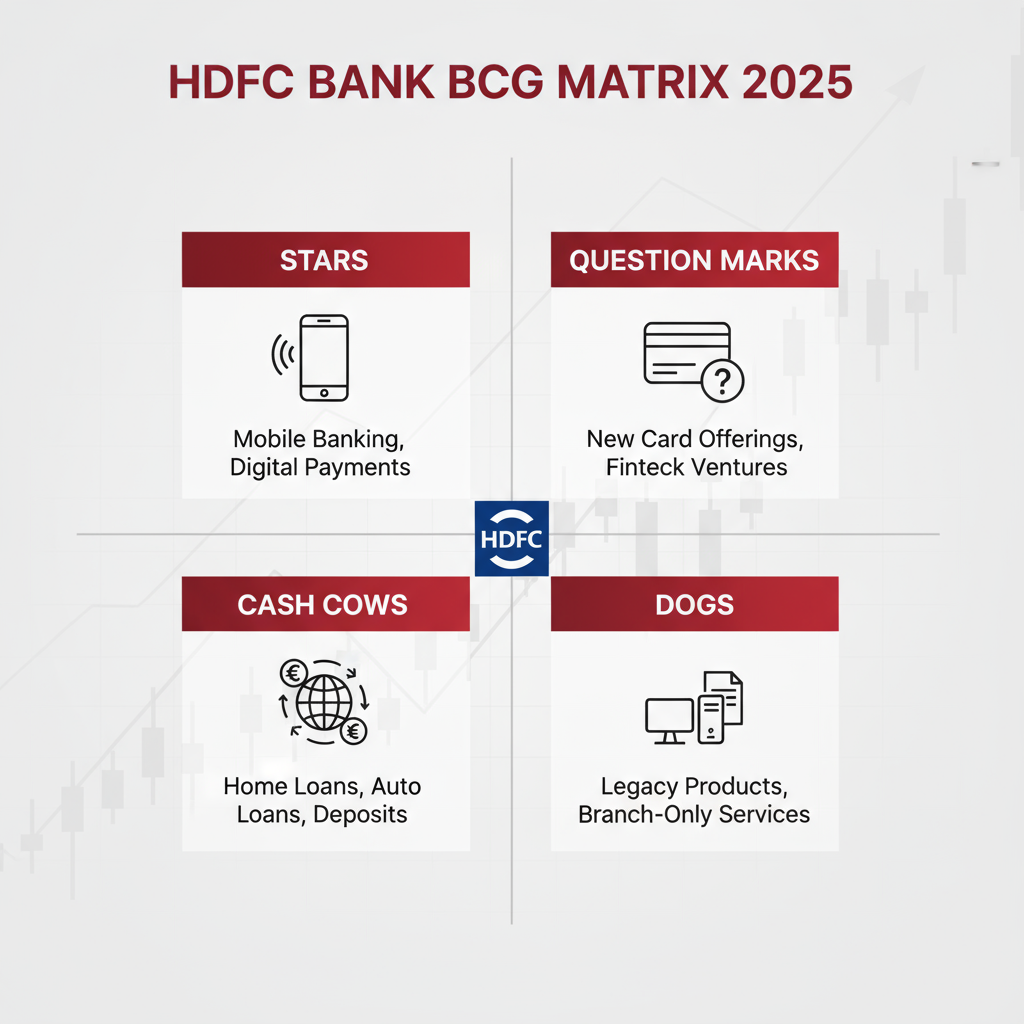
The BCG Matrix, also known as the Boston Consulting Group Matrix, is a strategic tool used to analyze a company’s business units or product lines based on:
- Market Growth Rate (vertical axis)
- Relative Market Share (horizontal axis)
The model divides businesses into four categories:
- Stars: High growth, high market share.
- Cash Cows: Low growth, high market share.
- Question Marks: High growth, low market share.
- Dogs: Low growth, low market share.
This classification enables companies like HDFC Bank to allocate resources efficiently, focusing on sectors that promise the highest returns.
Why the BCG Matrix Is Relevant to HDFC Bank
The banking industry is highly dynamic, with constant technological, economic, and regulatory shifts. The BCG Matrix of HDFC Bank helps:
- Evaluate performance across different business segments.
- Identify high-potential growth areas.
- Streamline investments and reduce inefficiencies.
- Support data-driven strategic decision-making.
Benefits of Using the BCG Matrix for HDFC Bank
Optimized Resource Allocation
The HDFC Bank BCG analysis ensures that resources are allocated effectively. For instance, retail banking and digital operations receive significant investment due to high profitability and growth potential, whereas low-performing sectors receive minimal focus. This helps the bank channel funds where they can yield the highest returns.
Also Read:BCG Matrix Analysis of Nike
Enhanced Portfolio Management
The HDFC Bank business strategy revolves around maintaining a balanced portfolio. Cash Cow divisions provide consistent revenue, while Star segments fuel innovation and market expansion. This equilibrium supports both profitability and sustainable growth.
Informed Strategic Decision-Making
By categorizing its operations under the BCG Matrix, HDFC Bank can identify opportunities and threats in different sectors. The insights enable leadership to decide whether to invest, maintain, harvest, or divest, ensuring long-term business success.
Risk Management and Diversification
The diversified portfolio of HDFC Bank minimizes exposure to risk. The BCG Matrix helps in identifying underperforming sectors early, allowing the bank to take corrective actions while diversifying into high-growth markets like digital finance and wealth management.
Detailed BCG Analysis for HDFC Bank Limited
Cash Cows (High Market Share, Low Growth)

These are mature and stable sectors generating consistent profits with low growth.
- Retail Banking: HDFC Bank dominates India’s retail segment, holding one of the highest market shares in savings, current accounts, and fixed deposits.
- Credit Cards: Through strong brand tie-ups (Tata Neu, Diners Club, and Regalia), HDFC Bank leads the credit card market in both transaction value and customer base.
- SME Banking: Though growth has plateaued, the SME portfolio remains profitable due to loyal customers and consistent repayment trends.
These Cash Cow divisions ensure steady inflows of revenue that support innovation in other segments.
Stars (High Market Share, High Growth)

Stars represent the sectors that drive the HDFC Bank growth strategy.
- Digital Banking: HDFC Bank’s “Digital 2.0” initiative, mobile banking app, and NetBanking services have revolutionized customer experience, making this segment a major growth driver.
- Wealth Management and Private Banking: With India’s growing affluent population, HDFC Bank’s private banking services are expanding rapidly.
- Corporate Banking: The bank’s focus on infrastructure financing and trade services contributes to strong growth and market leadership.
Investment in these Star divisions strengthens HDFC Bank’s competitive edge and prepares it for future expansion.
Question Marks (Low Market Share, High Growth)
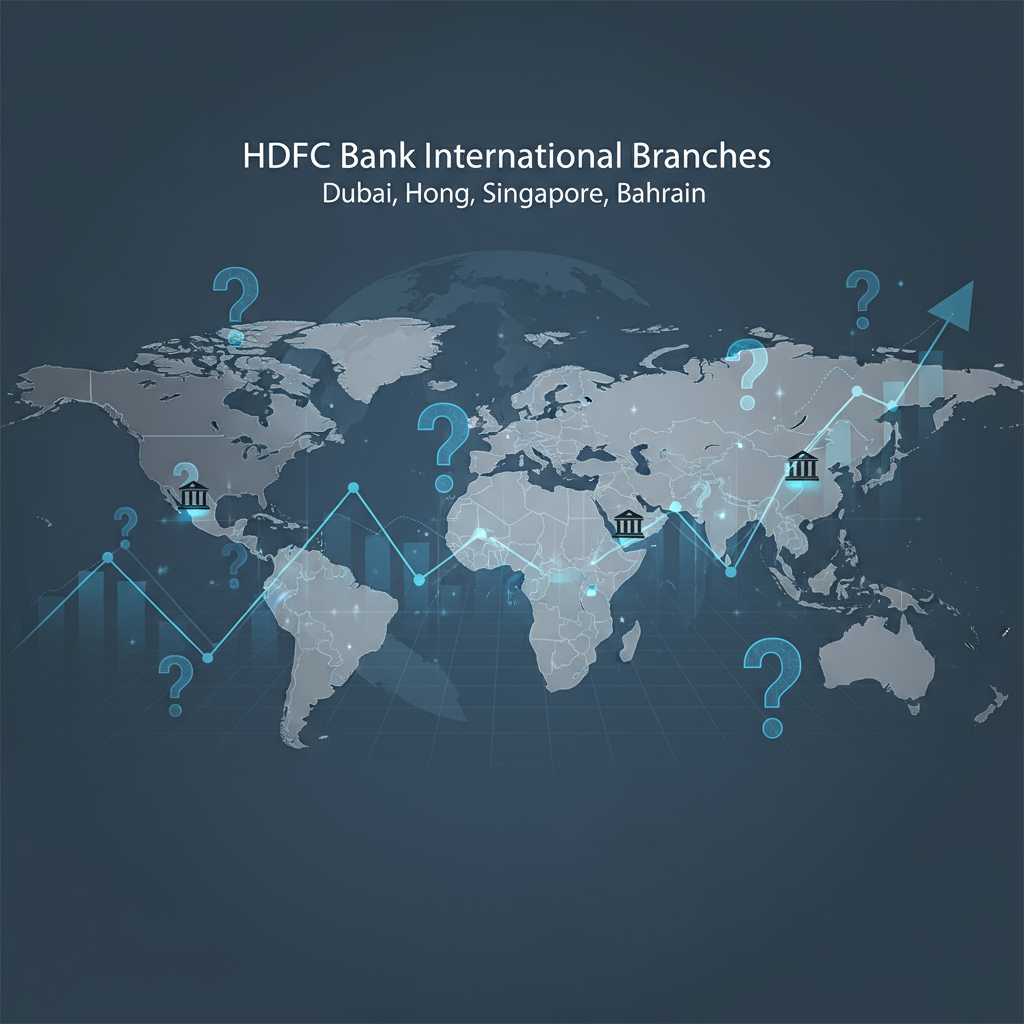
Question Marks indicate areas with potential for growth but currently limited market share.
- International Operations: Despite its presence in select countries, HDFC Bank’s global footprint is modest. Expanding its international network could help diversify income sources.
- Insurance and Mutual Funds: Managed through subsidiaries and partnerships, these services are growing but face stiff competition from ICICI Prudential and SBI Life.
- Fintech Collaborations: HDFC Bank is gradually entering fintech alliances; however, the sector’s rapid evolution requires more aggressive strategies.
With strategic investment and marketing, these Question Marks can evolve into Star categories in the near future.
Dogs (Low Market Share, Low Growth)
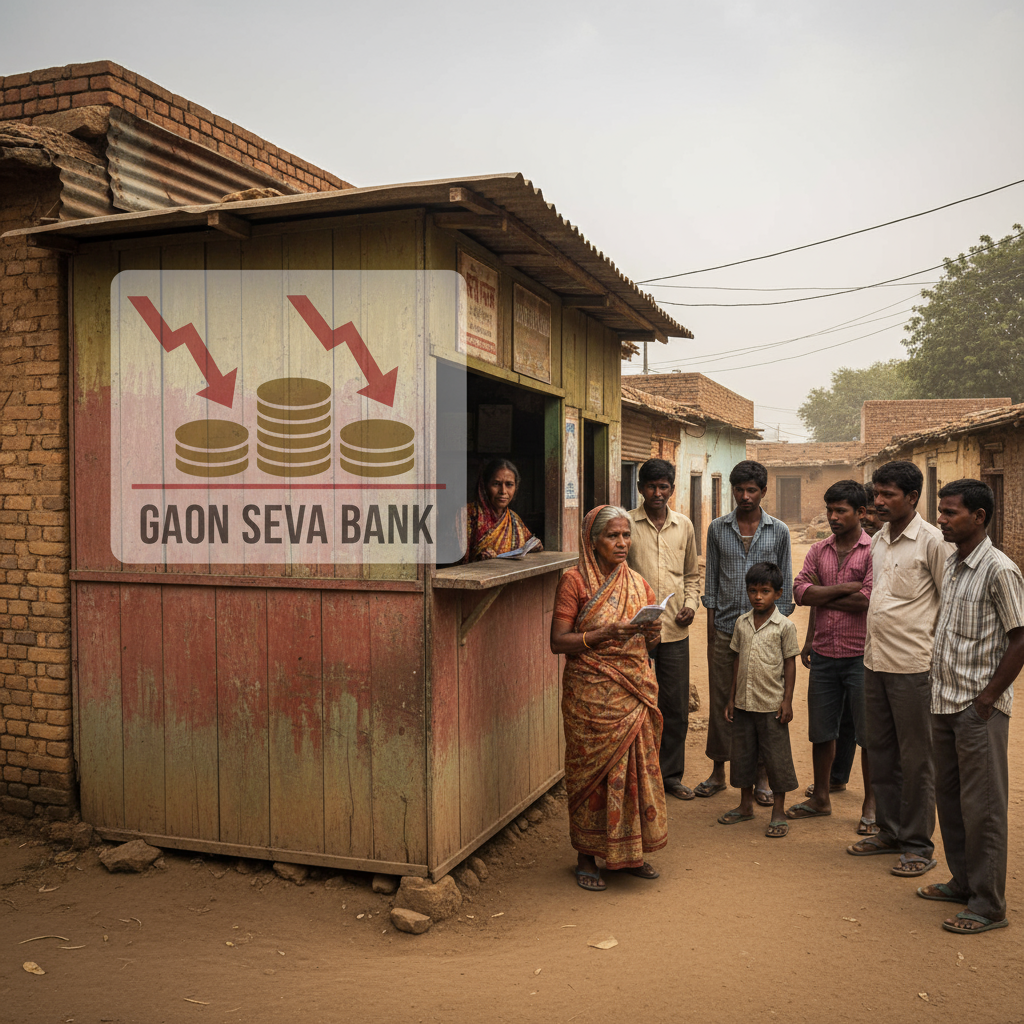
These segments contribute minimally to profit and have limited growth potential.
- Certain Rural Banking Operations: Although they promote financial inclusion, profitability remains low due to high operational costs.
- Legacy Banking Products: Outdated services with limited demand or customer engagement fall into this quadrant.
While these divisions may not drive revenue, they are maintained for social responsibility and compliance with government schemes.
BCG Matrix Diagram for HDFC Bank
| Quadrant | Business Segment | Market Growth | Market Share | Strategic Focus |
| Stars | Digital Banking, Corporate Banking, Wealth Management | High | High | Invest & Expand |
| Cash Cows | Retail Banking, Credit Cards, SME Lending | Low | High | Maintain & Harvest |
| Question Marks | International Operations, Mutual Funds, Fintech Alliances | High | Low | Selective Investment |
| Dogs | Rural Banking, Legacy Products | Low | Low | Optimize or Divest |
Strategic Insights from the BCG Matrix of HDFC Bank
- Digital Leadership: HDFC Bank’s digital banking division is the fastest-growing segment, helping the bank maintain market dominance.
- Revenue Stability: Retail and credit card operations act as financial anchors, generating steady profits even during economic slowdowns.
- Balanced Growth: HDFC Bank’s strategic mix of Stars and Cash Cows ensures both short-term profitability and long-term scalability.
- Future Potential: With growing fintech collaborations, HDFC Bank can leverage technology to enhance customer experience and operational efficiency.
- Sustainable Innovation: The bank’s investments in AI, blockchain, and automation reflect its commitment to long-term digital transformation.
Challenges and Limitations of the BCG Matrix for HDFC Bank
Despite its usefulness, the BCG Matrix of HDFC Bank has limitations:
- Qualitative Factors Ignored: It focuses solely on market growth and share, overlooking factors like customer satisfaction and brand reputation.
- Rapid Market Shifts: Financial services evolve quickly, making static matrix evaluations less reliable over time.
- Interdependence of Segments: Banking divisions often overlap, complicating clear categorization.
- Regulatory Influences: Government policies and RBI regulations significantly impact banking growth, something the BCG Matrix does not consider.
Therefore, HDFC Bank complements the BCG Matrix with tools like SWOT Analysis, PESTEL Analysis, and Porter’s Five Forces for comprehensive strategic planning.
Conclusion
The BCG Matrix of HDFC Bank highlights how India’s top private bank successfully balances innovation with stability.
Its Cash Cow divisions — retail banking and credit cards — generate steady income, while Star sectors like digital banking and wealth management fuel future growth. Emerging Question Marks such as fintech alliances and international operations offer expansion opportunities, whereas Dogs are managed efficiently for compliance and inclusivity.
By leveraging the BCG framework, HDFC Bank achieves optimized resource allocation, risk diversification, and sustainable growth, reinforcing its leadership position in the Indian banking ecosystem.
As the financial landscape evolves, HDFC Bank’s commitment to digital transformation and customer-centric innovation will ensure its continued success in both domestic and international markets.
FAQs
Q1. What is the BCG Matrix of HDFC Bank?
The BCG Matrix of HDFC Bank categorizes its business segments based on market growth and market share to guide investment and strategy decisions.
Q2. Which are the Cash Cow segments of HDFC Bank?
Retail Banking, Credit Cards, and SME Banking are Cash Cows that provide stable and consistent profits.
Q3. What makes Digital Banking a Star in HDFC Bank’s BCG Matrix?
Digital Banking shows high growth and high market share, making it central to HDFC Bank’s technological innovation and customer engagement.
Q4. What are the Question Marks for HDFC Bank?
International operations, mutual funds, and fintech partnerships are Question Marks with growth potential but relatively smaller market share.
Q5. What strategic insights can be drawn from HDFC Bank’s BCG analysis?
It reveals a strong balance between growth and stability, guiding the bank’s resource allocation, innovation focus, and long-term growth planning.

A digital marketer with a strong focus on SEO, content creation, and AI tools. Creates helpful, easy-to-understand content that connects with readers and ranks well on search engines. Loves using smart tools to save time, improve content quality, and grow online reach.