


Summary
The BCG Matrix of the airline industry provides an insightful framework to analyze how different airlines and their business divisions perform within a highly dynamic and competitive market. The aviation industry, known for its cyclical nature, operates under fluctuating economic conditions, fuel prices, technological advancements, and consumer preferences. The Boston Consulting Group (BCG) Matrix helps identify which airlines or service segments are thriving, which generate consistent profits, which require strategic investment, and which may be underperforming.
In this detailed and descriptive blog, we explore how the BCG Matrix applies to the airline industry, categorizing key divisions and business models into Stars, Cash Cows, Question Marks, and Dogs. We will examine the financial, operational, and strategic implications of each quadrant, supported by real-world examples, and explain how global airlines can use this framework to make more informed strategic decisions in 2025 and beyond.
The airline industry is one of the most challenging and complex sectors in the global economy. It is influenced by a wide range of factors including economic cycles, government regulations, global crises, fuel costs, and passenger demand. Airlines must constantly adapt to survive and remain profitable in this volatile environment.
The BCG Matrix of the airline industry serves as a powerful analytical tool to help aviation companies and stakeholders assess the performance of their various service divisions—such as domestic flights, international routes, cargo operations, and premium services—based on two key dimensions: market growth rate and relative market share.
Through this framework, airline companies can understand which services or routes are performing well, which provide stable profits, which hold growth potential, and which are dragging overall profitability. This analysis becomes especially critical in the post-pandemic era, where recovery, sustainability, and digital transformation have reshaped global aviation strategies.
What is the BCG Matrix

The Boston Consulting Group (BCG) Matrix is a strategic management tool that helps organizations evaluate their business portfolio based on two factors:
- Market Growth Rate: Reflects the attractiveness of the market or service segment. In the airline industry, this may refer to passenger growth, route expansion potential, or increasing demand for cargo.
- Relative Market Share: Represents the company’s competitive position within that market, based on passenger volume, route dominance, or brand strength.
Based on these dimensions, the BCG Matrix classifies business units into four categories:
Stars: High market share in high-growth markets. These divisions are growth leaders that require substantial investment but yield strong returns.
Cash Cows: High market share in low-growth markets. These segments generate steady profits and fund future investments.
Question Marks: Low market share in high-growth markets. These hold potential but require significant investment to improve market position.
Dogs: Low market share in low-growth markets. These segments are unprofitable or in decline and may need to be restructured or divested.
Applying this model to the airline industry provides a structured way to analyze how different types of flights, regions, and service divisions perform across global and domestic markets.
Why the BCG Matrix is Important for the Airline Industry
The BCG Matrix for the airline industry is vital for understanding how airlines can optimize their resources and portfolio. Airlines typically operate multiple service divisions, each requiring a unique strategic approach.
Key reasons why this framework is valuable include:
Strategic Resource Allocation: Airlines can determine where to invest more—whether in expanding profitable routes, upgrading aircraft fleets, or enhancing premium services.
Profitability Management: The BCG Matrix helps identify which divisions contribute the most revenue and which underperform, guiding long-term profitability strategies.
Competitive Positioning: It provides insights into how airlines fare against competitors in different regions or service categories.
Sustainability Planning: With the push for net-zero emissions, airlines can identify which operations align with future sustainability goals.
Risk Management: By diversifying investments across multiple quadrants, airlines can balance between growth and stability.
Detailed BCG Matrix Analysis of the Airline Industry
Stars (High Market Share, High Market Growth)

Stars represent the most promising and profitable sectors of the airline industry. They operate in high-demand markets and possess a significant competitive advantage. These divisions or services require continuous investment to maintain dominance and expand market reach.
International Long-Haul Flights
In 2025, international travel demand continues to recover and expand following the pandemic, especially across routes connecting Asia, Europe, and North America. Airlines like Emirates, Qatar Airways, Singapore Airlines, and British Airways have strong market share in this segment.
These carriers dominate premium long-haul services due to their superior fleet quality, connectivity, and service standards. With increasing global business travel and tourism, this segment represents both high growth and profitability.
Investments in modern aircraft such as the Airbus A350 and Boeing 787 have enhanced operational efficiency and passenger comfort, further strengthening these airlines’ market positions.
Cargo and Freight Operations
Air cargo services have emerged as a Star segment after the pandemic accelerated e-commerce and global logistics demand. Airlines like FedEx, UPS, Qatar Airways Cargo, and Emirates SkyCargo have witnessed significant revenue from freight operations.
As supply chains diversify and global trade increases, the cargo segment continues to offer strong growth potential. Airlines investing in dedicated freighter fleets and digital cargo management systems maintain high profitability.
Why They Are Stars
Both long-haul passenger travel and air cargo services combine high market demand with robust performance. Continuous innovation, digital transformation, and environmental initiatives ensure their relevance in a competitive landscape.
Cash Cows (High Market Share, Low Market Growth)

Cash Cows represent mature airline services that generate consistent revenue but operate in markets with limited growth potential. They are essential for maintaining stability and funding high-growth areas.
Domestic Airline Operations
Domestic routes, especially in large markets such as the United States, India, and China, are Cash Cows for many airlines. These routes often have high passenger volume, predictable demand, and stable profitability.
Carriers such as Southwest Airlines, IndiGo, and Ryanair dominate domestic and short-haul routes due to their efficient operations and cost advantages.
Although growth in these markets has slowed compared to international expansion, they continue to generate steady income and strong cash flow.
Business Class and Frequent Flyer Programs
For legacy airlines, business and premium-class services act as consistent revenue generators. Frequent flyer programs like American Airlines’ AAdvantage and Emirates Skywards ensure recurring customer loyalty and steady revenue streams.
Why They Are Cash Cows
These segments are mature, highly competitive, and stable. Airlines focus on maintaining efficiency and customer retention rather than aggressive expansion. Profit margins remain strong due to high occupancy rates and brand loyalty.
Question Marks (Low Market Share, High Market Growth)
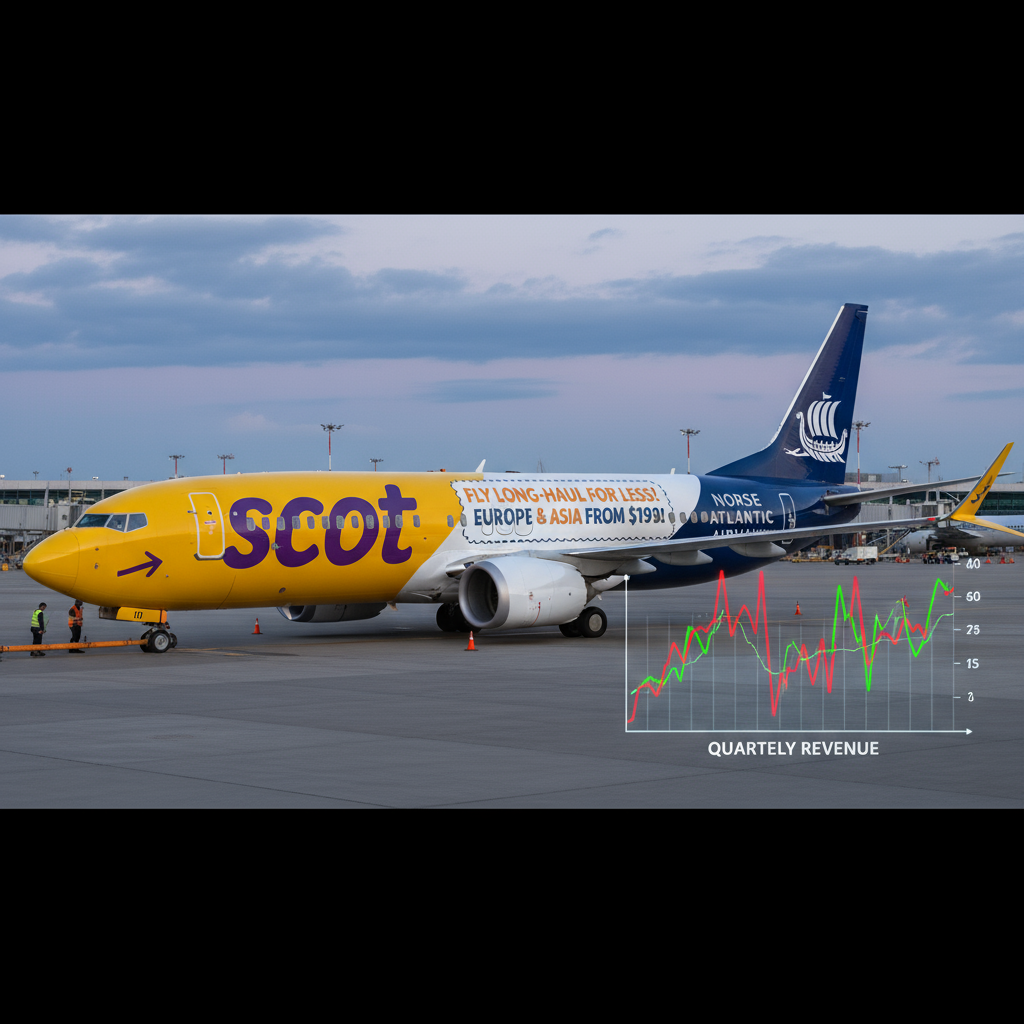
Question Marks are service segments or new ventures with potential but limited market share. These divisions require careful strategic decisions—either significant investment to turn them into Stars or restructuring to minimize losses.
Low-Cost Long-Haul Airlines
The low-cost long-haul model has been a challenging experiment in aviation. While short-haul budget carriers like Ryanair and AirAsia thrive, long-haul low-cost carriers such as Norse Atlantic Airways and Scoot operate in a high-growth but uncertain market.
The demand for affordable intercontinental travel continues to rise, yet profitability is inconsistent due to high operational costs, competition, and fuel expenses.
These airlines need to achieve economies of scale and differentiate through ancillary services, flexible pricing, and digital innovation.
Sustainable Aviation and Green Technologies
Environmental sustainability is transforming aviation, creating new opportunities. Airlines investing in sustainable aviation fuels (SAF), electric planes, and carbon offset programs are in a high-growth but developing market.
While major players like Delta, KLM, and Lufthansa have begun transitioning toward sustainability, it remains a costly and evolving segment with low immediate returns but long-term potential.
Why They Are Question Marks
Both low-cost long-haul models and sustainable aviation technologies represent high-growth areas with uncertain profitability. Strategic investment, innovation, and government support could turn them into Stars in the future.
Dogs (Low Market Share, Low Market Growth)

Dogs are divisions or market segments that contribute little to profitability and often face decline. In the airline industry, these services are either outdated, uncompetitive, or no longer aligned with market trends.
Unprofitable Regional Routes
Smaller regional flights connecting low-demand destinations often struggle with profitability. Rising fuel costs, pilot shortages, and low passenger loads make them financially unsustainable.
Many airlines have reduced operations on such routes, focusing instead on profitable hubs and alliances with regional carriers.
Legacy Charter Services
Traditional charter services, once popular for group travel or seasonal tourism, have lost relevance with the rise of budget airlines and dynamic online booking systems.
These operations face declining demand and limited scalability, making them less attractive for investment.
Why They Are Dogs
These segments offer low returns, limited growth, and operational inefficiencies. Airlines either restructure, outsource, or exit these markets to focus on high-yield opportunities.
Also Read:BCG Matrix of Pepsi
Strategic Insights from the BCG Matrix of the Airline Industry
The BCG Matrix analysis of the airline industry offers several valuable insights into the sector’s overall strategy and evolution.
- Balance Between Growth and Stability: Airlines must maintain a balance between Star segments (like cargo and international operations) and Cash Cows (like domestic flights).
- Innovation Is Essential: Question Mark areas like sustainable aviation and long-haul low-cost models require technological advancements to achieve profitability.
- Operational Efficiency Matters: Cash Cows succeed due to operational excellence, not just high passenger numbers.
- Adaptation to Market Changes: Dog segments highlight the importance of flexibility. Airlines that fail to innovate quickly lose relevance.
- Diversification Is Key: Successful airlines diversify across passenger, cargo, and auxiliary services to minimize risk.
Challenges in Applying the BCG Matrix to the Airline Industry
While the BCG Matrix provides a useful perspective, applying it to airlines presents certain limitations:
- The airline industry is heavily influenced by external factors such as oil prices, government regulations, and geopolitical tensions.
- Market growth and share can shift quickly due to unforeseen crises like pandemics or economic recessions.
- Measuring relative market share can be complex, as global routes and partnerships often overlap.
- The model does not account for brand reputation, customer loyalty, or service quality—all critical in aviation success.
- Interconnected services (e.g., cargo and passenger operations) make clear categorization challenging.
Despite these limitations, the BCG Matrix remains an effective starting point for evaluating long-term strategic planning in aviation.
Conclusion
The BCG Matrix of the airline industry (2025) offers a comprehensive understanding of how airlines can strategically position their service divisions in an evolving marketplace.
Stars like international flights and air cargo are driving growth and innovation.
Cash Cows such as domestic operations and frequent flyer programs ensure financial stability.
Question Marks like low-cost long-haul services and sustainable aviation technologies represent future opportunities requiring investment and innovation.
Dogs such as unprofitable regional routes and outdated charter services highlight the need for restructuring or exit strategies.
Through effective use of the BCG Matrix, airlines can align their portfolios with future market trends, ensuring competitiveness, profitability, and sustainability in a volatile global economy.
FAQs
What is the BCG Matrix in the airline industry?
The BCG Matrix in the airline industry is a strategic tool used to analyze various services such as domestic routes, international flights, and cargo operations based on market growth and market share.
Which are the Star segments in the airline industry?
International long-haul flights and cargo services are Star segments due to high demand and strong market dominance.
What are Cash Cows for airlines?
Domestic operations and loyalty programs act as Cash Cows, generating steady profits with low market growth.
What are examples of Question Marks in aviation?
Low-cost long-haul airlines and sustainable aviation initiatives are Question Marks that require investment to achieve profitability.
Why are regional and charter services considered Dogs?
They have low market demand, low profitability, and limited growth potential, making them less viable for long-term investment.